
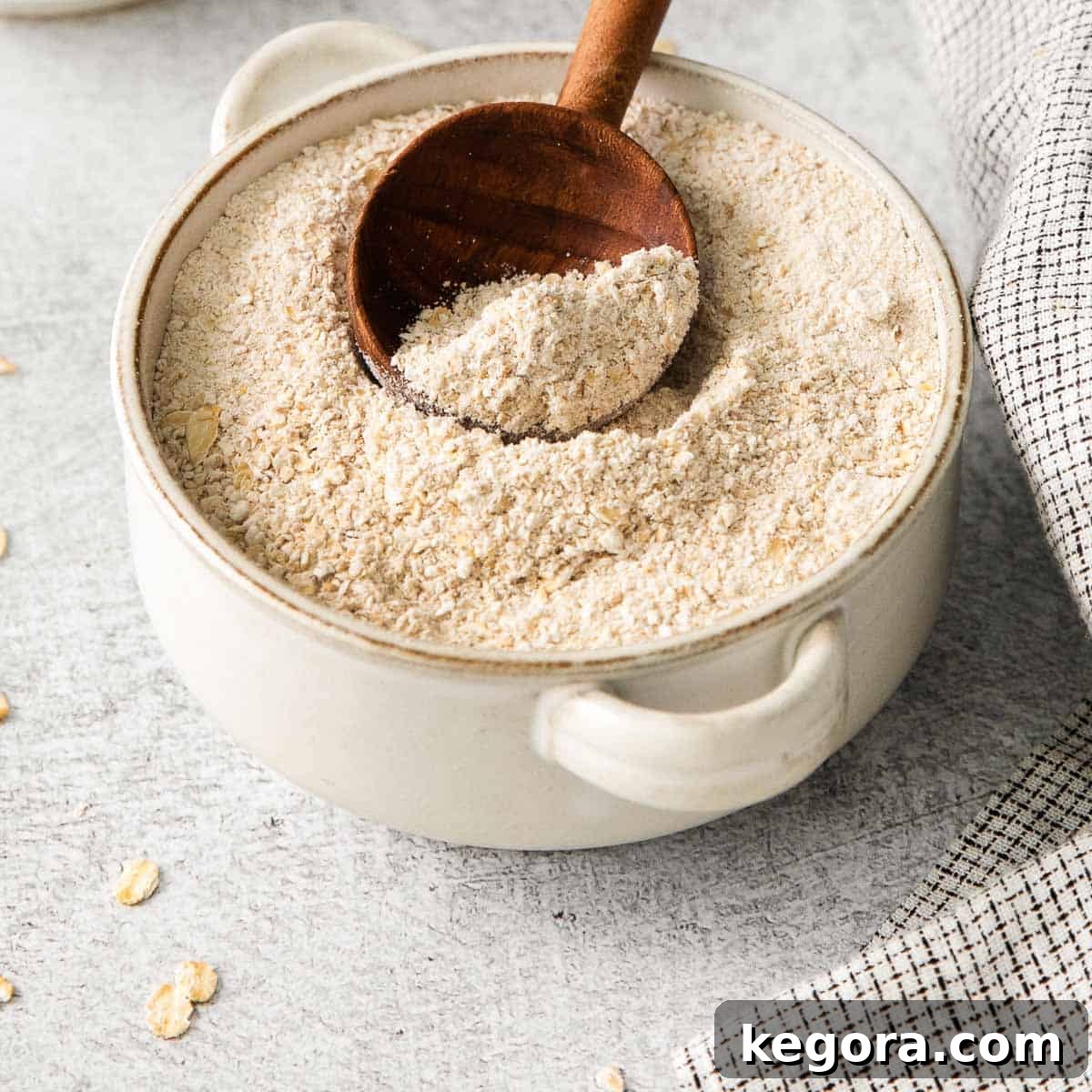
Delve into the comprehensive guide on substituting with oat flour! Learn the ins and outs of replacing all-purpose flour with oat flour, explore effective alternatives, and discover essential tips for successful gluten-free baking.
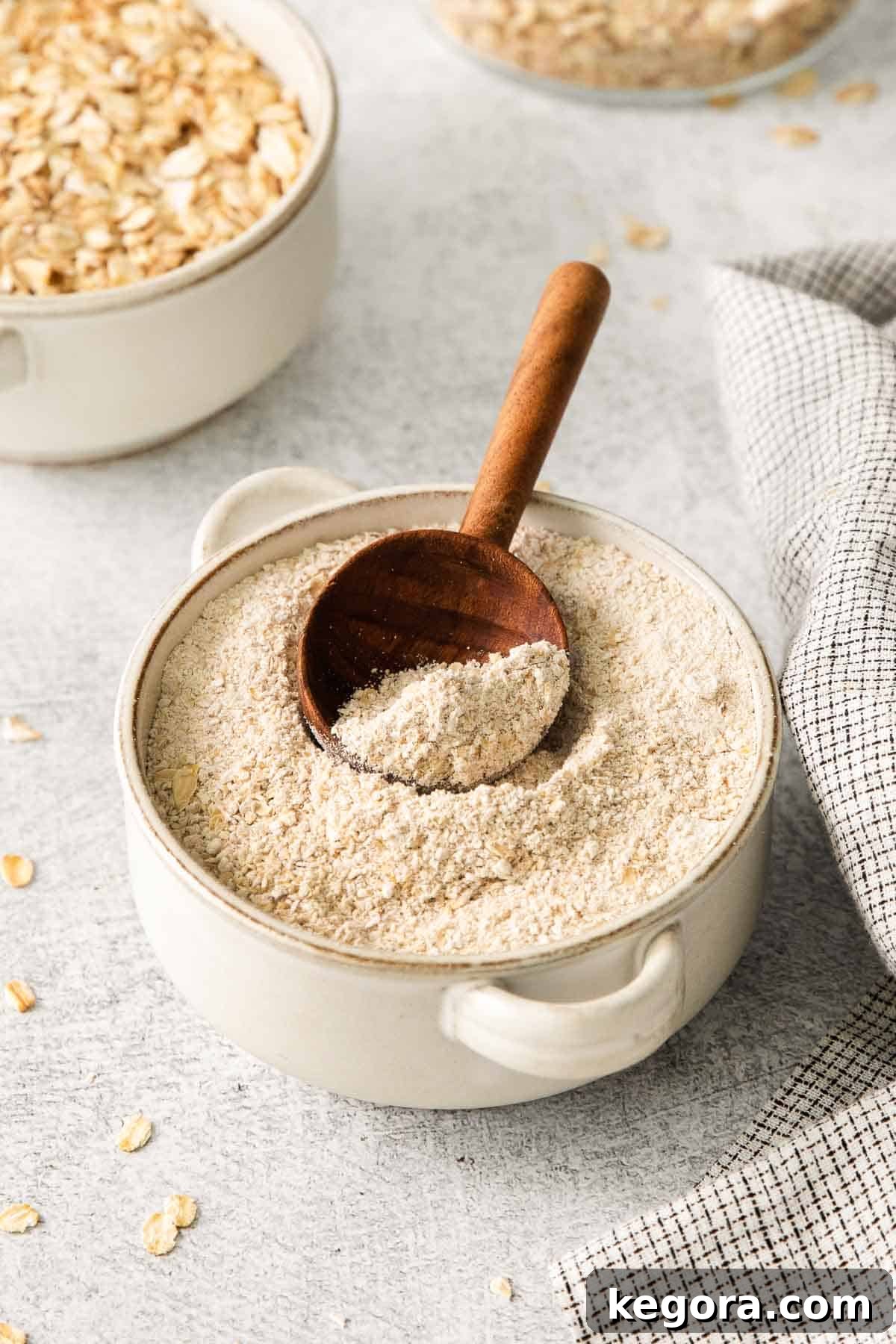
Oat flour has emerged as a beloved staple in many kitchens, particularly for those seeking gluten-free alternatives without compromising on flavor or texture. Frequently used in a variety of baked goods such as fluffy muffins, tender pancakes, and chewy cookies, this versatile flour offers a fantastic natural gluten-free solution. Beyond its suitability for special dietary needs, oat flour boasts significant health benefits compared to traditional white flour, being rich in fiber, protein, and essential nutrients. Its naturally neutral, slightly sweet flavor also makes it an excellent canvas for both sweet and savory recipes.
One of the most appealing aspects of oat flour is its accessibility; you can easily craft your own homemade version. All you need are certified gluten-free oats and a robust food processor or high-speed blender. This simple process allows you to have fresh oat flour on hand whenever inspiration strikes, ensuring the highest quality and purity for your culinary creations.
Ultimately, oat flour serves as a remarkable gluten-free substitute, especially for individuals managing Celiac disease or gluten sensitivity. However, to truly unlock its potential and achieve outstanding results, understanding its unique properties and how it behaves in baking is crucial. Unlike wheat flours that rely on gluten for structure and elasticity, oat flour requires specific techniques and recipe adjustments.
Since oat flour possesses distinct characteristics compared to conventional flours, familiarizing yourself with the best practices and ‘tricks of the trade’ before incorporating it into your recipes is highly recommended. Once you grasp these fundamental principles and learn how to optimize its use, you’ll discover that oat flour is an indispensable and excellent substitute for a wide array of recipes, yielding delicious and satisfying outcomes every time!
To deepen your knowledge, you might also find these articles insightful: how to make oat flour, are oats gluten-free, is rice gluten-free and is buckwheat gluten-free.
Thankfully, this comprehensive guide is designed to share everything you need to know about successfully baking with oat flour!
Can You Directly Substitute Oat Flour for All-Purpose Flour?
Yes, it is possible to substitute oat flour for all-purpose white flour or other wheat flours in many of your cherished recipes. However, the direct substitution often yields varied results due to a fundamental difference: the absence of gluten in oat flour. Gluten, a protein complex found in wheat, plays a pivotal role in providing elasticity, structure, and binding properties to baked goods. It’s what gives bread its chewiness, cakes their delicate crumb, and pastries their flaky layers.
When you remove gluten from a recipe, especially one heavily reliant on it for its structural integrity, the outcome can be significantly different. For instance, in recipes where gluten forms a robust network to trap gases and allow for rising, like yeast breads, oat flour simply cannot replicate this function. Substituting oat flour in such recipes would likely result in a dense, flat, and crumbly loaf that lacks the characteristic chew and rise of traditional bread.
Similarly, quick breads and muffins, while not yeast-leavened, still depend on gluten to some extent for their structure and to prevent them from becoming excessively crumbly. Using a 100% oat flour substitution in these items might produce a very delicate, fragile product that falls apart easily. However, in recipes where the binding properties of gluten are less critical, such as certain types of cookies, brownies, or even some cakes, oat flour can perform quite well, often contributing a delightful chewiness and a subtly nutty flavor.
To ensure the best possible results when baking with oat flour, especially if you’re new to gluten-free baking, the most reliable approach is to utilize recipes that have been specifically developed and tested with oat flour. These recipes have been carefully formulated to account for oat flour’s unique absorption qualities and lack of gluten, often incorporating additional binders or specific techniques to achieve optimal texture and structure.
For more flexible recipes, where a partial substitution is often recommended, you can begin by replacing 25-50% of the all-purpose flour with oat flour. You might also find it necessary to adjust the liquid content, as oat flour tends to absorb more moisture than wheat flour. Adding a small amount of a binding agent like xanthan gum (typically ¼ to ½ teaspoon per cup of oat flour) can also help improve the structure and prevent excessive crumbliness in some recipes.
To ensure better results, it’s always best to use a recipe specifically designed to work with oat flour.
I’ve dedicated time to developing and perfecting a collection of oat flour recipes that are not only naturally gluten-free but also deliver incredible taste and a wonderful texture!
- Oat Flour Brownies
- Oat Flour Muffins
- Oat Flour Banana Muffins
- Oat Flour Pancakes
- Oat Flour Waffles
- Oat Flour Banana Bread
- Oat Flour Chocolate Chip Cookies

Understanding Oat Flour Properties for Successful Baking
To truly master baking with oat flour, it’s essential to understand its unique characteristics. Oat flour is distinct from wheat flour in several key ways that influence how it behaves in recipes:
- High Fiber Content: Oat flour is rich in soluble fiber, particularly beta-glucan. This fiber contributes to its superior nutritional profile but also means it absorbs more liquid than all-purpose flour. This can lead to drier baked goods if not properly accounted for with increased moisture or reduced baking time.
- Lack of Gluten: As mentioned, the absence of gluten means oat flour cannot develop the elastic network needed for stretchy doughs or light, airy structures. This makes it challenging for yeast-leavened recipes but ideal for tender, crumbly textures.
- Flavor Profile: Oat flour has a mild, subtly sweet, and nutty flavor that complements a wide range of ingredients. It generally doesn’t overpower other flavors in a recipe, making it very versatile.
- Texture Contribution: When used correctly, oat flour can impart a lovely chewiness and moistness to baked goods. However, if overmixed or improperly hydrated, it can result in dense or crumbly textures.
When working with oat flour, remember to measure by weight for accuracy, as it’s lighter than wheat flour by volume. Sifting oat flour can help prevent clumping and ensure an even distribution in your batter or dough. Allowing batters to rest for 5-10 minutes can also give the oat flour time to fully absorb the liquid, leading to a better final texture.
Excellent Gluten-Free Alternatives to Oat Flour
Many individuals gravitate towards oat flour due to its inherently gluten-free nature (provided certified gluten-free oats are used). However, a variety of other excellent gluten-free flours can effectively substitute for oat flour, especially within recipes already designed to be gluten-free. These alternatives offer distinct characteristics while maintaining the necessary properties for successful baking.
Here are some of the best oat flour substitutes to consider for your gluten-free baking needs:
- Sorghum Flour: A mild-flavored, nutrient-dense whole grain flour, sorghum offers a light texture similar to wheat flour, making it a good all-around replacement. It’s excellent for breads, cookies, and cakes, providing a soft crumb.
- Buckwheat Flour: Despite its name, buckwheat is not related to wheat and is naturally gluten-free. It has a robust, earthy flavor and can create a moist, chewy texture, similar to the depth oat flour can offer in certain baked goods. It’s perfect for pancakes, muffins, and certain breads.
- Millet Flour: With a mild, slightly sweet corn-like flavor, millet flour is light and often used in gluten-free baking blends. It’s a good source of protein and fiber, contributing to a tender crumb in cakes, cookies, and flatbreads.
- Brown Rice Flour: This whole grain flour is widely available and has a somewhat coarse texture and nutty flavor. It’s a staple in many gluten-free baking recipes, providing structure and a slightly chewy quality, similar to oat flour in terms of general baking application.
- Gluten-Free 1:1 Baking Flour Blends: These commercially prepared blends are designed to replace wheat flour cup-for-cup in most recipes, often containing a mix of rice flours, starches, and xanthan gum. They are usually the most straightforward substitute for oat flour, particularly if a recipe doesn’t specify other binders.
- Regular Flour (for non-GF needs): If gluten is not a concern, all-purpose wheat flour or whole wheat flour can also substitute oat flour. However, keep in mind the significant difference in gluten content and adjust liquids as needed.
Gluten-Free Flours that Are Not Suitable as Oat Flour Substitutes
It’s equally important to understand that not all gluten-free flours can be interchangeably substituted for oat flour. These flours possess vastly different properties, and using them in place of oat flour will likely lead to undesirable textures and failed recipes. Avoid substituting oat flour with these specific types of flours in your gluten-free baking endeavors:
- White Rice Flour: While a common GF flour, white rice flour is very fine and can make baked goods dry and gritty without additional binders or starches. It lacks the fiber and fat content of oat flour, resulting in a much different crumb.
- Sweet Rice Flour (Glutinous Rice Flour): Known for its sticky and chewy properties, sweet rice flour is primarily used for thickening and creating mochi-like textures. It will make your baked goods gummy and dense if used as a direct substitute for oat flour.
- Potato Starch: A pure starch, potato starch provides lightness and tenderness but no structure or binding on its own. It’s typically used in small quantities in GF blends and would result in an overly soft, crumbly, or rubbery texture if used alone.
- Tapioca Starch (Tapioca Flour): Similar to potato starch, tapioca starch is a light, absorbent starch that adds chewiness and crispness. It’s often used to improve texture in GF blends but cannot provide the bulk or protein structure that oat flour offers, leading to a very poor substitution.
- Potato Flour: This is made from whole dried potatoes, not just the starch. It’s very dense, heavy, and highly absorbent, often used as a thickener or to add moisture in small amounts. Substituting it for oat flour would make your baked goods incredibly dense and gummy.
Oat Flour vs. Almond Flour: A Detailed Comparison and Substitution Guide
The question of whether almond flour can substitute for oat flour is common, and the answer is nuanced: it depends entirely on the recipe and the proportion of flour involved. While both are popular gluten-free options, their distinct properties mean they are not always interchangeable.
Key Differences Between Almond Flour and Oat Flour:
- Nutritional Profile: Almond flour is significantly higher in fat and protein, and lower in carbohydrates, compared to oat flour. This nutritional difference directly impacts how they behave in baking.
- Texture and Density: Almond flour, made from ground blanched almonds, has a finer, denser texture. It tends to create baked goods with a richer, moister, and more substantial crumb. Oat flour, on the other hand, is lighter, fluffier, and often contributes a chewier or more tender texture.
- Flavor Profile: Almond flour possesses a distinct, strong nutty flavor that can be quite prominent in recipes. Oat flour has a much milder, delicate nutty flavor that tends to be more neutral.
- Moisture Absorption: Due to its higher fat content, almond flour absorbs less liquid than oat flour, which is rich in fiber. This means recipes designed for one will likely require liquid adjustments if the other is used.
When Substitution Might Work:
I’ve found that substituting almond flour with oat flour can be successful in recipes where almond flour is used in smaller quantities as part of a larger blend of gluten-free flours. For instance, if a recipe calls for a combination of brown rice flour, tapioca starch, and a small amount of almond flour, replacing that small portion of almond flour with oat flour might work. This is particularly useful if you’re aiming to create nut-free, gluten-free baked goods without completely altering the recipe’s balance.
In these cases, the oat flour can contribute a similar textural quality without the strong almond flavor, while the other flours in the blend provide the necessary structure.
When Substitution Will Likely Fail:
Conversely, if a recipe primarily relies on almond flour as its main structural component (e.g., my almond flour chocolate chip cookies, or almond flour cakes), a direct substitution with oat flour is generally not advisable. The higher fat and lower carbohydrate content of almond flour are crucial for the specific crumb, moisture, and overall structure of such recipes. Replacing it with oat flour would dramatically change the texture, often resulting in baked goods that are too dry, crumbly, or dense, and lack the desired richness and chewiness.
In summary, while both are excellent gluten-free flours, they are not universally interchangeable. Always consider the role each flour plays in a specific recipe before attempting a substitution. For best results, stick to recipes formulated for the particular flour or make small, incremental changes when experimenting.
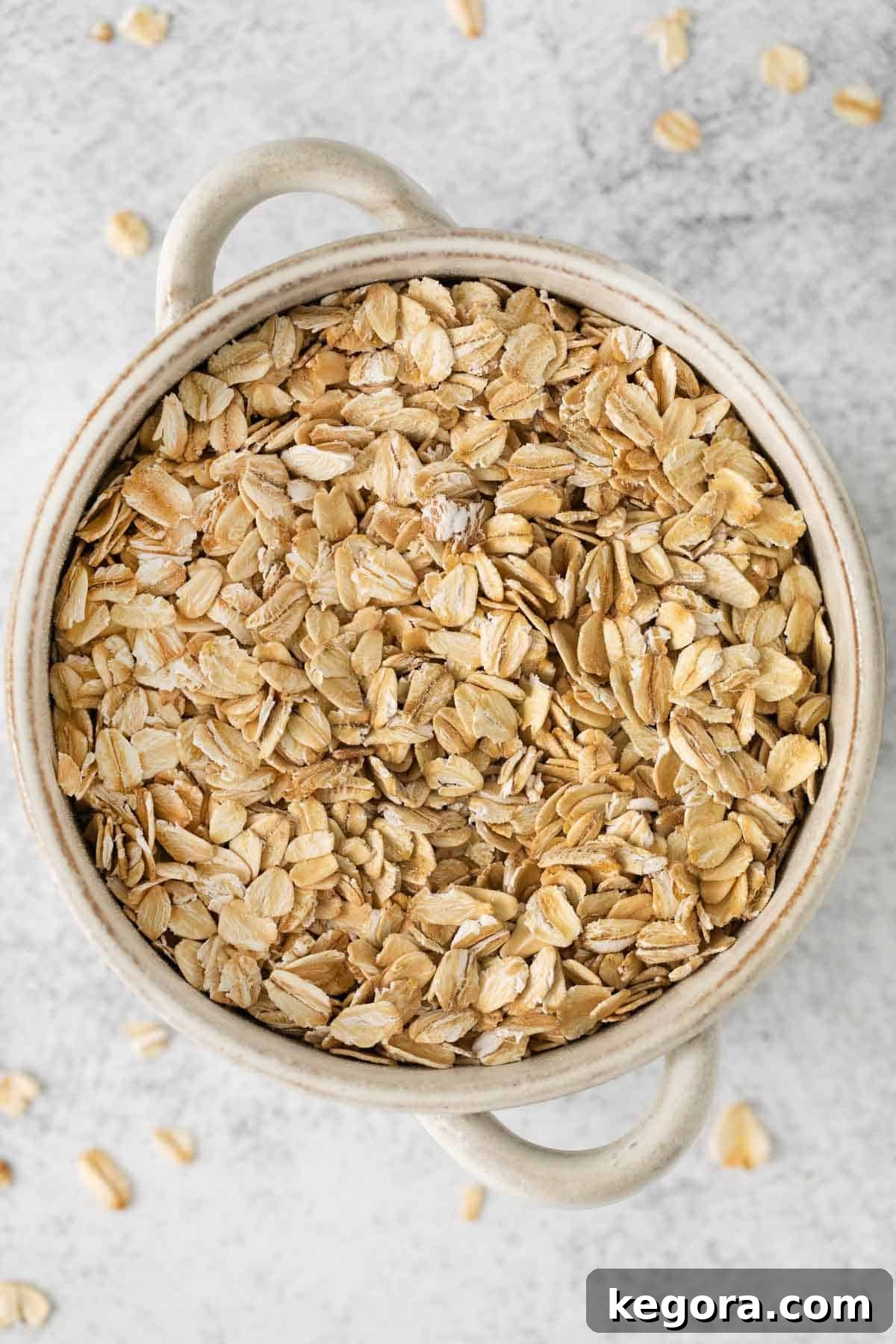
Are Oats Truly Gluten-Free? Navigating Certified Oats
It’s a common misconception that all oats are gluten-free by nature. While oats themselves do not contain gluten proteins (gliadin and glutenin) like wheat, barley, and rye, the reality is more complex: not all oats are safe for individuals with Celiac disease or severe gluten sensitivity.
The Risk of Cross-Contamination:
The primary reason conventional oats may contain gluten is due to a high risk of cross-contamination. This can occur at several stages:
- Field Contamination: Oats are often grown in rotation with wheat, barley, or rye, or in adjacent fields. Grains can intermingle during harvesting.
- Transportation: Oats may be transported in vehicles previously used for gluten-containing grains.
- Processing Facilities: The most significant risk comes from processing facilities that handle both gluten-free and gluten-containing grains on shared equipment. Without stringent cleaning protocols, residue from wheat, barley, or rye can easily contaminate the oats.
This means that regular, uncertified oats may indeed contain detectable levels of gluten, making them unsafe for those who must adhere to a strict gluten-free diet.
The Importance of Certified Gluten-Free Oats:
To ensure safety for individuals with Celiac disease or gluten sensitivity, it is absolutely paramount to use certified gluten-free oat flour (I highly recommend Bob’s Red Mill). These oats are specifically processed to avoid contamination and meet strict gluten-free standards.
What “Certified Gluten-Free” Means:
Certified gluten-free oats are typically processed in dedicated gluten-free facilities or under strict “Purity Protocol” standards. This means they are:
- Grown with Care: Often grown in fields where wheat has not been planted recently.
- Harvested and Transported Separately: Using dedicated equipment and transport to prevent commingling.
- Processed in Dedicated Facilities: Or thoroughly cleaned facilities that are regularly tested for gluten.
- Tested Rigorously: Products are tested to ensure they contain less than 20 parts per million (ppm) of gluten, which is the international standard for “gluten-free.” This level is considered safe for most individuals with Celiac disease.
Therefore, when selecting oat flour or whole oats for your baking, always look for a clear “Certified Gluten-Free” label on the packaging. This certification provides peace of mind and ensures the product is safe for those with gluten sensitivities. If you choose to make homemade oat flour from whole oats, be sure to purchase certified gluten-free rolled oats or quick oats.
For a more in-depth discussion on this topic, check out this full post on are oats gluten-free!
Frequently Asked Questions About Oat Flour Substitution
For gluten-free baking, several flours can effectively replace oat flour. Excellent choices include sorghum flour, buckwheat flour, millet flour, brown rice flour, and commercially available gluten-free 1:1 baking flour blends. These alternatives generally share similar textural and absorption properties, making them reliable substitutes without drastically altering your recipe’s outcome.
If you are adhering to a gluten-free diet, a high-quality 1:1 gluten-free flour blend is typically the closest and most convenient alternative to oat flour, as these blends are formulated to mimic the behavior of all-purpose flour. For those who are not gluten-free, whole wheat flour or even all-purpose white flour can serve as suitable substitutes, though precise measurements by weight and potential liquid adjustments are recommended due to differences in density and gluten content.
Yes, you can use normal all-purpose wheat flour in place of oat flour, but several important considerations apply. Firstly, oat flour is significantly lighter than regular flour by volume, so for accurate substitution, it is crucial to measure by weight rather than by cup. Secondly, and critically, normal flour contains gluten, which oat flour does not. This fundamental difference will impact the texture, elasticity, and rise of your baked goods, particularly in recipes where gluten plays a major structural role. Be prepared for potentially different results in terms of crumb and chewiness.
DELICIOUS OAT FLOUR RECIPES TO TRY
Oat Flour Waffles
Oat Flour Banana Bread
Oat Flour Brownies
Oat Flour Chocolate Chip Cookies
Oat Flour Muffins (Endless Mix-Ins!)
Oat Flour Pancakes
The Bottom Line on Baking with Oat Flour
Oat flour offers a fantastic gluten-free alternative to traditional wheat flour, providing added nutritional benefits and a pleasant, neutral flavor to your baked goods. However, its success as a substitute hinges on understanding its distinct properties, particularly its lack of gluten and higher fiber content. While oat flour can shine in recipes for tender cookies, brownies, and certain cakes, it’s generally not a direct substitute for all-purpose flour in recipes that heavily rely on gluten for structure, such as yeast breads or light, airy quick breads, where it can lead to crumbly or dense results.
For optimal outcomes, prioritize using recipes specifically developed for oat flour. If experimenting with substitutions, begin with partial replacements and be prepared to adjust liquid content or incorporate binders like xanthan gum. When seeking alternatives to oat flour, gluten-free options like sorghum, buckwheat, millet, or brown rice flour are excellent choices. Crucially, always ensure you are using certified gluten-free oat flour to avoid cross-contamination, especially if baking for individuals with Celiac disease.
Embrace the unique characteristics of oat flour, and with a little knowledge and practice, you’ll unlock a world of delicious and wholesome gluten-free baking!