
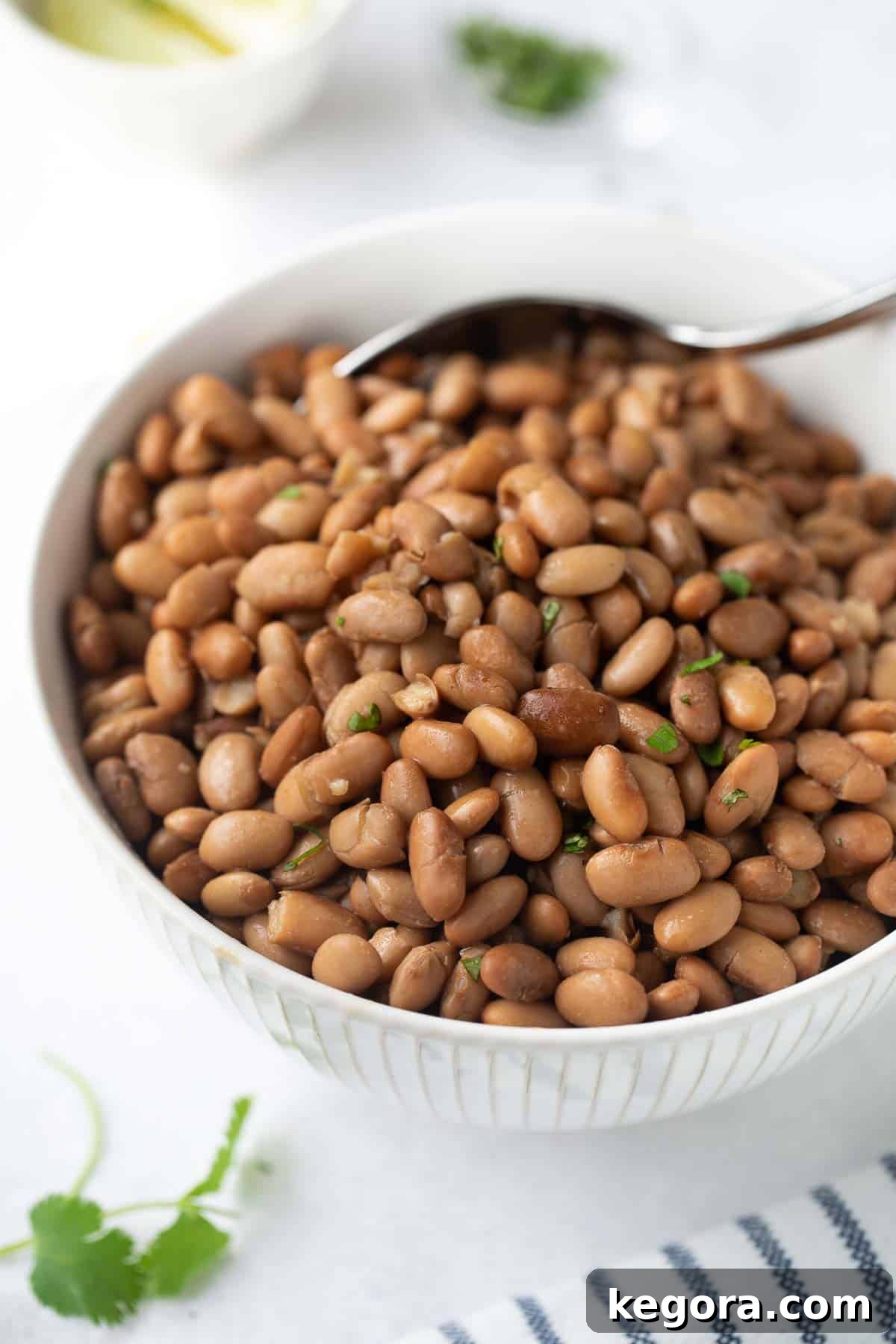
Slow-cooker pinto beans are the ultimate pantry hero – incredibly affordable, packed with flavor, and wonderfully versatile! Learning how to transform dry pinto beans into a delicious, wholesome meal has never been easier, all thanks to the magic of your slow cooker. Say goodbye to canned beans and hello to a homemade staple that will revolutionize your weeknight dinners.
For more effortless slow-cooker meals, don’t miss our Slow-Cooker Moroccan Chicken or this hearty Slow-Cooker Balsamic Roast Beef.
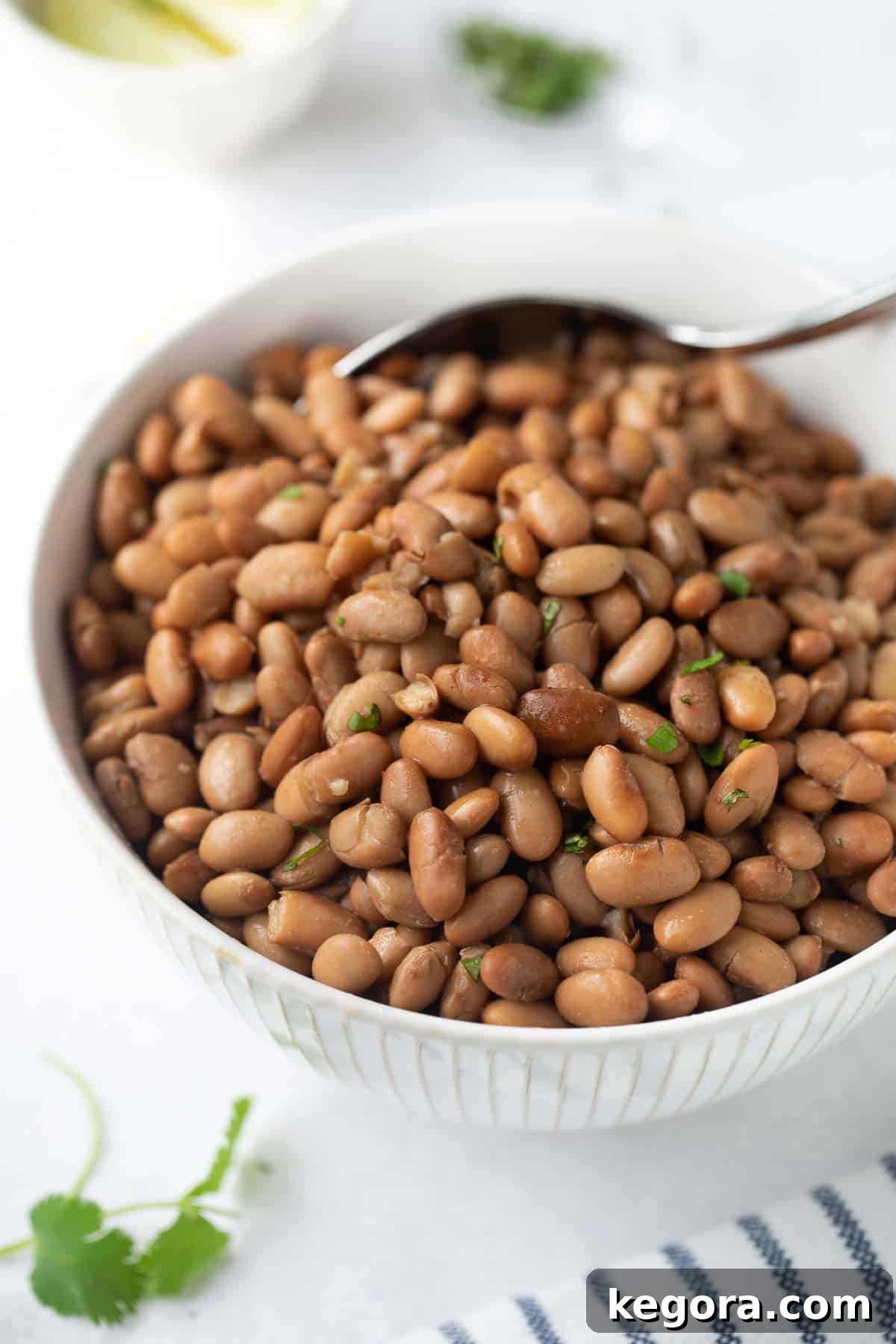
Many of us have bags of dried beans tucked away in the deepest corners of our pantries. For some reason, the idea of cooking them from scratch can feel a bit daunting, shrouded in myths about endless cooking times and complicated preparation. Despite knowing how incredibly delicious and beneficial they are, these humble legumes often remain untouched, eventually becoming forgotten relics. Well, the time has come to unleash their full potential! It’s time to pull those dry pinto beans out into the light and prepare to create the most incredibly tender, flavorful beans you’ve ever tasted, all with minimal effort thanks to your trusty slow cooker.
Embrace the Simplicity: Why Slow Cooker Pinto Beans?
The slow cooker is an absolute game-changer when it comes to preparing dried beans. It transforms a seemingly complex task into a hands-off, fuss-free experience. Instead of standing over a stovetop, constantly monitoring boiling water, you simply combine your ingredients, set the dial, and let time work its magic. This low-and-slow cooking method is ideal for beans, ensuring they cook evenly, become wonderfully tender, and absorb all the incredible flavors you add. It prevents the scorching that can happen on a stovetop and yields a consistently creamy texture that’s hard to beat.
Beyond the convenience, slow cooking also deepens the flavor profile of the pinto beans. The extended cooking time allows the aromatics and spices to truly meld, infusing every bean with rich, savory notes. This results in a much more satisfying and flavorful dish compared to fast-cooked or even canned varieties. Plus, cooking beans from scratch means you have complete control over the ingredients, avoiding unwanted additives or excessive sodium often found in store-bought options.
Discovering the Pinto Bean: A Versatile Legume
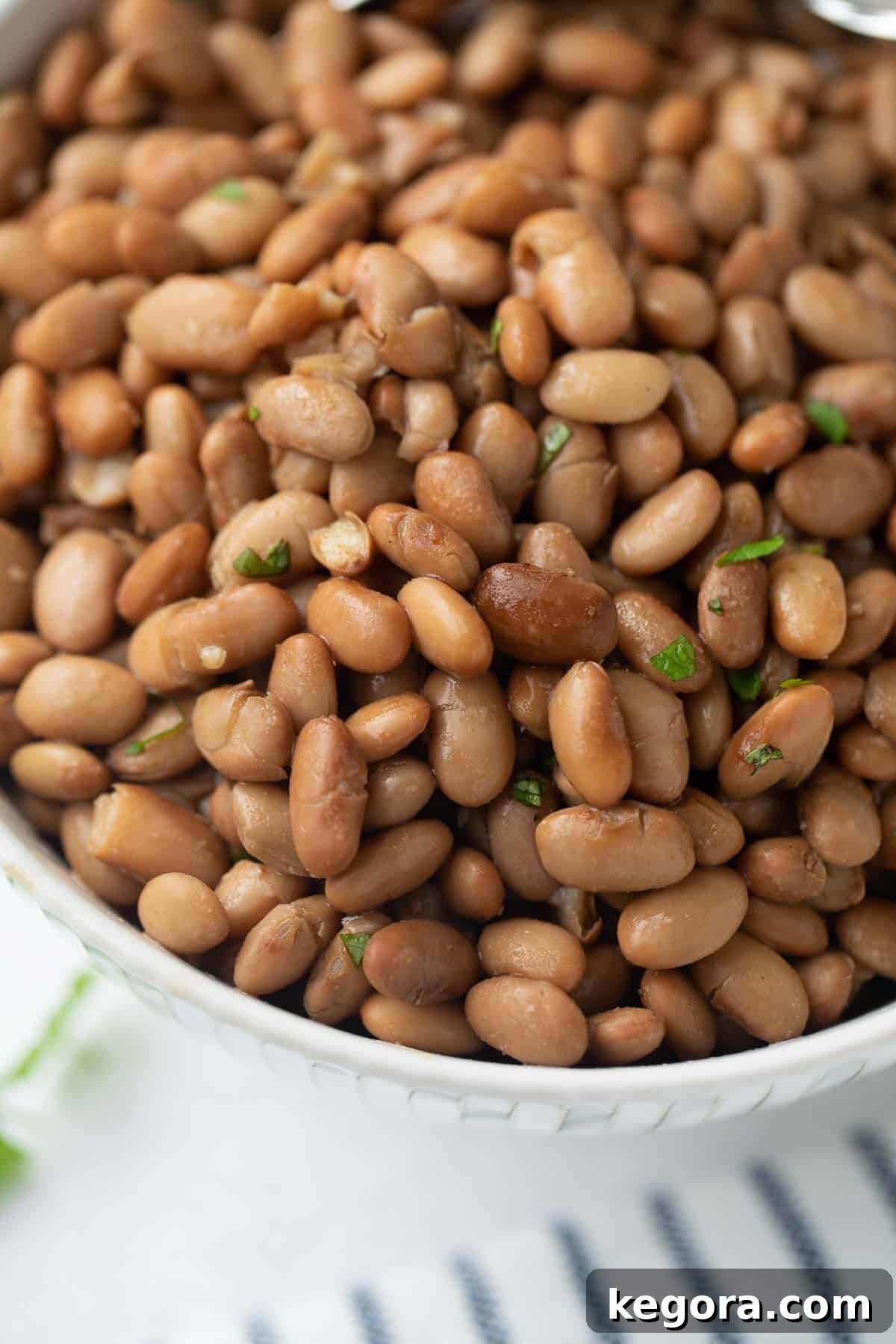
Pinto beans are instantly recognizable by their mottled, speckled appearance, ranging in color from light tan to a reddish-brown. The name “pinto” itself comes from the Spanish word for “painted,” perfectly describing their unique patterned skin. These beautiful beans are a member of the legume family, which includes other nutritious foods like peas, peanuts, and lentils. They are celebrated worldwide for their mild, earthy flavor and creamy texture when cooked, making them incredibly adaptable to a wide range of culinary traditions.
Why Pinto Beans Are a Culinary Favorite:
- Unbeatable Affordability: Dry beans are one of the most budget-friendly food staples you can buy. They offer a fantastic source of plant-based protein and fiber, allowing you to create satisfying, nutrient-dense meatless meals without breaking the bank. Purchasing them in bulk can lead to even greater savings, making them an excellent choice for family meals and meal prepping.
- Exceptional Shelf Life: Dry pinto beans, along with most other dry bean varieties, boast an impressively long shelf life. Stored correctly in a cool, dark, and dry place, they can remain fresh and viable for many months, often a year or even longer. This makes them a perfect pantry item to stock up on, ensuring you always have a wholesome ingredient ready for your next meal.
- Nutritional Powerhouse: Pinto beans are a powerhouse of nutrition. They are an excellent source of dietary fiber, which aids digestion, promotes satiety, and helps regulate blood sugar levels. They also provide significant amounts of plant-based protein, making them a superb option for vegetarians, vegans, and anyone looking to reduce their meat consumption. Furthermore, pinto beans are rich in essential vitamins and minerals, including folate, iron, magnesium, and potassium, contributing to overall health and well-being.
These slow-cooker pinto beans are delicious enough to stand alone, but they also make a perfect accompaniment to many dishes. You might also enjoy these recipes for Easy Gluten-Free Tacos and our homemade Gluten-Free Taco Seasoning. Serve them alongside a hearty dish like Creamy Chicken Enchiladas. And for another flavorful Mexican-inspired dish, be sure to check out this Chipotle-Inspired Gluten-Free Chicken recipe.
Preparing Dry Pinto Beans for Slow Cooking
The journey from dry beans to a tender, flavorful dish begins with proper preparation. While it requires a little foresight, these steps are straightforward and crucial for the best results.
Sorting Your Dry Beans
Before you begin cooking your slow-cooker pinto beans, a vital first step is to sort them. This simply means spreading the dry beans out and inspecting them for any unwanted elements. Despite modern packaging, it’s not uncommon to find small pebbles, dirt clods, or shriveled beans mixed in. Taking a few moments for this step ensures a pleasant and safe eating experience.
- Spread: Pour the dry pinto beans onto a clean, light-colored plate, baking sheet, or cutting board. This allows for easy visibility.
- Inspect and Remove: Carefully look through the beans, removing and discarding any foreign objects, discolored beans, or broken pieces.
- Rinse Thoroughly: Once sorted, place the beans in a colander and rinse them under cold, running water. Agitate them with your hands to remove any lingering dust or surface dirt.

The Essential Step: Soaking Pinto Beans
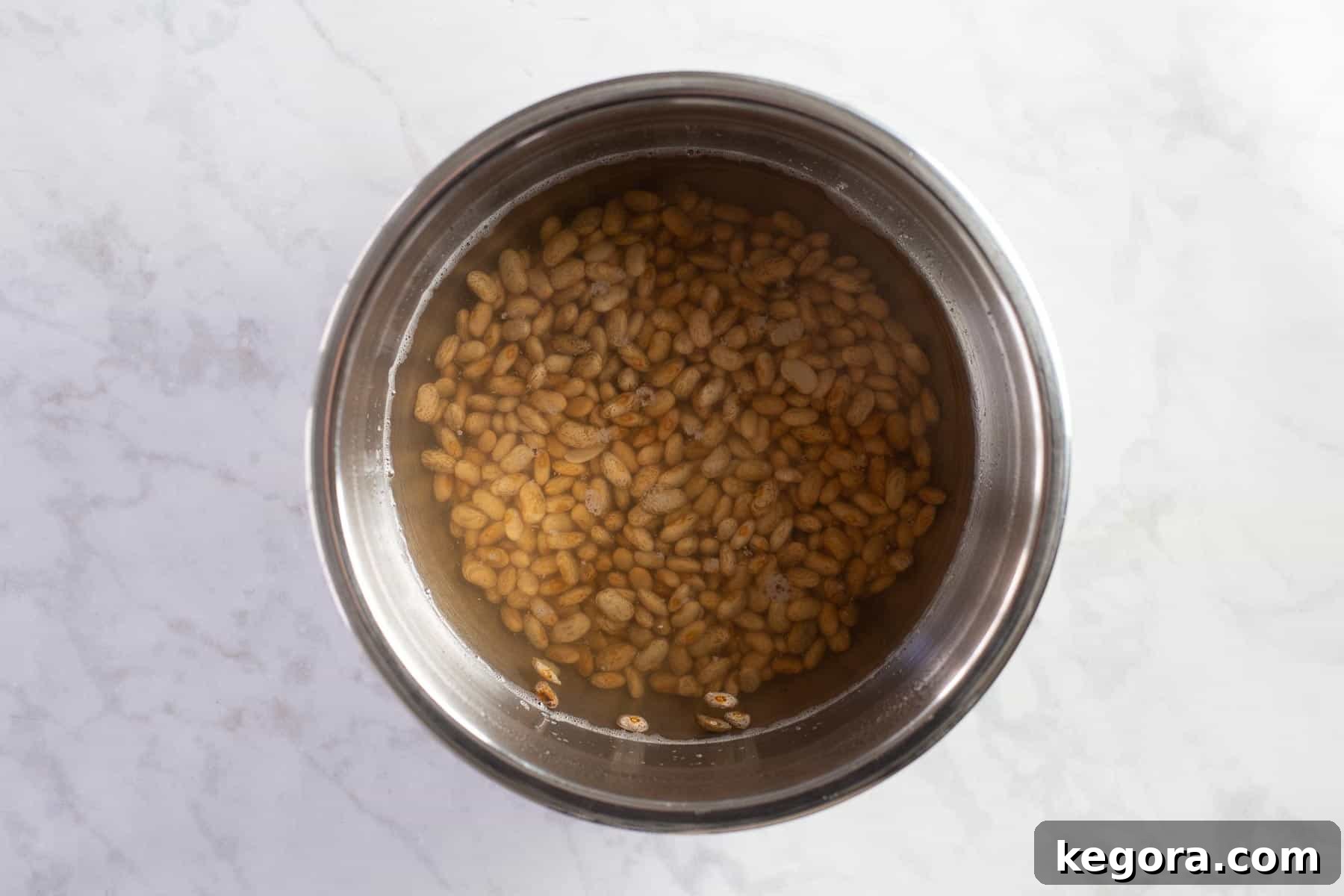
Soaking pinto beans is often debated, but for this slow-cooker recipe, and for optimal digestion and cooking time, it’s highly recommended. Soaking offers several key benefits:
- Reduces Gas-Causing Compounds: Beans contain complex carbohydrates (oligosaccharides) that can be difficult for our digestive system to break down, leading to gas and discomfort. Soaking helps to dissolve many of these compounds into the soaking water, which is then discarded.
- Improves Nutrient Absorption: Dry beans also contain phytic acid, an anti-nutrient that can bind to minerals like iron and zinc, making them less available for absorption by your body. Soaking helps to reduce phytic acid levels, enhancing the nutritional value of your beans.
- Significantly Decreases Cooking Time: This is arguably the most important practical reason for soaking. By absorbing water, the beans soften considerably, drastically reducing the time needed to cook them until tender. Unsoaked beans can take at least twice as long to cook, sometimes even longer, in a slow cooker.
- Promotes Even Cooking: Soaking ensures the beans cook more uniformly, resulting in a consistent texture throughout the batch.
To soak your pinto beans: Place the sorted and rinsed beans into a large mixing bowl or pot. Cover them generously with cold tap water, ensuring the water level is several inches above the beans, as they will expand significantly. Allow them to soak overnight, typically 8-12 hours. Alternatively, for a quick soak, you can boil the beans for 5 minutes, then remove them from heat, cover, and let them stand for 1 hour before draining and rinsing.
Important Note: Always discard the soaking water. Do not use it for cooking, as it contains the very compounds you aimed to remove.
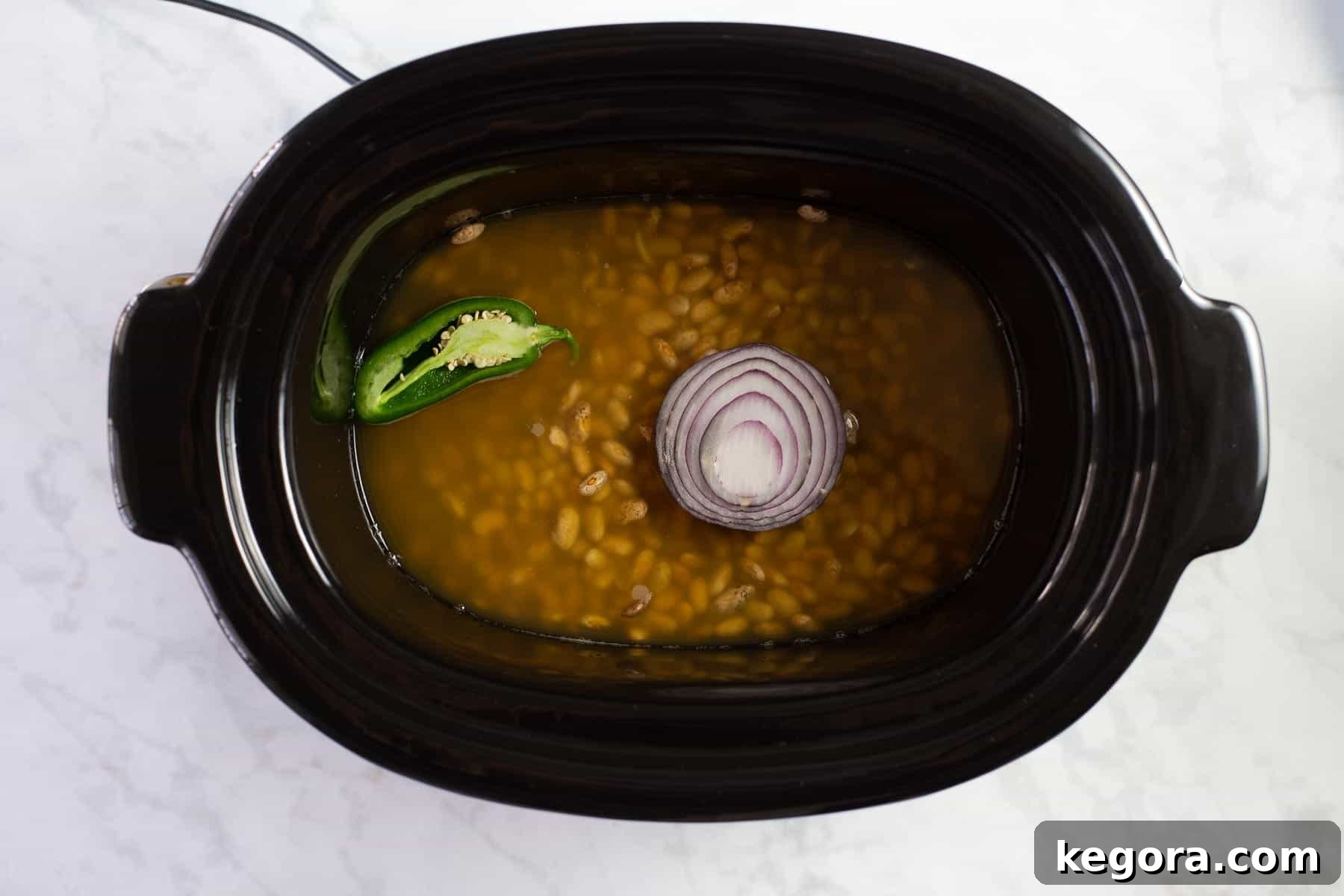
The Easy Way: How to Make Slow-Cooker Pinto Beans
Once your pinto beans are sorted and soaked, the hard part is over! The slow cooker takes care of the rest, transforming simple ingredients into a deeply flavorful and satisfying dish. After the overnight soak, drain the beans completely and rinse them thoroughly under cold water one last time. This ensures all the beneficial effects of soaking are maximized.
Now, add your prepared beans into the slow cooker along with the remaining ingredients:
- Chicken Stock: This forms the flavorful liquid base. You can use homemade or store-bought. For a vegetarian or vegan version, simply substitute with vegetable stock.
- Onion: A whole or halved onion (white, yellow, or red are all excellent choices) adds a fundamental layer of savory aroma and sweetness to the beans. It will soften and infuse the liquid beautifully.
- Jalapeño: For a touch of mild heat and vibrant flavor. If you prefer less spice, remove the seeds and membranes before adding, or for a completely mild version, use a banana pepper or simply omit it.
- Worcestershire Sauce: This secret ingredient adds an incredible depth of umami and complex savory notes that truly elevate the flavor profile of the beans.
- Garlic: Minced fresh garlic is indispensable for its pungent, aromatic qualities that are key in almost any savory dish.
- Cumin: This warm, earthy spice is a cornerstone of Mexican and Southwestern cuisine, providing authentic flavor to your pinto beans.
- Chili Powder: A blend of spices, chili powder adds another layer of mild heat and robust flavor, complementing the cumin perfectly.
- Salt: Essential for seasoning, but it’s often best to add a portion during cooking and adjust to taste at the end. Adding too much salt at the beginning can sometimes prevent beans from softening properly.
- Black Pepper: A classic seasoning that provides a subtle bite and enhances all the other flavors.
Give everything a good stir to ensure all the ingredients are well combined and the beans are coated with the spices. Secure the lid on your slow cooker and set it to low power. Allow the beans to cook for 6-8 hours. The long, gentle cooking time will render them incredibly tender and allow all the flavors to meld together beautifully.
Once the cooking time is complete, carefully remove the onion and jalapeño halves from the slow cooker. Taste the beans and adjust the seasoning with additional salt and pepper as needed. Your perfectly cooked slow-cooker pinto beans are now ready to be enjoyed! Try serving them as a hearty side dish or as the star of your next meal with easy chicken enchiladas!
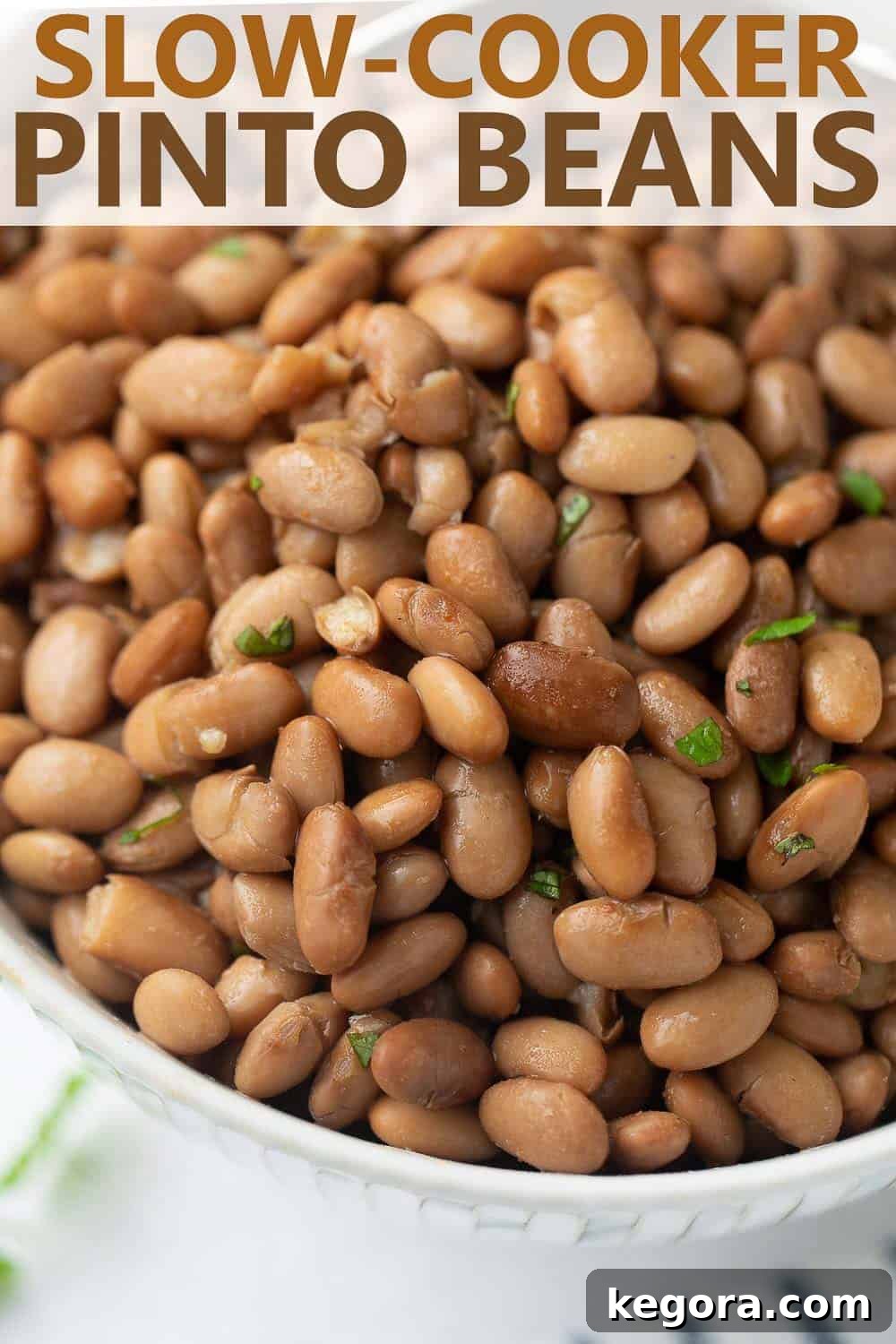
Creative Ways to Enjoy Your Versatile Pinto Beans
While these slow-cooker pinto beans are incredibly flavorful and satisfying on their own, their true magic lies in their versatility. They can be incorporated into countless dishes, adding flavor, texture, and nutritional value. Here are some fantastic ways to enjoy your homemade pinto beans:
- Hearty Breakfast or Side Dish: For a simple yet satisfying meal, fry some bacon or chorizo until crispy. Drain any excess grease, then add a portion of the cooked pinto beans to the pan. Mash some of the beans with the bacon or chorizo for an extra rich and creamy texture. Serve alongside fluffy Gluten-Free Corn Muffins for a complete and comforting meal.
- Taco & Burrito Filling: These beans are an ideal filling for tacos, burritos, or quesadillas. Serve them with warm gluten-free tortillas and our Slow-Cooker Island Pork Tenderloin for a Mexican-inspired feast. They also make a fantastic vegetarian option on their own, topped with cheese, salsa, and avocado.
- Authentic Charro Beans: Transform your basic pinto beans into authentic Mexican charro beans (frijoles charros). After cooking, stir in some crispy sliced jalapeños, chopped cooked bacon, diced fresh tomatoes, and a generous sprinkle of fresh cilantro. The blend of smoky, spicy, and fresh flavors is simply irresistible.
- Southwestern Skillet Meals: Enhance your existing recipes with the creamy goodness of pinto beans. Use them instead of kidney beans in dishes like our Skillet Southwest Chicken and Quinoa for an even deeper, more authentic Mexican flavor profile.
- Stuffed in Pupusas or Arepas: For a delightful twist, drain and lightly mash the pinto beans (or leave them whole if preferred) and use them as a savory filling for traditional Latin American dishes like pupusas or arepas. They add incredible flavor and substance.
- Creamy Bean Dip: Drain the cooked pinto beans, mash them until smooth, and then mix them with your favorite guacamole. This creates an incredibly flavorful, healthy, and satisfying dip perfect for tortilla chips or fresh veggies. Add a squeeze of lime juice for brightness.
- Chili Base: These tender pinto beans form an excellent foundation for any homemade chili. Their creamy texture will enrich the chili, making it heartier and more robust.
- Soup & Stew Enhancer: Stir a cup or two of cooked pinto beans into your favorite soups or stews for added protein, fiber, and body. They are particularly good in vegetable soups or a robust minestrone.
- Healthy Salads: Cooled pinto beans can be a fantastic addition to salads. They add substance and a creamy texture, making your salad more filling and nutritious. Toss them with corn, bell peppers, cilantro, and a lime vinaigrette for a zesty bean salad.
- Vegetarian Bean Burgers: Mash a portion of the beans and combine with breadcrumbs, spices, and an egg (or flax egg for vegan) to form delicious and healthy vegetarian burger patties.
Slow-Cooker Pinto Beans
Erin Collins
5 mins
8 hrs
8 hrs
8 hrs 5 mins
6 servings
Comments
Ingredients
- 1 pound pinto beans rinsed and picked over
- 1 quart chicken stock
- 1 tablespoon cumin
- 1 tablespoon chili powder
- 1 teaspoon salt
- 1 teaspoon black pepper
- 1/2 onion left whole
- 1/2 jalapeño left whole
- 2 cloves garlic minced
- 1 tablespoon Worcestershire sauce
Instructions
-
The night before cooking, place the dry pinto beans in a large bowl and cover them generously with cold water. Ensure the water level is a few inches above the beans, as they will absorb a significant amount of liquid as they soak and expand.
-
The following day, thoroughly drain the pinto beans and rinse them under cold, running water. Transfer the rinsed beans to your slow cooker. Add the remaining ingredients (chicken stock, onion, jalapeño, Worcestershire sauce, garlic, cumin, chili powder, salt, and black pepper) to the slow cooker and stir well to combine everything.
-
Cover the slow cooker with its lid and cook on the low setting for 6-8 hours, or until the beans are tender. Once cooked, carefully remove and discard the whole onion and jalapeño halves. Taste the beans and adjust the seasoning with additional salt and pepper as needed before serving. Enjoy your delicious, homemade pinto beans!
Nutrition
Carbohydrates: 28g |
Protein: 11g |
Fat: 2g |
Cholesterol: 4mg |
Sodium: 665mg |
Potassium: 575mg |
Fiber: 7g |
Sugar: 3g |
Vitamin A: 420IU |
Vitamin C: 3.6mg |
Calcium: 60mg |
Iron: 3mg
Troubleshooting & Frequently Asked Questions
Even with the simplicity of slow cooking, a few common questions and issues can arise. Here’s how to address them:
- “Why are my pinto beans still hard after cooking?”
This is a common concern. Several factors can contribute:
- Old Beans: Very old dry beans (over a year) can become incredibly difficult to soften, regardless of soaking or cooking time. Try to use fresher beans for best results.
- Insufficient Soaking: If beans weren’t soaked long enough (at least 8 hours for an overnight soak), they will naturally take much longer to cook.
- Too Much Salt Too Early: While a little salt is added in this recipe, adding a large amount of salt or acidic ingredients (like tomatoes, lemon juice) at the very beginning of cooking can sometimes toughen the bean skins, preventing them from becoming fully tender. It’s best to add most of your salt towards the end of the cooking process.
- Not Enough Liquid: Ensure your beans are fully submerged in liquid throughout the cooking process.
- “Can I cook pinto beans in the slow cooker without soaking them?”
Yes, you can, but it’s not recommended for this recipe’s specified cooking time. If you choose not to soak, you will need to significantly increase the cooking time, often to 10-12 hours or even longer on low, and ensure there is plenty of liquid. The benefits of soaking (reduced gas, better nutrient absorption, faster cook time) are significant enough that it’s generally worth the extra step.
- “How can I make this slow-cooker pinto bean recipe vegetarian or vegan?”
It’s very easy! Simply substitute chicken stock with an equal amount of good quality vegetable stock. All other ingredients in this recipe are plant-based. If serving, ensure any toppings or accompaniments (like cornbread) are also vegetarian/vegan.
- “Can I use canned pinto beans with this recipe?”
While canned pinto beans are already cooked, this recipe is specifically designed for dry beans and the long, slow cooking process. If you want to use canned beans, you would not follow the slow cooker instructions. Instead, drain and rinse canned beans, then simmer them on the stovetop with the seasonings for about 20-30 minutes to allow the flavors to meld. The texture and depth of flavor will, however, be different from truly slow-cooked dry beans.
- “How do I store and reheat leftover pinto beans?”
Cooked pinto beans store beautifully. Allow them to cool completely, then transfer them to an airtight container. They will last for 4-5 days in the refrigerator. For longer storage, freeze them in freezer-safe containers or bags for up to 3 months. When reheating, you might need to add a splash of water or broth to reach your desired consistency, especially if reheating from frozen.
Conclusion: The Ultimate Easy & Healthy Staple
There you have it – the comprehensive guide to making delicious, comforting slow-cooker pinto beans from scratch. This recipe demystifies the process, turning a humble bag of dry beans into an incredibly flavorful, nutritious, and economical meal. Whether you serve them as a simple side, the star of a vegetarian feast, or as a versatile ingredient in countless dishes, these pinto beans are sure to become a cherished staple in your kitchen. So, take the plunge, embrace the slow cooker, and enjoy the rich rewards of homemade beans!