
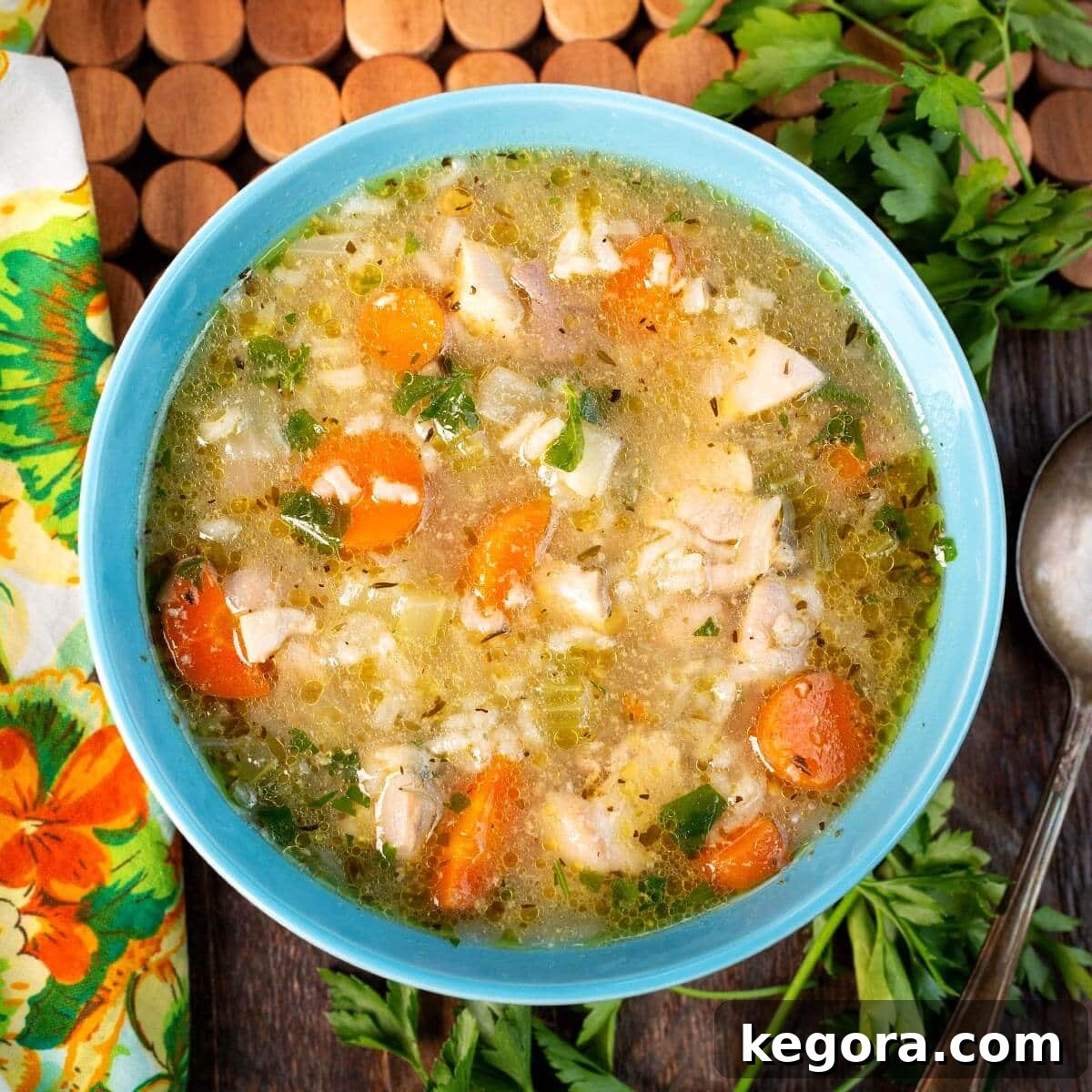
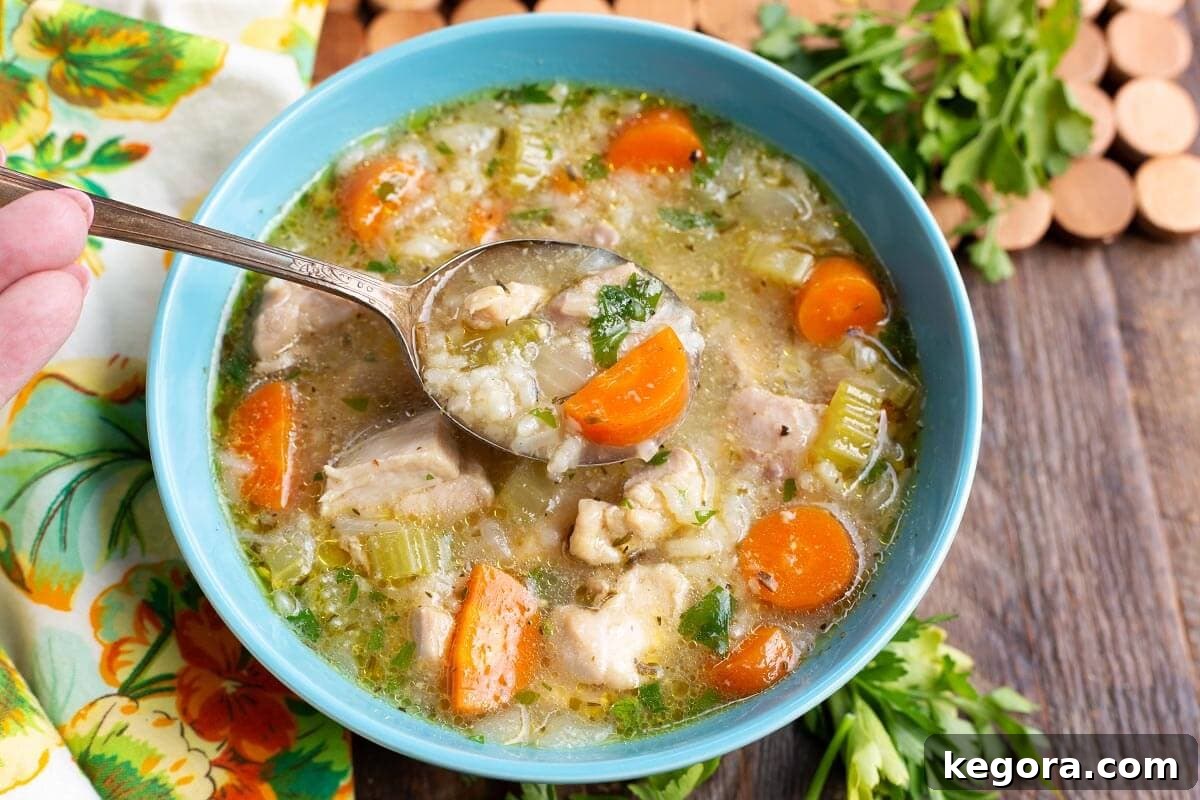
In the realm of comforting, wholesome meals, few dishes rival the universal appeal of a hearty chicken and rice soup. But what if you could achieve that rich, slow-cooked flavor in a fraction of the time? Enter **Instant Pot Chicken Rice Soup** – a culinary marvel that delivers tender, juicy chicken, perfectly cooked rice, fresh vibrant vegetables, and a deeply flavorful broth, all crafted effortlessly in your pressure cooker. This isn’t just soup; it’s a warm embrace in a bowl, ideal for the chilly embrace of soup season, a quick and satisfying weeknight dinner, or a nourishing pick-me-up when you need a bit of comfort. Forget bland, watery versions; this homemade Instant Pot Chicken Rice Soup bursts with fresh, authentic taste, transforming simple ingredients into an extraordinary comfort food experience.
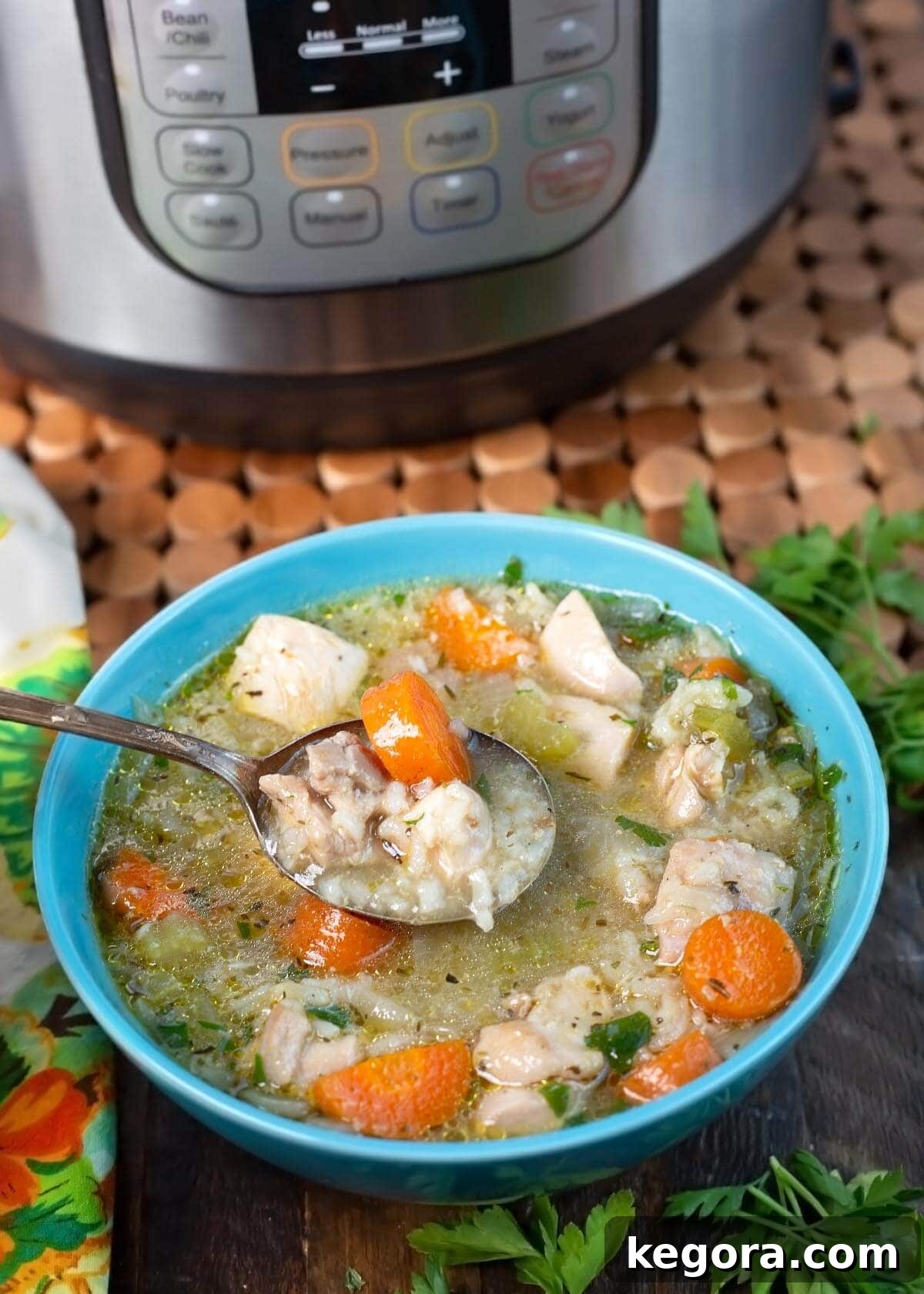
Instant Pot Chicken Rice Soup: Your Ultimate Comfort Food Guide
If you’re seeking a genuinely delicious and effortlessly prepared soup for your Instant Pot, look no further. This pressure cooker chicken and rice soup recipe is a true standout. It’s a robust and satisfying soup, made with humble ingredients that coalesce into a symphony of incredible flavor. Beyond its delightful taste, this recipe is a testament to the Instant Pot’s ability to create rich, complex dishes with minimal fuss, making it a staple for busy families and comfort-seekers alike.
This particular chicken soup holds a special place in my heart as one of my absolute favorite recipes. It’s my go-to when I crave a soul-soothing meal on crisp, chilly days, or when I’m feeling under the weather and need something truly restorative. It’s the soup I lovingly prepare for our grandchildren, and the comforting dish I often share with friends and neighbors who could use a little warmth and care. Its simplicity and profound comfort make it more than just a meal; it’s an act of love.
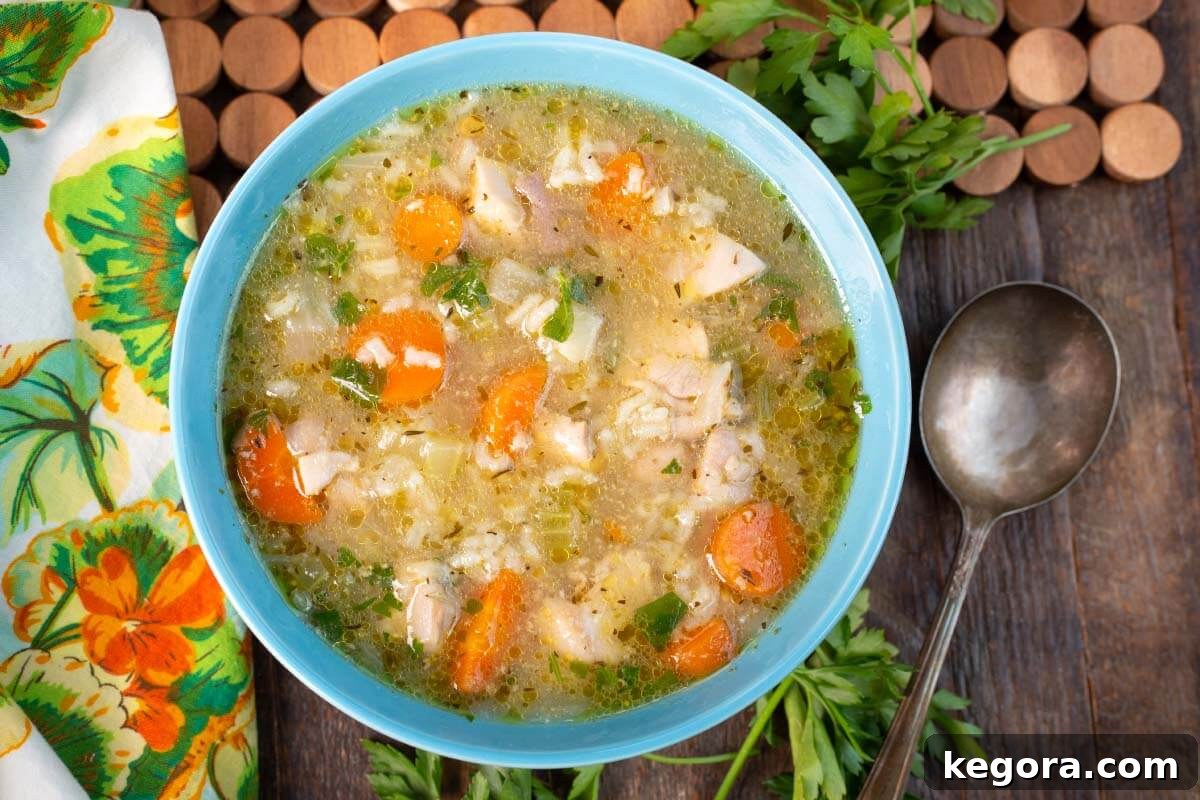
Why This Pressure Cooker Chicken and Rice Soup Will Become a Family Favorite
There are countless reasons to adore this Instant Pot Chicken Rice Soup, making it a recipe you’ll revisit again and again:
- Unbeatable Flavor & Nutrition: This chicken soup recipe is not only incredibly delicious but also packed with wholesome ingredients, offering a nourishing meal that tastes like it simmered for hours. The pressure cooker infuses flavors deeply and quickly, resulting in a rich and satisfying broth.
- Effortless Preparation: Designed for convenience, this is an easy recipe to follow, utilizing common, wholesome ingredients you likely already have on hand. The Instant Pot streamlines the cooking process, allowing you to create a gourmet-tasting soup with minimal effort and cleanup. It’s a lifesaver for those busy weeknights.
- Incredible Versatility: One of the best aspects of this soup is its adaptability. Feel free to customize it to your taste preferences! You can easily swap in different vegetables based on what’s in season or what you have available, and experiment with various types of rice to achieve different textures and flavors. This flexibility ensures the soup always feels fresh and exciting.
- Perfect for Any Occasion: Whether it’s a cozy family dinner, a meal prep solution for the week, or a comforting dish to share, this soup fits every scenario. Its universal appeal makes it a go-to recipe for any time of year, especially comforting during cooler weather or when someone needs a culinary hug.
- Budget-Friendly: Made with readily available and often inexpensive ingredients, this soup is a fantastic option for feeding a crowd without breaking the bank. It makes the most of chicken thighs and pantry staples, turning them into a luxurious and filling meal.
Essential Ingredients for Your Perfect Chicken Rice Soup
Crafting this flavorful Instant Pot Chicken Rice Soup starts with a foundation of simple, quality ingredients. Each component plays a crucial role in building the soup’s depth and character:
- Olive Oil: The base for sautéing, olive oil imparts a subtle richness and helps unlock the flavors of the vegetables. For an added layer of indulgence, you can use pure olive oil or a delightful mix of olive oil and a pat of butter.
- Onion, Carrot, Celery (Mirepoix): This classic aromatic trio forms the backbone of any great soup. When sautéed, these fresh vegetables release their sweet and savory essences, creating the perfect flavorful foundation for a robust chicken broth. Dice them uniformly for even cooking.
- Bay Leaf: Always a welcome addition to soups and stews, one or two bay leaves contribute a subtle, aromatic, and slightly herbaceous depth that enhances the overall flavor profile without overpowering the other ingredients. Remember to remove them before serving.
- Boneless Skinless Chicken Thighs: Chosen for their superior tenderness and juiciness, chicken thighs hold up beautifully under pressure cooking. They impart a richer flavor to the broth compared to breasts. However, you can easily substitute with boneless skinless chicken breasts if preferred, just be mindful of potential shredding during pressure cooking.
- Garlic: Minced fresh garlic is a powerhouse of savory flavor, essential for adding warmth and complexity to the soup. If fresh garlic isn’t available, a good quality garlic powder can be used as a convenient substitute, though fresh is always recommended for maximum impact.
- Herbs (Dried Thyme & Italian Seasoning): A thoughtful blend of dried herbs elevates this chicken rice soup. Dried thyme brings an earthy, slightly minty note, while Italian seasoning—a blend typically containing oregano, basil, rosemary, and marjoram—adds a fragrant, savory dimension. Both fresh and dried herbs work well; adjust quantities accordingly (generally, use more fresh herbs than dried).
- Salt & Black Pepper: These essential spices are more than just seasonings; they are flavor enhancers. They awaken and balance the natural tastes of all the ingredients, bringing the entire soup to life. Always taste and adjust to your preference at the end of cooking.
- Rice: This recipe primarily utilizes long-grain white rice, which cooks up soft and absorbs the savory broth beautifully. Its texture is ideal for a comforting soup. While white rice is specified, you have flexibility here (more on this below).
- Chicken Broth / Chicken Stock: The liquid base of your soup, good quality chicken broth or stock is critical for a rich flavor. Whether you opt for homemade for superior depth or a reliable store-bought option for convenience, ensure it’s low-sodium if you want to control the salt content.
- Fresh Parsley: A vibrant garnish added after cooking, chopped fresh parsley brightens the soup with its fresh, clean, and slightly peppery notes. It adds both visual appeal and a burst of herby flavor that complements the richness of the soup.
- Fresh Lemon Juice: A squeeze of fresh lemon juice at the end of cooking is a game-changer. It adds a crucial touch of acidity and brightness, cutting through the richness and making all the flavors pop. It’s an optional but highly recommended finish.
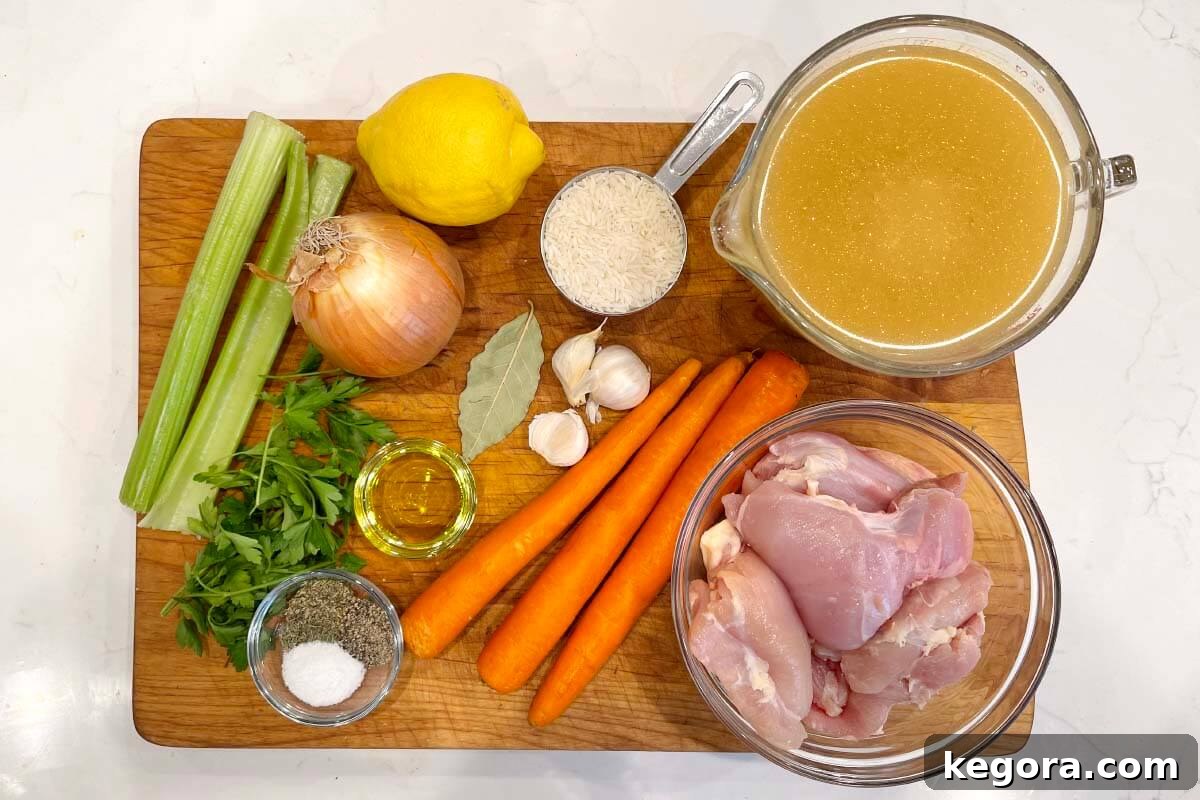
These simple ingredients, thoughtfully combined, are the secret to a truly great tasting and deeply satisfying chicken rice soup!
Choosing the Right Rice for Your Instant Pot Chicken Soup
The type of rice you choose can significantly impact the texture and cooking time of your Instant Pot Chicken Rice Soup. While this recipe is optimized for white rice, here’s a guide to other popular options:
- White Rice (Long Grain, Jasmine, Basmati):
- This recipe, as written, calls for long-grain white rice, which yields a soft and comforting texture that many adore in chicken soup. It cooks perfectly in the same amount of time as the chicken and vegetables.
- Jasmine rice can also be used for a slightly more aromatic soup with a similar soft texture.
- Basmati rice, known for its distinct fragrance and longer grains, works well too but might retain a bit more chewiness.
- Brown Rice (Regular or Quick-Cooking):
- Regular brown rice requires a significantly longer cooking time (typically 12 minutes high pressure with a 10-minute natural pressure release) compared to white rice. If using regular brown rice, you’ll need to adjust the chicken and vegetable preparation. Consider using larger cuts of chicken (like whole chicken thighs or whole chicken breasts) so they don’t become overly tender or shred prematurely during the extended cook time. Similarly, cut your vegetables larger to prevent them from becoming too soft or mushy.
- Alternatively, for a quicker solution, you can use quick-cooking brown rice (often labeled as “parboiled brown rice”) or simply cook brown rice separately and add it to the soup after the chicken and vegetables have finished pressure cooking.
- As brown rice cooks, it releases more starches, which can contribute to a wonderfully creamy texture in the soup.
- Wild Rice Blend:
- A wild rice blend can add a delightful chewy texture and earthy flavor to your soup, making it a more gourmet option.
- Be aware that the cooking time for wild rice blends can vary greatly depending on the specific varieties included. You may need a slightly longer cook time than white rice. (While not personally tested for this exact recipe, it would likely fall between white and brown rice cook times).
- Similar to brown rice, if using a blend with longer cooking grains, consider the impact on your chicken and vegetables.
Should You Cook the Rice Before Adding to the Soup?
For the ultimate convenience and flavor integration in this Instant Pot Chicken Rice Soup:
- Use uncooked rice for this recipe. The beauty of the Instant Pot is that the white rice cooks simultaneously and perfectly within the same amount of time as the chicken and vegetables. This method ensures that the rice absorbs all the rich flavors of the broth, resulting in a cohesive and delicious soup.
- If you prefer to use cooked rice (perhaps to use up leftovers or to avoid mushy vegetables with longer-cooking rice types), simply add it to the soup after the pressure cooking cycle has completed. This allows you to maintain better control over the texture of the rice.
Using Frozen Chicken in Your Instant Pot Soup
Life happens, and sometimes frozen chicken is all you have on hand. Good news – you can absolutely use frozen raw chicken breasts or thighs in this Instant Pot Chicken Rice Soup recipe with a few minor adjustments:
- Add After Sautéing: Since frozen chicken doesn’t sauté well and can lead to uneven cooking, it’s best to add the frozen chicken pieces directly to the pot after you’ve finished sautéing your vegetables. You can place them on top of the sautéed aromatics before adding the broth and other ingredients.
- Adjust Cooking Time: When using frozen chicken, the cooking time will need to be increased slightly to ensure it cooks through thoroughly. For frozen chicken, set your Instant Pot to 12 minutes on High Pressure, followed by a 10-minute natural pressure release. This extended time allows the chicken to fully thaw and cook to tender perfection.
- Shred and Return: Once the cooking cycle is complete and pressure has been released, carefully open the lid. Remove the cooked chicken, shred it using two forks, and then return the shredded chicken back into the soup. This ensures every spoonful is packed with tender chicken.
- Consider Rice Type with Frozen Chicken: If you are using frozen chicken, which necessitates a longer pressure cooking time, it presents a perfect opportunity to use brown rice or a wild rice blend. These rice types benefit from longer cook times. If you stick with white rice and frozen chicken, be aware that the white rice might become very soft or even slightly mushy due to the extended cooking. In that case, adding cooked white rice after the soup has finished pressure cooking (and the chicken has been shredded and returned) is a better option for ideal rice texture.
Step-by-Step: How to Make Instant Pot Chicken Rice Soup
Making this hearty Instant Pot Chicken Rice Soup is straightforward. Follow these steps for a perfectly cooked, flavorful meal:
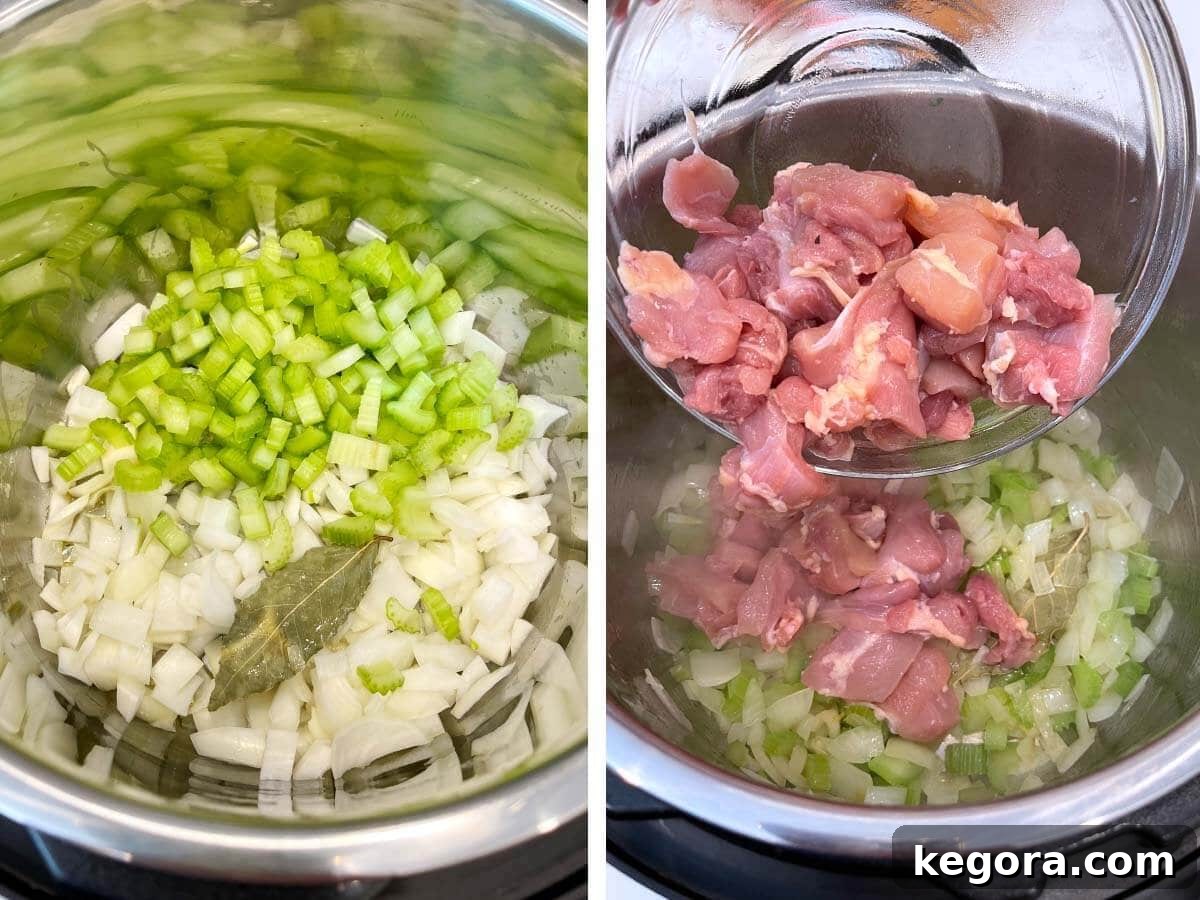
- Step 1: Prep All Ingredients. Begin by preparing all your components. Chop the onion, carrots, and celery into desired sizes (larger if you prefer more texture, smaller for a softer blend). Cube the boneless, skinless chicken thighs into bite-sized pieces for even cooking. Measure out your spices, chicken broth, and any other additions. Efficient preparation makes the cooking process smoother.
- Step 2: Sauté Aromatics. Turn on the Sauté mode on your Instant Pot. Once the pot is hot, add the olive oil (or olive oil and butter mix), diced onion, bay leaf, and chopped celery. Cook for approximately 4 minutes, stirring occasionally, until the vegetables begin to soften and release their fragrant aromas. This step is crucial for building a deep flavor base.
- Step 3: Brown the Chicken. Add the cubed chicken to the pot. Cook for a couple of minutes, stirring frequently, just until the chicken pieces are lightly seared on the outside. This helps lock in moisture and flavor.
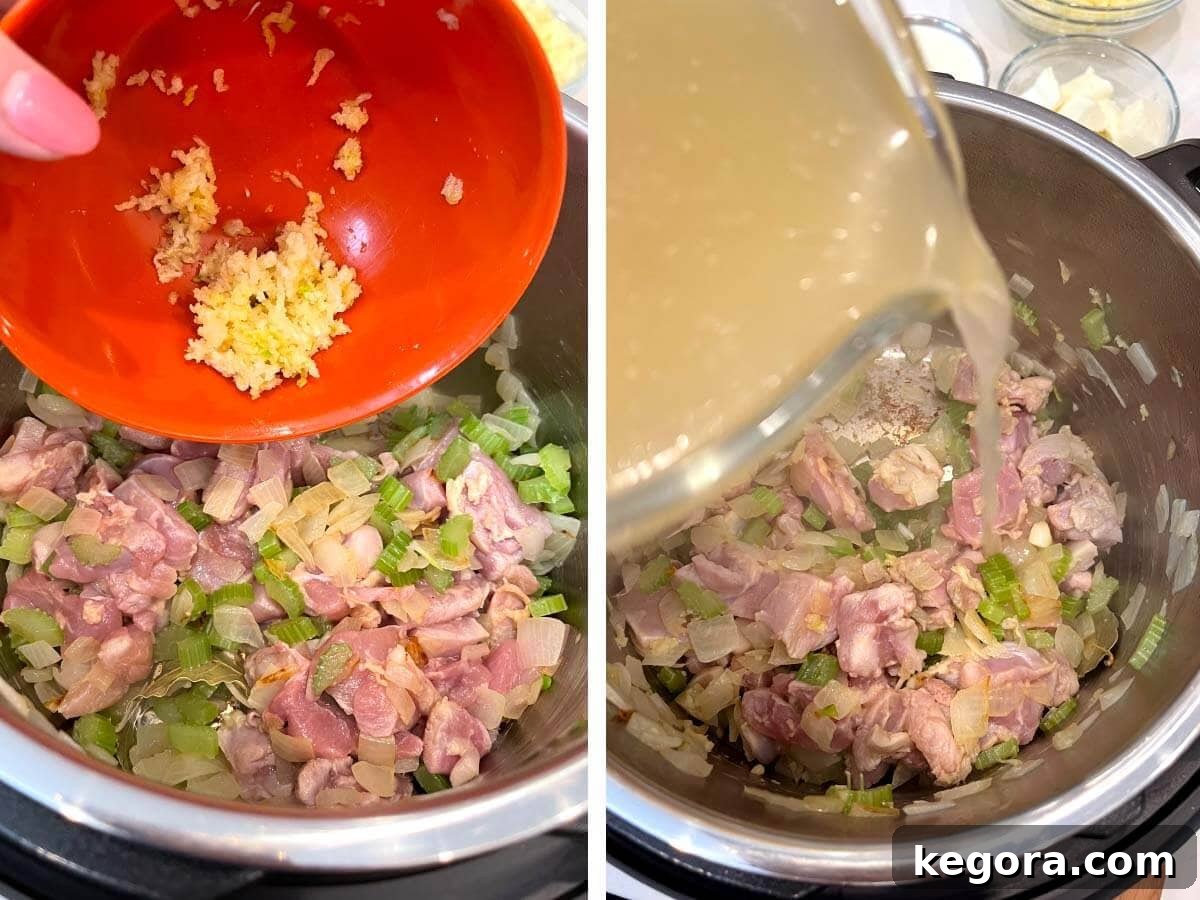
- Step 4: Add Garlic and Deglaze. Stir in the minced garlic and cook for about 30 seconds until fragrant (be careful not to burn it). Immediately add a splash of chicken broth to the pot. Using a wooden spoon, scrape the bottom of the pot thoroughly to dislodge any browned bits (this process is called deglazing). This crucial step prevents the “Burn” error on your Instant Pot and adds incredible flavor to your soup. If needed, add a little more broth to ensure all browned bits are loosened.
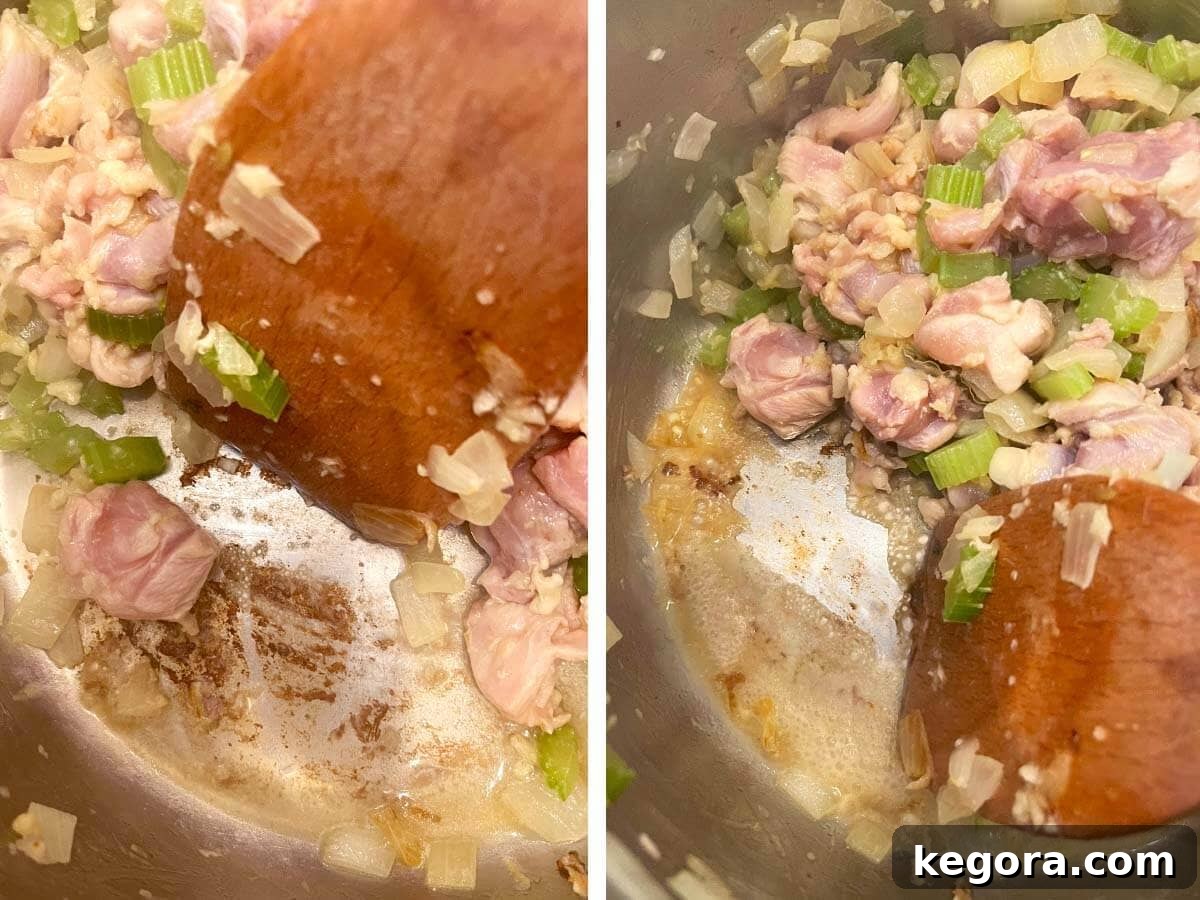
- Step 5: Continue Deglazing (if necessary). Ensure no bits are stuck to the bottom. This prevents the dreaded “Burn” warning and ensures all those delicious caramelized flavors are incorporated into your soup.
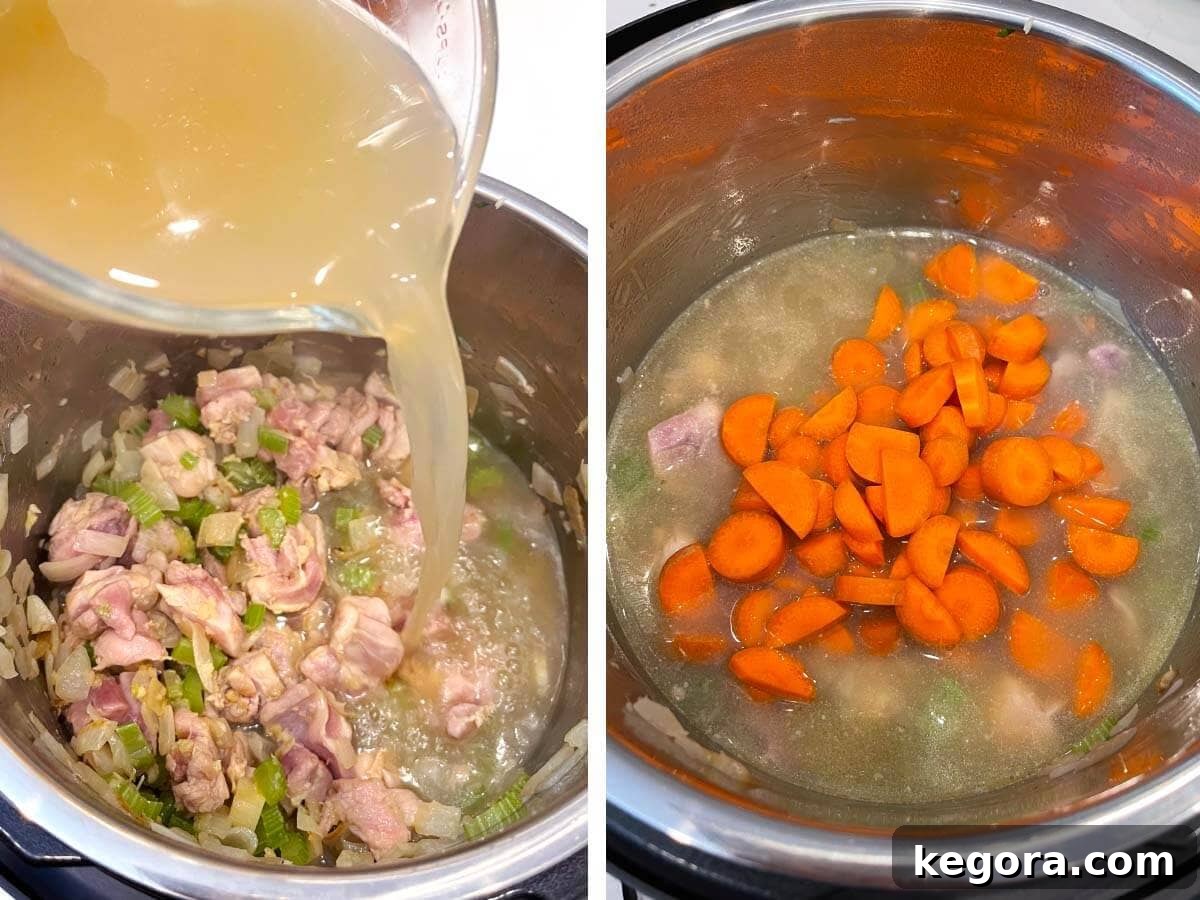
- Step 6: Add Broth and Carrots. Pour in the remainder of the chicken broth. Add the chopped carrots to the pot. Avoid stirring extensively after this point, especially once the rice is added, to prevent scorching.
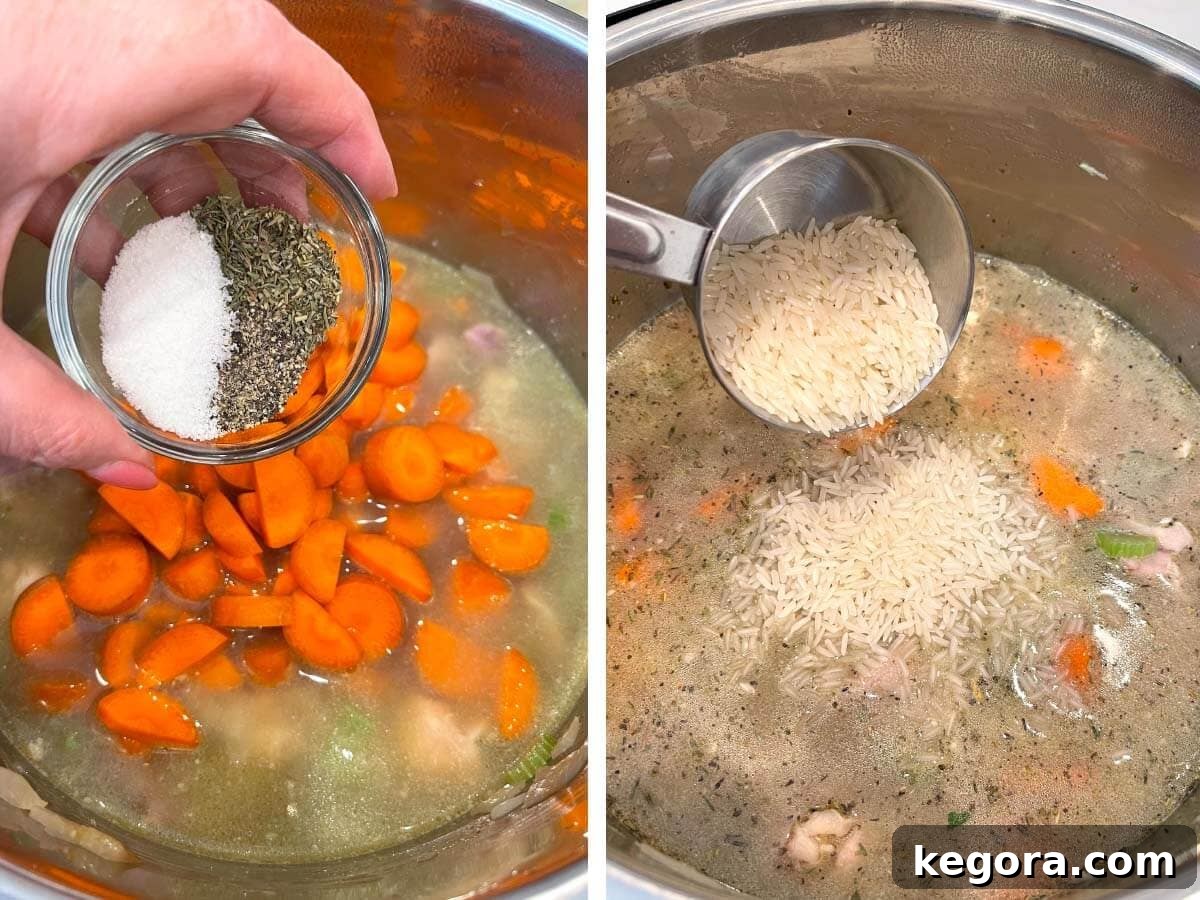
- Step 7: Introduce Spices and Rice. Add the dried thyme, Italian seasoning, kosher salt, and black pepper to the pot. Finally, add the uncooked white rice. Stir everything gently but thoroughly to combine, ensuring the rice is submerged in the liquid.
- Step 8: Pressure Cook. Secure the Instant Pot lid and set the steam release knob to the Sealing position (if it doesn’t self-seal). Select the “Pressure Cook” or “Manual” button/dial and set the cooking time to 3 minutes on High Pressure. Allow the pot to come to pressure, which typically takes several minutes.
- Step 9: Natural Release. Once the cooking cycle is complete, turn off the Instant Pot and allow it to sit undisturbed for 5 minutes. This is a 5-minute natural pressure release (NPR) and helps the flavors meld and the chicken to remain tender.
- Step 10: Quick Release & Open. After the 5-minute natural release, carefully turn the steam release valve to the “Venting” position to quick release any remaining pressure and steam. Once the float valve (pin) in the lid drops back down, it’s safe to open the lid. Turn off the pot and carefully remove and discard the bay leaf.
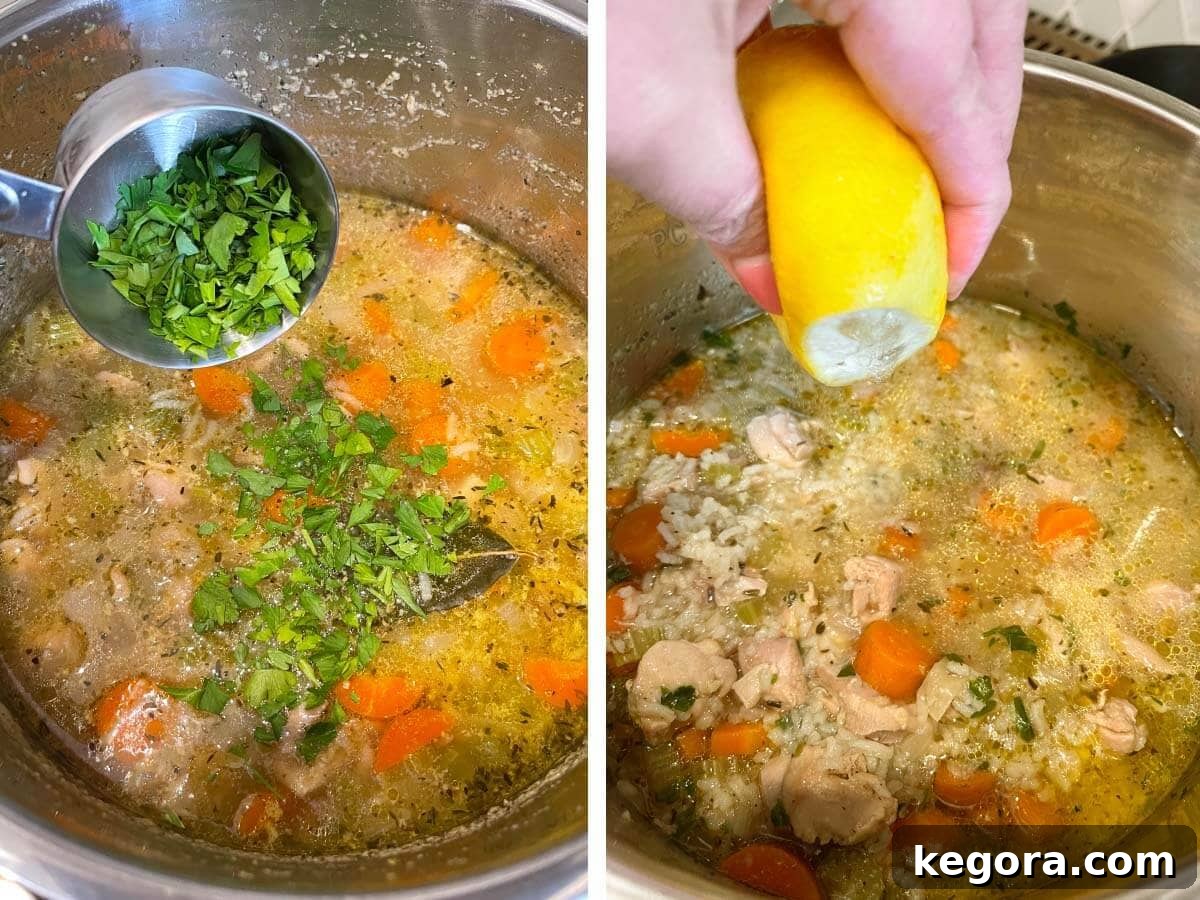
- Step 11: Final Touches & Serve. Stir in the chopped fresh parsley. If using, add a tablespoon of fresh lemon juice for a bright, zesty finish. Taste the soup and adjust seasonings (salt, pepper) as needed. Serve immediately and enjoy your homemade, comforting Instant Pot Chicken Rice Soup!
Serving Suggestions for Your Hearty Soup
This Instant Pot Chicken Rice Soup is a meal in itself, but it pairs wonderfully with a few simple accompaniments. Consider serving it with a side of crusty bread or garlic bread to soak up every last drop of the flavorful broth. A light green salad with a vinaigrette dressing can provide a refreshing contrast to the richness of the soup. For an extra touch of indulgence, a sprinkle of grated Parmesan cheese or a dollop of sour cream or Greek yogurt can be delightful toppings.
Troubleshooting Common Instant Pot Soup Issues
- “Burn” Error: This typically happens when food is stuck to the bottom of the pot. Ensure you thoroughly deglaze the pot in Step 4, scraping up all browned bits, before adding the broth and sealing the lid. Using enough liquid is also key.
- Soup Too Thick: If your soup is thicker than desired (especially after the rice has sat for a while), simply add a little extra chicken broth or water when reheating until it reaches your preferred consistency.
- Soup Too Thin: If you prefer a thicker soup, you can remove about 1/2 cup of the soup (including some rice), mash it with a fork or an immersion blender, and stir it back into the pot. Alternatively, create a cornstarch slurry (1 tbsp cornstarch mixed with 2 tbsp cold water), stir it into the simmering soup on Sauté mode until thickened.
- Bland Flavor: Don’t be afraid to adjust seasonings! After cooking, taste the soup and add more salt, pepper, or a pinch more of your dried herbs if it feels understated. A final squeeze of lemon juice can also dramatically brighten flavors.
Creative Customization Ideas for Your Chicken Rice Soup
This recipe is a fantastic starting point, but don’t hesitate to make it your own! Here are some ideas:
- Add More Vegetables: Root vegetables like diced turnip, rutabaga, parsnips, or even sweet potatoes can add lovely texture and sweetness. Stir in fresh spinach or kale during the last few minutes of cooking for extra greens. Bell peppers or mushrooms can be sautéed with the initial aromatics, or you can add a bag of frozen mixed vegetables at the end of the pressure cooking cycle.
- Creamy Texture: For a richer, creamier soup, stir in a splash of heavy cream, half-and-half, or a few ounces of softened cubed cream cheese (warmed slightly to prevent curdling) after the pressure cooking is complete and the lid is open.
- Spice it Up: A pinch of red pepper flakes, a dash of smoked paprika, or a tiny amount of curry powder can add an exciting twist to the flavor profile.
- Different Greens: While parsley is traditional, consider chopped fresh dill or chives for a different aromatic finish.
The Wonderful Health Benefits of Homemade Chicken Rice Soup
Beyond its comforting taste, this Instant Pot Chicken Rice Soup is a powerhouse of nutrition. Chicken provides lean protein essential for muscle repair and satiety. The medley of vegetables – onion, carrots, and celery – delivers a wealth of vitamins, minerals, and antioxidants, supporting overall health and immunity. Rice offers complex carbohydrates for sustained energy. The warm, savory broth is hydrating and can be incredibly soothing, especially when you’re feeling unwell. By making it at home, you control the ingredients, avoiding excessive sodium and artificial additives often found in store-bought varieties, ensuring a truly wholesome meal for your family.

More Delicious Instant Pot Soup Recipes You Might Enjoy
If you loved the ease and flavor of this chicken and rice soup, be sure to explore these other fantastic Instant Pot soup recipes:
Instant Pot Cabbage Soup
Instant Pot Creamy Tortellini Soup
Instant Pot 15 Bean Soup
Instant Pot Split Pea Soup
Instant Pot Albondigas Soup
Leftovers and Storage Best Practices
Enjoying this delicious soup throughout the week is easy with proper storage:
- Refrigeration: Store any leftover Instant Pot Chicken Rice Soup in an airtight container in the refrigerator for up to 4 days. The flavors often deepen overnight, making it even more delicious.
- Reheating: Gently reheat leftover soup on the stovetop over medium-low heat or in the microwave. As rice continues to absorb liquid, the soup may thicken considerably in the fridge. If it becomes too thick for your liking, simply add a splash of water or extra chicken broth during reheating until it reaches your desired consistency.
- Freezing: I generally do not recommend freezing soup with rice in it. Rice tends to become mushy and develop an undesirable texture once thawed and reheated. If you anticipate freezing portions of this soup, you might consider cooking the rice separately and adding it to individual servings before eating, or omit the rice entirely from the batch you intend to freeze.
Additional Recipe Notes and Expert Tips
Elevate your Instant Pot Chicken Rice Soup even further with these handy tips:
- Using Pre-Cooked Chicken: If you have leftover rotisserie chicken or any other cooked chicken meat, it can be wonderfully repurposed for this Instapot chicken rice soup. To maintain its texture and prevent overcooking, add precooked chicken during the last step, after the soup has finished pressure cooking and you’ve added the parsley and lemon juice. Simply stir it in until heated through.
- Vegetable Variations: Don’t limit yourself to the classic mirepoix! Feel free to incorporate other root vegetables like diced turnip, rutabaga, parsnips, or even sweet potatoes for added flavor and nutrients. For greens, stir in fresh spinach or kale during the last few minutes of cooking, just until wilted. Sautéed bell peppers or mushrooms can also be excellent additions. A bag of frozen mixed vegetables can be a quick and convenient option to toss in at the end.
- For a Creamier Indulgence: After the soup has finished pressure cooking and the lid is removed, if you desire a rich, creamy texture, you can stir in a touch of heavy cream. Alternatively, for a slightly tangy creaminess, add some cubed cream cheese that has been slightly warmed to ensure it melts smoothly without clumping. Whisk until fully incorporated.
- Don’t Skimp on Deglazing: This step is critical for both flavor development and preventing the “Burn” warning on your Instant Pot. Take your time to scrape all the browned bits from the bottom of the pot after sautéing.
- Adjust Salt to Taste: Broths and chicken can vary in their sodium content. Always taste your soup at the very end and adjust the salt and pepper as needed.
You Might Also Like These Easy Instant Pot Chicken Recipes
If you’re looking for more quick and delicious chicken dishes to make in your Instant Pot, these recipes are sure to impress:
Instant Pot Chicken Noodle Soup
Instant Pot Creamy Italian Chicken Breasts
Instant Pot Shredded Chicken
Instant Pot Crack Chicken
If you’ve enjoyed making and savoring this Instant Pot Chicken Rice Soup, I’d love to hear your thoughts! Please feel free to leave a comment below and share your star rating. Your feedback helps other home cooks discover this wonderfully comforting recipe.

Instant Pot Chicken Rice Soup
Print Recipe
Ingredients
- 3 Tablespoons Olive Oil
- 1 Yellow Onion
- 1 lg Bay Leaf
- 3 ribs Celery, chopped
- 3 med Carrots, chopped
- 1 lb Chicken Thighs, cubed
- 3 cloves Garlic, pressed
- 5 cups Chicken Broth
- ½ teaspoon Dried Thyme Leaves
- ½ teaspoon Italian Seasoning
- 1 teaspoon Kosher Salt (or ¾ teaspoon table salt)
- ½ teaspoon Black Pepper
- ½ cup White Rice
- ¼ cup Fresh Parsley, chopped
- 1 Tablespoon Lemon Juice (optional)
Instructions
-
Prep all of the ingredients; chop the veggies, cube the chicken into bite-sized pieces, measure out the spices, broth, etc.
-
Turn on the Sauté setting. When hot, add the oil, onion, bay leaf, and celery. Cook for about 4 minutes, stirring occasionally, until the vegetables start to soften.
-
Add the chicken and cook a couple of minutes, stirring frequently.
-
Add the garlic and stir. Add a splash of the broth and stir to moisten and keep the contents from scorching. If the bottom of your pot has browned bits on it, use a wooden spoon to scrape the bottom and get them all up (called Deglazing – this prevents the burn error). Use a little more broth if needed.
-
Pour in the remainder of the chicken broth and add the carrots to the pot.
-
Add the spices to the pot, then add the uncooked rice and stir well.
-
Close the lid and set the steam release knob to the Sealing position, if not self-sealing.
-
Press the Pressure Cook/Manual button or dial, then the +/- button or dial to select 3 minutes. High Pressure. The pot will take several minutes to come to pressure.
-
When the cook cycle has finished, turn off the pot and let it sit undisturbed for 5 minutes (5 minute natural release). Then turn the steam release knob to the Venting position to release the remaining steam/pressure.
-
When the pin in the lid drops back down, open the lid, turn off the pot, and discard the bay leaf.
-
Add the parsley and stir.
-
If using the lemon juice, add and stir. Taste the soup and adjust salt, if needed.
Notes
See the post for details on the rices and chicken that can be used.
Nutrition
Nutrition information is automatically calculated, so should only be used as an approximation.