
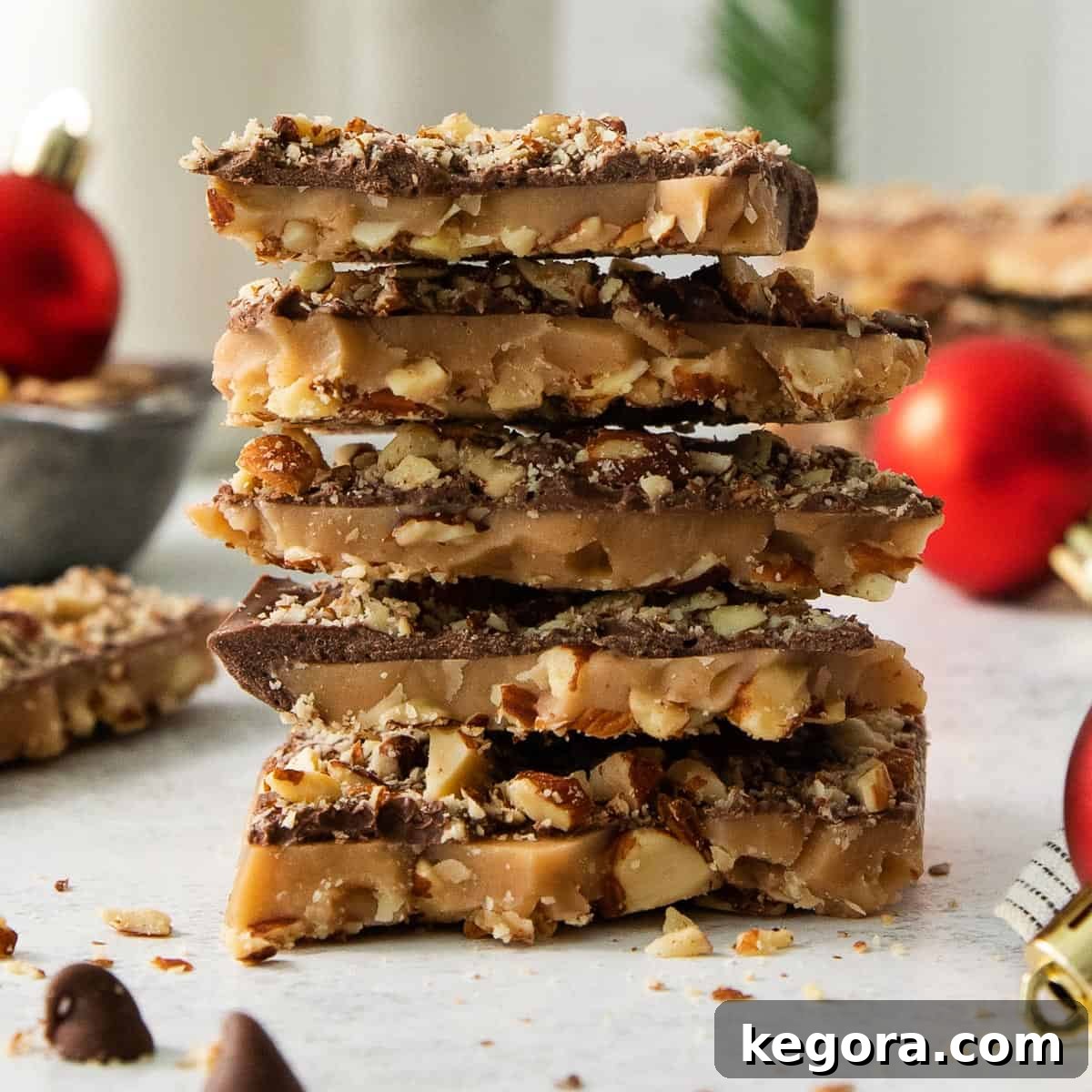
Delicious Homemade English Toffee: Erin’s Classic Recipe Rundown
Welcome to a culinary journey into the heartwarming world of homemade English toffee! This recipe, a true classic from my Grandma’s cherished collection, promises an unforgettable treat that captures the essence of traditional holiday baking. It’s more than just a recipe; it’s a piece of family history, passed down through generations, ensuring perfect results every time.
Unforgettable Texture: Prepare for a truly sensational experience with every bite. This English toffee delivers an exquisitely crisp and satisfyingly crunchy texture that melts delightfully in your mouth, leaving a buttery sweetness that lingers. The perfect snap is key to great toffee, and this recipe absolutely nails it.
Irresistible Taste Profile: Indulge in the harmonious blend of rich, caramelized butter, smooth, luscious chocolate, and the subtle, nutty crunch of almonds. It’s a symphony of flavors that perfectly balances sweet and savory, making it utterly addictive. Each ingredient plays a vital role in creating a taste that evokes warmth and celebration.
Effortless Candy Making: Don’t let the idea of homemade candy intimidate you. This recipe is surprisingly easy to follow, utilizing simple, accessible ingredients you likely already have in your pantry. Whether you’re a seasoned candy maker or a first-time baker, my detailed instructions are designed to guide you to success, making the process enjoyable and stress-free.
Essential Tips for Success: The secret to flawless English toffee lies in precision. A reliable candy thermometer is your best friend, crucial for achieving the exact temperature required for that perfect “hard crack” stage. I always recommend gathering all your ingredients and tools before you begin, ensuring a smooth and efficient cooking process. This preparation minimizes stress and maximizes your chances for a delectable outcome.
A Recipe to Revisit: Would I make these again? Without a doubt! This vintage recipe is a beloved Christmas classic in our family, and for good reason. A single batch yields enough to generously share with family and friends, making it ideal for holiday gifting or festive gatherings. Plus, it’s naturally gluten-free and an excellent make-ahead option, perfect for navigating the busy holiday season with delicious homemade treats ready to go. It’s a tradition you’ll want to start and cherish year after year.
xoxo erin
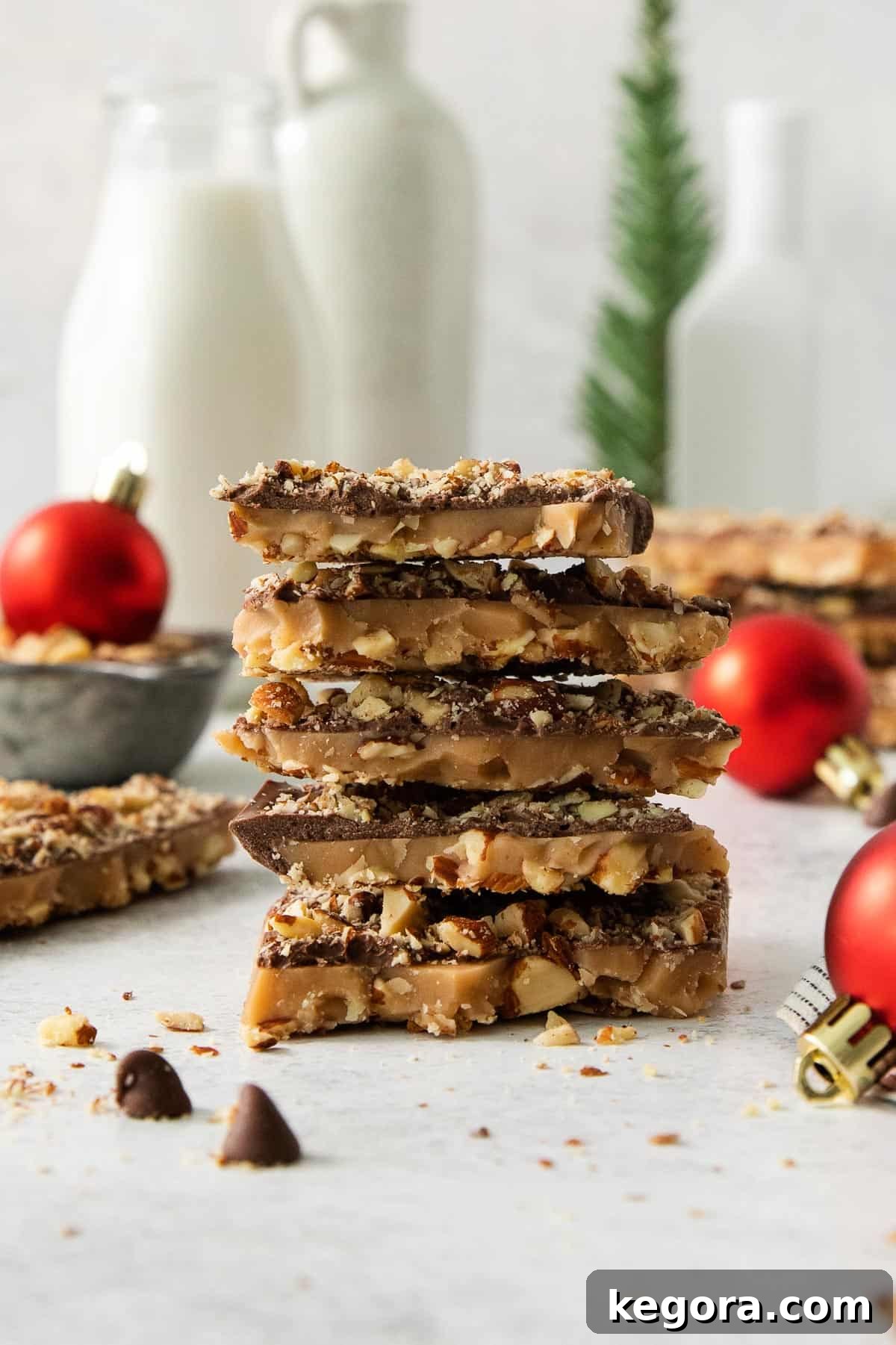
This post was originally published in December 2023, sharing the initial joy of this classic recipe. It was thoughtfully updated in November 2024 with brand new photos and enhanced, clearer instructions, ensuring an even better experience for all our readers.
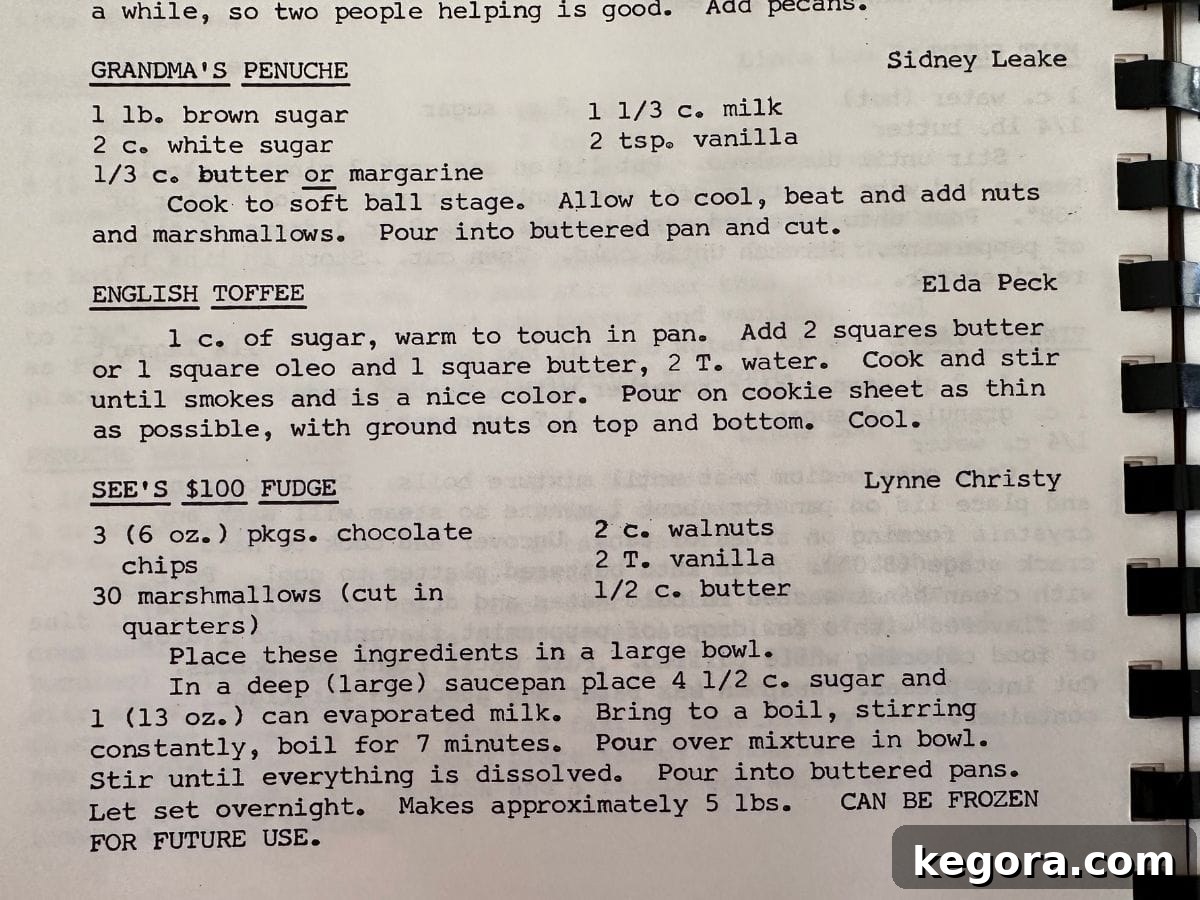
The heritage of this English toffee recipe traces back to a treasured church cookbook, meticulously compiled by my Grandma and her dear friend, Elda Peck, back in the nostalgic 1970s. It’s a testament to timeless flavors and community spirit.
English toffee stands as a classic holiday treat for compelling reasons. Its irresistible allure lies in the perfect marriage of a buttery, crisp crunch, rich, melt-in-your-mouth milk chocolate, and the delightful salinity of perfectly roasted nuts. This combination creates a truly unforgettable confection.
While this recipe upholds the traditional spirit of English toffee with its simple, wholesome ingredients, I’ve taken care to augment the instructions with extra details and helpful tips. My goal is to guarantee success for every baker, whether you’re a seasoned candy-making professional or embarking on your very first homemade candy adventure. This recipe is truly perfect for everyone to enjoy the magic of crafting their own delicious English toffee!
Featured Comment
From April: “I absolutely love this recipe! It’s deceptively easy and beyond yummy. Makes great gifts, too!”
Comments
Table of Contents: Your Guide to Perfect English Toffee
- Delicious Homemade English Toffee: Erin’s Classic Recipe Rundown
- Essential Ingredients for Your Homemade English Toffee
- Step-by-Step Guide: How to Make English Toffee
- Make-Ahead, Storage, and Freezing Instructions for English Toffee
- English Toffee vs. Regular Toffee: What’s the Difference?
- Can I Use Other Nuts Besides Almonds in English Toffee?
- Troubleshooting: Why Isn’t My English Toffee Breaking Properly?
- Pro Tips for Making the Best English Toffee
- Explore More Delicious Candy Recipes
- Grandma’s Classic English Toffee Recipe Card
Essential Ingredients for Your Homemade English Toffee
Crafting the perfect English toffee starts with understanding each ingredient’s role. Here are some key notes on the components that make this classic treat so special. For exact measurements, you can always jump to the full recipe card below.
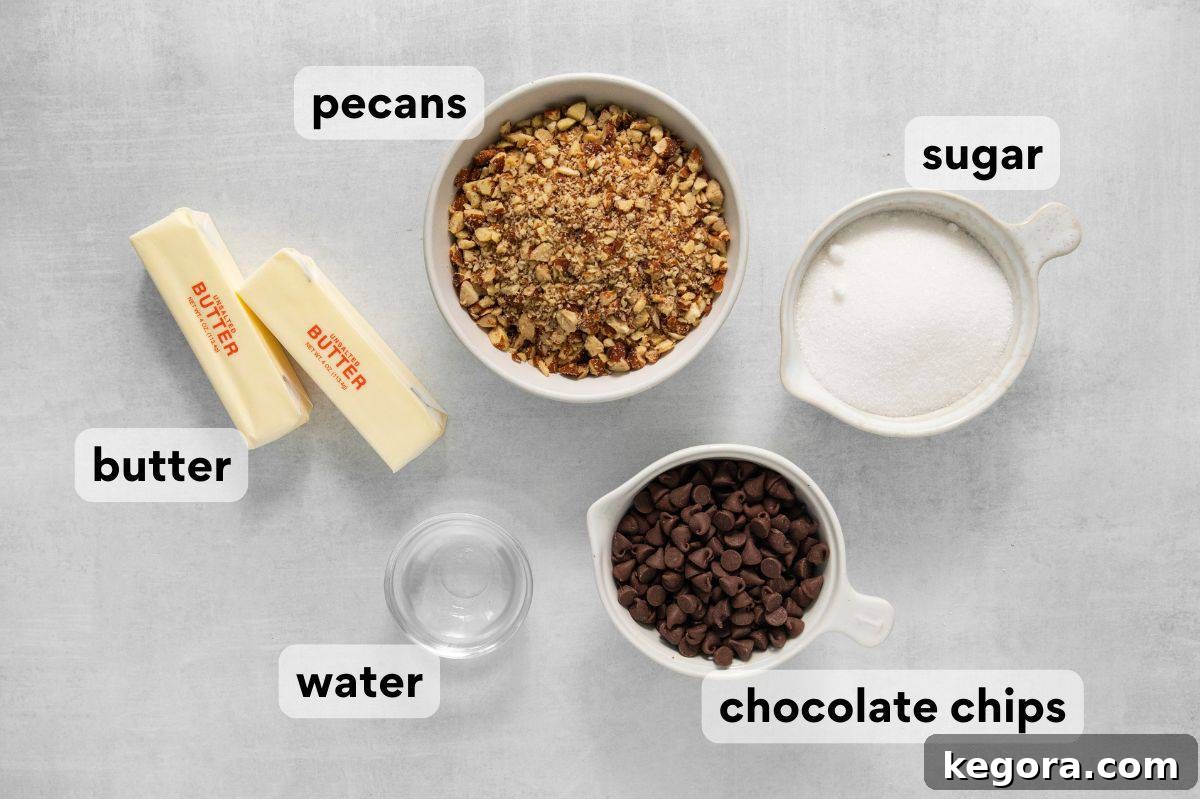
- Granulated Sugar: This is the fundamental building block of our toffee. As it cooks, the sugar caramelizes, developing a deep, rich, toasted flavor that forms the sweet heart of the confection. It’s crucial for achieving that signature glassy, crisp texture. Any standard white granulated sugar will work beautifully; however, it’s important to note that brown sugar, with its molasses content, will not yield the correct texture or flavor profile for this specific English toffee recipe.
- High-Quality Chocolate Chips: While entirely optional, a generous layer of melted milk chocolate chips truly elevates this English toffee, providing a delightful contrast to the nutty, buttery base. I personally favor milk chocolate for its creamy sweetness, but feel free to experiment with dark, white, or semi-sweet varieties based on your preference. The key here is quality! Using premium chocolate chips, like Guittard, makes an undeniable difference in the overall taste and luxurious feel of the finished product. Good chocolate melts smoother and tastes far superior.
- Water: A small amount of water plays a surprisingly significant role. It helps to dissolve the sugar evenly, softening the initial mixture and preventing it from crystallizing too quickly. This ensures a smoother, more stable toffee base and helps prevent separation, contributing to the perfect final texture.
- Almonds: Traditionally, roasted and salted almonds are the star nut in English toffee, and for good reason. I highly recommend using freshly and finely chopped roasted and salted almonds. The roasting process enhances their flavor profile, making them more aromatic and crunchy, while the salt perfectly balances the sweetness of the toffee and chocolate. Avoid raw almonds, as they won’t provide the same depth of flavor or texture. While almonds are classic, don’t hesitate to explore other options – pecans, walnuts, or even cashews can create delicious variations.
- Butter: The quality of your butter is paramount in this recipe, as it contributes significantly to the toffee’s rich flavor and smooth texture. Opt for a high-quality butter; you’ll taste the difference. Since we use salted nuts for the topping, I typically use unsalted butter in the toffee itself. This allows for better control over the overall saltiness, ensuring a perfectly balanced sweet and savory profile. Cutting the butter into tablespoons ensures it melts evenly and incorporates smoothly into the sugar mixture.
If you enjoy this recipe from our cherished church cookbook, you might also be interested in other delightful homemade candy recipes shared within its pages, such as soft buttery homemade caramels, a classic nougat recipe, crispy peanut brittle, and the ever-popular pecan log.
Step-by-Step Guide: How to Make English Toffee
Crafting homemade English toffee is a rewarding process, and with these detailed steps, you’ll achieve perfect results every time. For the complete, printable instructions, you can always jump to the full recipe card!
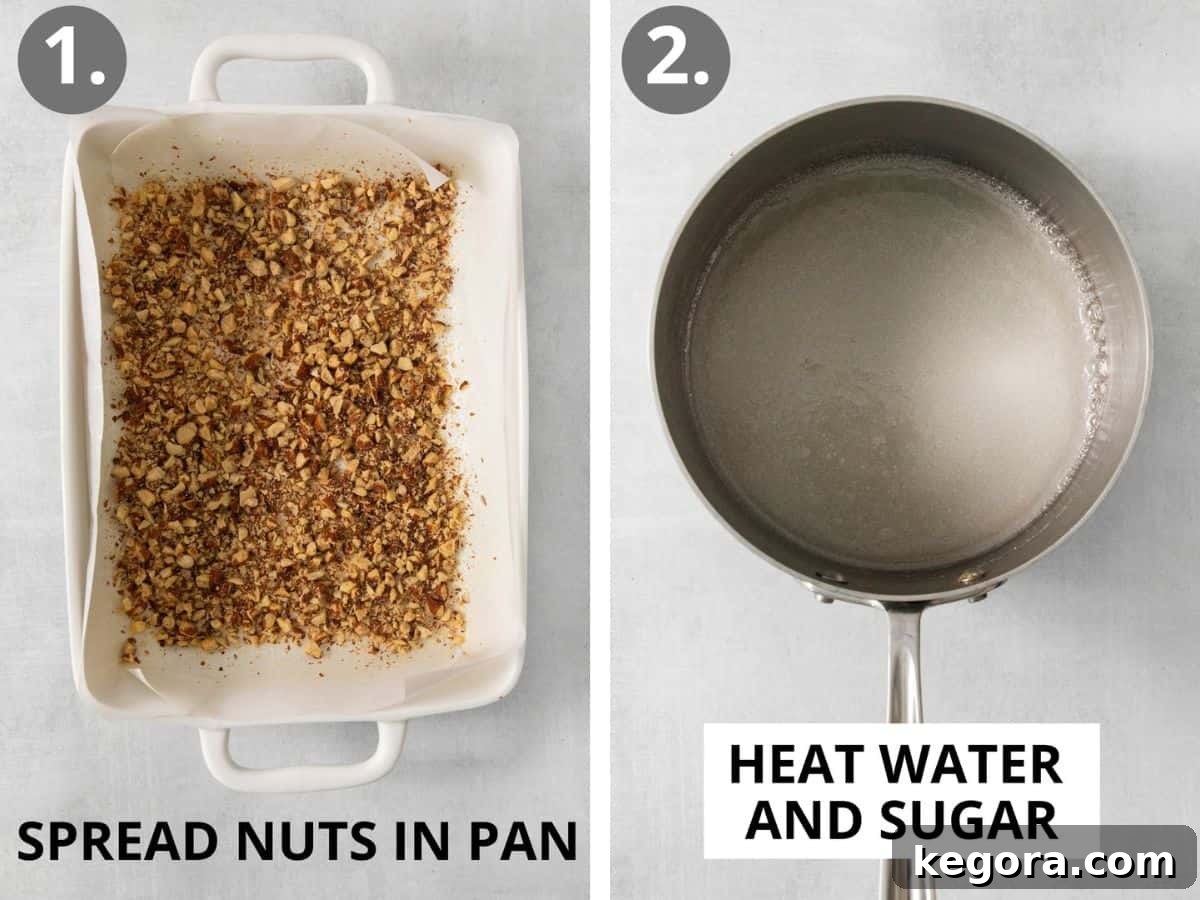
- 1. Prep Your Pan for Success: Begin by lining a 9×13-inch baking pan with either parchment paper or aluminum foil. This step is critical for easy removal of your finished toffee. Once lined, lightly spray the paper or foil with a nonstick cooking spray to ensure nothing sticks. Next, evenly sprinkle 1 cup of your finely chopped almonds across the bottom of the prepared pan. This forms the delicious base layer of nuts that will adhere to the toffee.
- 2. Initiate the Sugar Syrup: In a large, heavy-bottomed saucepan – a heavy bottom is important for even heat distribution and preventing scorching – combine the granulated sugar and water. Place the saucepan over medium heat. Stir the mixture occasionally with a wooden spoon, just until the sugar begins to dissolve and you see small bubbles forming around the edges of the pan. This is your cue that the sugar is starting its transformation.
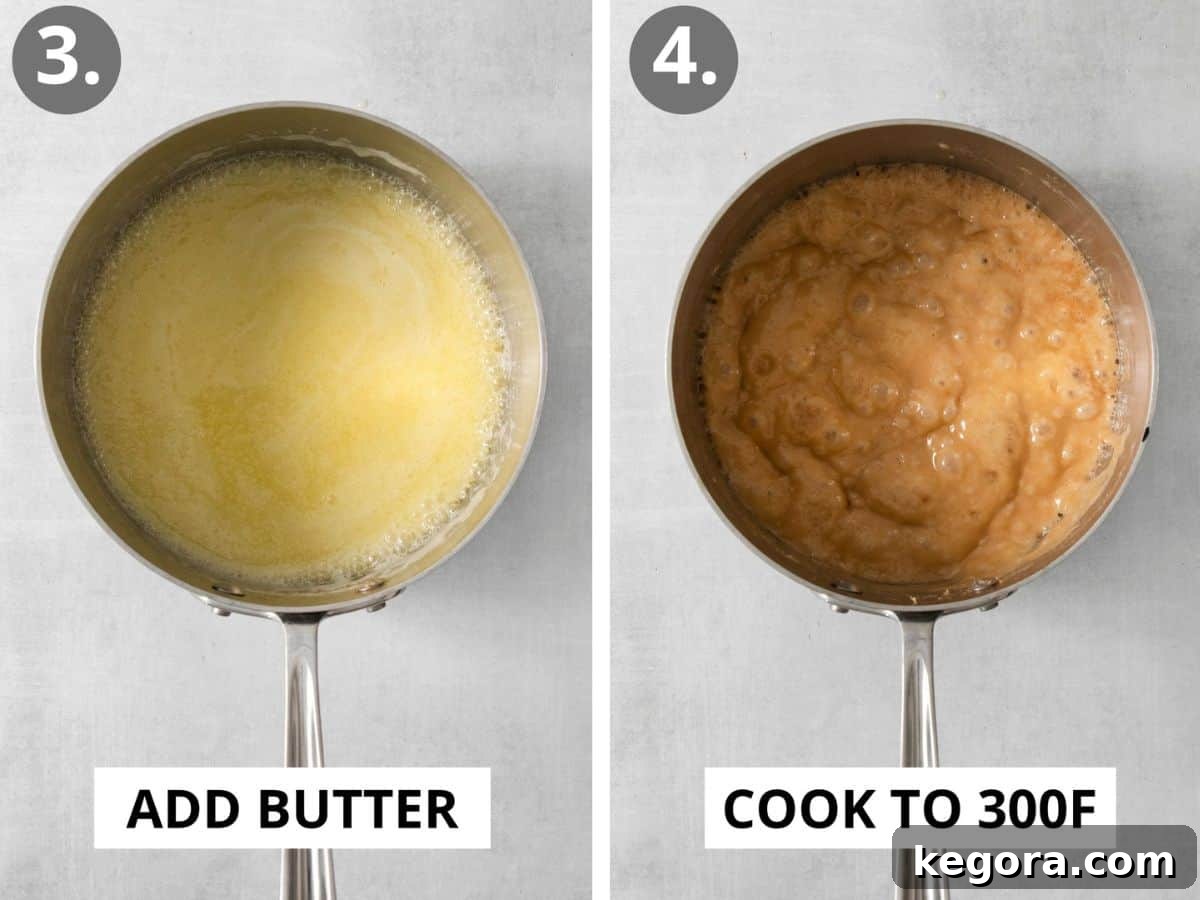
- 3. Introduce the Butter: Once the sugar water is lightly bubbling, it’s time to add the butter, which should ideally be cut into tablespoon-sized pieces for quicker, more even melting. Continue cooking the mixture over medium heat, stirring constantly. Constant stirring at this stage is crucial to fully incorporate the butter and prevent the mixture from separating or burning. Keep stirring until the butter is completely melted and beautifully blended into the sugar syrup, creating a smooth, emulsified liquid.
- 4. Achieve the Hard Crack Stage: This is where your candy thermometer becomes indispensable. Continue to stir constantly while bringing the mixture to a rolling boil. The goal is to cook the toffee until it transforms into a beautiful golden-brown color and, most importantly, reaches precisely 300°F (149°C) on your candy thermometer. This temperature signifies the “hard crack” stage, vital for the toffee’s brittle texture. Patience is key here; this step typically takes about 10 minutes over medium heat. Resist the urge to increase the heat, as this can lead to scorching.
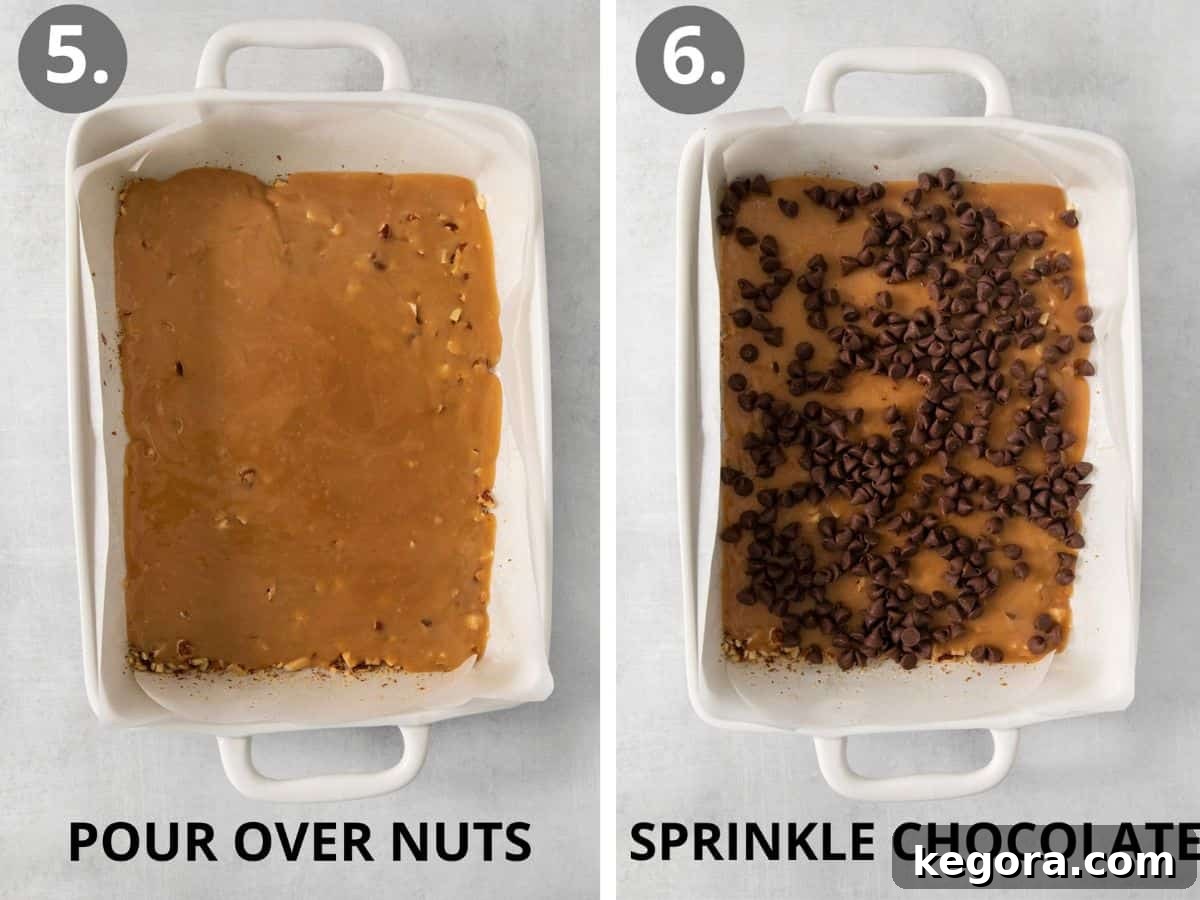
- 5. Pour and Spread the Toffee: The moment your toffee reaches 300°F, immediately remove the saucepan from the heat. Carefully and quickly pour the hot toffee evenly over the chopped almonds in your prepared pan. Work swiftly but carefully, as the toffee will begin to set very quickly. Use an offset spatula or the back of a spoon to gently spread the toffee into an even layer, ensuring it covers the nuts completely.
- 6. Add the Chocolate Layer: Allow the hot toffee to cool just enough so that it slightly hardens – this usually takes about 5 minutes. Then, uniformly sprinkle your chocolate chips across the entire surface of the warm toffee. Let the chocolate chips sit undisturbed for 1-2 minutes. The residual heat from the toffee will gently warm and melt the chocolate, creating a smooth, spreadable consistency.
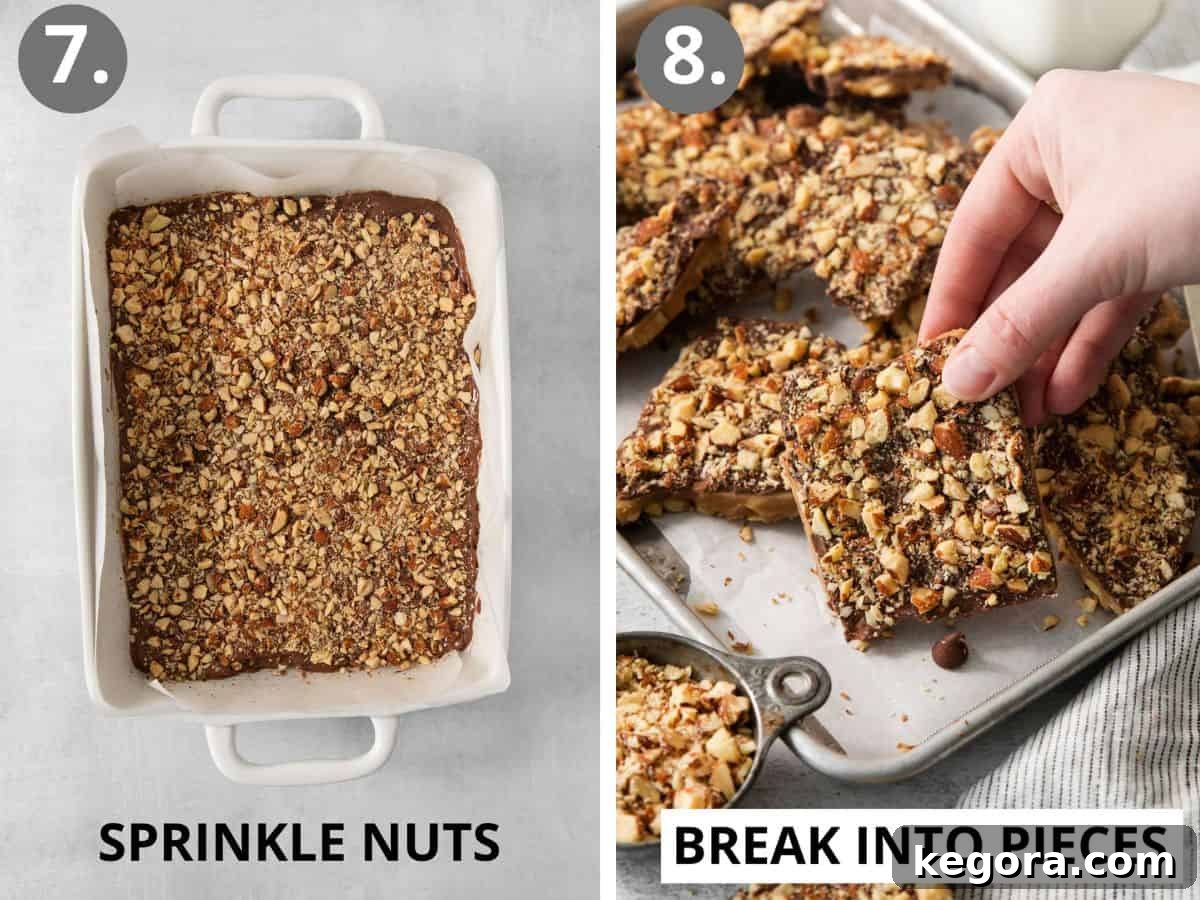
- 7. Top with More Nuts: Once the chocolate chips are warm and softened, use your offset spatula to spread the melted chocolate evenly over the toffee layer, creating a smooth, glossy coating. If, for any reason, your chocolate chips aren’t fully melted, a quick 30-second microwave zap of the entire pan can help. Immediately after spreading the chocolate, generously sprinkle the remaining 1 cup of chopped almonds across the top, pressing them gently into the chocolate.
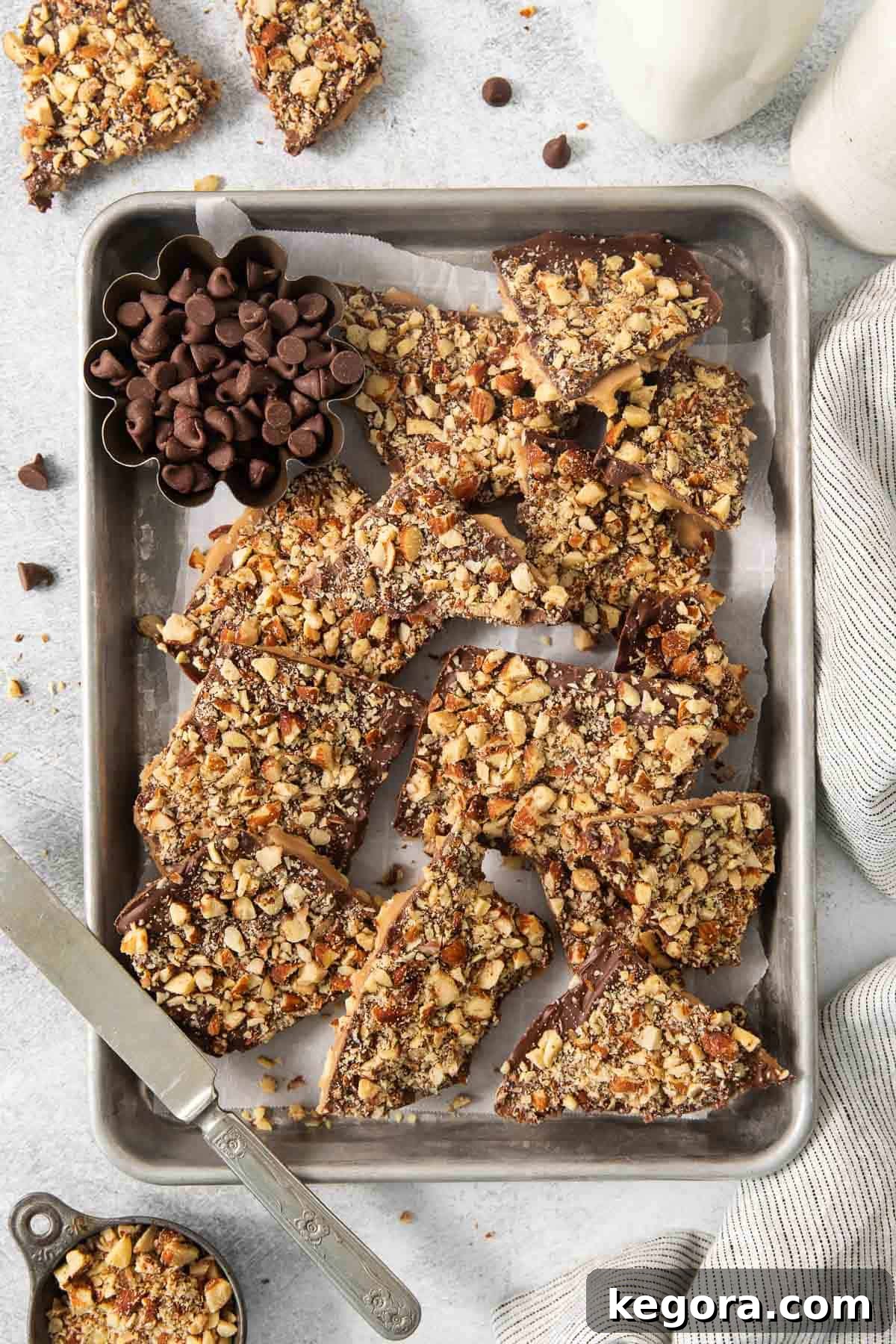
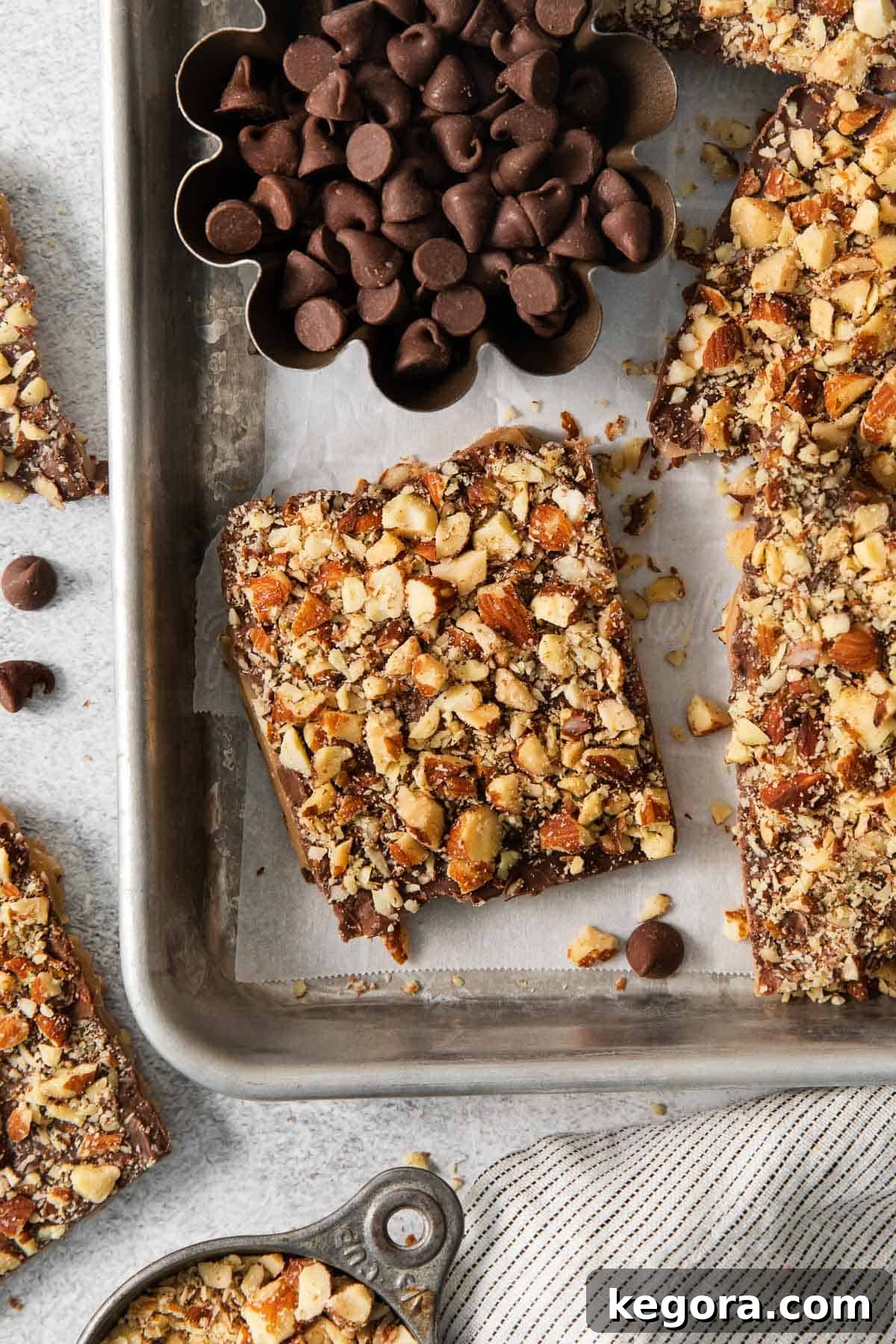
- 8. Chill, Break, and Enjoy: Place the English toffee in the refrigerator for approximately 1 hour, or until the chocolate layer is completely set and firm. Once chilled, gently lift the toffee out of the pan using the parchment paper. Carefully break it into irregular, delicious pieces. For an extra touch of gourmet flair, you can garnish with a light sprinkle of flaky sea salt (optional, but highly recommended!). Now, it’s time to savor your exquisite homemade English toffee!
Make-Ahead, Storage, and Freezing Instructions for English Toffee
One of the many charms of this English toffee recipe is its excellent shelf life and adaptability for make-ahead preparations, making it ideal for busy times or gift-giving.
To Make-Ahead: This delicious English toffee can be prepared well in advance. It maintains its crisp texture and rich flavor for up to 2 weeks, making it a perfect candidate for holiday baking or party prep when you need treats ready before the rush begins.
To Store: For optimal freshness and to prevent sticking, store your English toffee in an airtight container at room temperature. It will remain perfectly delightful for up to 2 weeks. If you live in a particularly warm climate or your home tends to be warm, you may opt to refrigerate the toffee. This prevents the chocolate from becoming too soft or melting, ensuring it retains its firm snap.
To Freeze: English toffee freezes beautifully, extending its shelf life significantly. To freeze, place the broken pieces in an airtight container or a heavy-duty freezer bag, ensuring you remove as much air as possible to prevent freezer burn. For best results and to keep pieces from sticking together, separate layers with parchment or wax paper. It can be frozen for up to 3 months. When you’re ready to enjoy, simply thaw the toffee at room temperature for about 30 minutes, and it will be as fresh and crunchy as the day it was made.
English Toffee vs. Regular Toffee: What’s the Difference?
The terms “English toffee” and “regular toffee” (often referring to American toffee) are frequently used interchangeably, as the confections are quite similar in their buttery, brittle base. However, there’s a traditional distinction that sets English toffee apart. Authentic English toffee typically includes a generous layer of nuts, most commonly almonds, and is almost always topped with a luscious layer of melted chocolate. “Regular” or American toffee, while equally delicious, doesn’t necessarily include these additions; it can be enjoyed as a pure, hard caramel candy without any chocolate or nut toppings. This recipe, with its rich chocolate and almond topping, firmly falls into the beloved English toffee category.
Can I Use Other Nuts Besides Almonds in English Toffee?
Absolutely! While almonds are the traditional and often preferred nut for English toffee due to their delicate flavor and crisp texture, this recipe is wonderfully versatile. You are more than welcome to substitute peanuts, cashews, walnuts, or pecans in place of the almonds. Each nut will impart its unique flavor profile, allowing you to customize the toffee to your liking. You can even create a delightful combination of different nuts for an added layer of complexity. If you prefer, you can omit the nuts entirely for a pure, buttery toffee experience. The fundamental deliciousness of the toffee will shine through no matter your nut choice!
Troubleshooting: Why Isn’t My English Toffee Breaking Properly?
If you find that your English toffee is soft, chewy, or doesn’t break cleanly into crisp pieces, the most common culprit is insufficient cooking temperature. For toffee to achieve its signature hard, brittle snap, it must reach precisely 300°F (149°C) – known as the “hard crack” stage. If the mixture is removed from the heat prematurely, it won’t have cooked long enough for the sugar molecules to form the rigid structure required for a proper break. This is why a reliable candy thermometer is an absolutely essential tool for this recipe. It removes all guesswork, ensuring you hit that crucial temperature every time and resulting in perfectly brittle English toffee that snaps beautifully into delicious shards.
Pro Tips for Making the Best English Toffee
Achieving perfect homemade English toffee is within your reach with these expert tips and insights:
- Choose Your Nuts Wisely: While roasted, salted almonds are the most common and classic choice for English toffee, offering a perfect balance of flavor and crunch, don’t feel limited. Experiment with other nuts like pecans or walnuts to discover new flavor combinations that you and your family will love. Ensure they are fresh and, if not pre-roasted, give them a quick toast yourself to enhance their aroma and taste.
- Invest in Quality Chocolate: The quality of your chocolate chips truly makes a significant difference in the final taste of this English toffee. Opt for high-quality brands like Guittard or your favorite premium baking chocolate. Superior chocolate will melt more smoothly, spread more easily, and deliver a richer, more satisfying flavor that elevates the entire confection.
- Master the Art of Constant Stirring: When the English toffee mixture is boiling and its temperature is rising, consistent and steady stirring is paramount. This continuous movement ensures that the sugar and butter melt evenly, preventing scorching at the bottom of the pan and promoting a smooth, uniform texture throughout the toffee. Don’t step away from the pot during this critical phase!
- Prepare for the Holidays Early: This English toffee is an absolute marvel for holiday preparations. Since it stores so well, you can easily make it weeks ahead of time, freeing up your precious holiday hours. It makes a fantastic addition to homemade cookie boxes, a thoughtful gift for neighbors and teachers, or simply a delightful treat to have on hand for unexpected guests. Its make-ahead nature is a true lifesaver during the busy festive season.
- Safety First with Hot Sugar: Remember, hot sugar can cause severe burns. Always exercise extreme caution when working with the boiling toffee mixture. Keep children and pets away from the cooking area, and have a bowl of ice water nearby in case of accidental splashes.
- Ensure Accurate Temperature: As mentioned, a reliable candy thermometer is non-negotiable. Calibrate it before use to ensure accuracy. The difference of just a few degrees can mean the difference between perfectly brittle toffee and a chewy, sticky mess.
Explore More Delicious Candy Recipes
If you’ve fallen in love with making homemade English toffee, you’re in for a treat! Our collection features a variety of other delightful candy recipes perfect for gifting, parties, or simply satisfying your sweet tooth. Dive into these other homemade confections:
- Rich Penuche Vanilla Fudge
- The Best Marshmallow Cream Fudge
- Homemade Vanilla Bean Marshmallows
- Irresistible Rolo Pretzel Bites
- Gluten-Free Christmas Pretzel Treats (Dark Chocolate Sea Salt Caramel Bark)
- Festive Gluten-Free White Chocolate Peppermint Pretzels
- Classic Peanut Butter Balls with Rice Krispies
- The Absolute Best Caramel Corn
Grandma’s Classic English Toffee Recipe
Erin Collins
10
mins
25
mins
12
large pieces
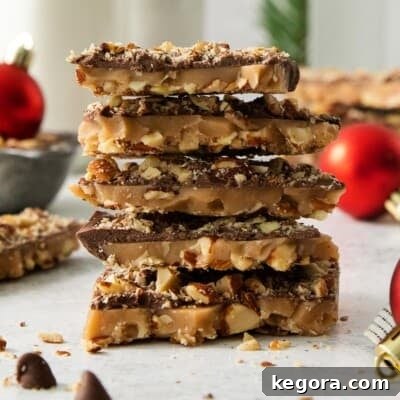
It’s crisp, buttery and topped with milk chocolate and salted almonds. Perfect for your holiday parties or cookie boxes!
Comments
Ingredients
- 2 cups (240g) finely chopped roasted and salted almonds divided
- 1 cup (200g) granulated sugar
- 2 tablespoons water
- 1 cup (226g) butter, cut into tablespoons (2 sticks)
- 1 cup (170g) milk chocolate chips
Instructions
-
Line a 9×13” pan with parchment paper or foil and spray it lightly with nonstick cooking spray.
-
Sprinkle 1 cup of chopped almonds evenly over the pan.
-
Add the granulated sugar and water to a large heavy bottomed saucepan set over medium heat. Cook the sugar, stirring occasionally, just until it is beginning to bubble around the edges.
-
Then add the butter. Cook, stirring constantly, until the butter has fully melted.
-
Still stirring constantly, bring the caramel to a boil and cook until just until it is golden brown and reaches exactly 300°F on a candy thermometer. Be patient– this should take about 10 minutes over medium heat.
-
Immediately remove the caramel from the heat and pour it evenly over the chopped almonds in the prepared pan. Spread the caramel out with an offset spatula if needed.
-
Allow the toffee to sit for five minutes, or just until it has hardened, before sprinkling over the chocolate chips. Then let the chocolate chips sit for 1-2 minutes, or until they are warm and melted. Spread the milk chocolate evenly over the caramel and sprinkle the remaining 1 cup of chopped almonds on top. If the chocolate chips don’t completely melt, just microwave the toffee for 30 seconds to warm them up.
-
Place the toffee in the fridge until the chocolate has set– about 1 hour. Then break it into pieces and enjoy. Garnish with a sprinkle of flakey sea salt, if desired.
Notes
Chocolate Chips: Be sure to use high-quality chocolate chips for this recipe, like Guittard. The quality makes all the difference in the taste of this English toffee!
Candy Thermometer: It’s essential to use a candy thermometer to ensure the proper temperature. If the mixture is too hot or cold, the texture will be off!
To Make-Ahead: It lasts up to 2 weeks, making it a great make-ahead recipe!
To Store: Store in an airtight container at room temperature for up to 2 weeks. Use parchment or wax paper to separate layers and avoid sticking. You can also refrigerate it if the house is too warm for the chocolate to sit out at room temperature.
To Freeze: Store in an airtight container or freezer bag, removing as much air as possible. Use parchment or wax paper to separate layers and avoid sticking. Freeze for up to 3 months. Thaw at room temperature for about 30 minutes.
Nutrition
Carbohydrates: 31g |
Protein: 5g |
Fat: 32g |
Saturated Fat: 13g |
Polyunsaturated Fat: 4g |
Monounsaturated Fat: 12g |
Trans Fat: 1g |
Cholesterol: 41mg |
Sodium: 122mg |
Potassium: 222mg |
Fiber: 3g |
Sugar: 26g |
Vitamin A: 473IU |
Calcium: 80mg |
Iron: 1mg