
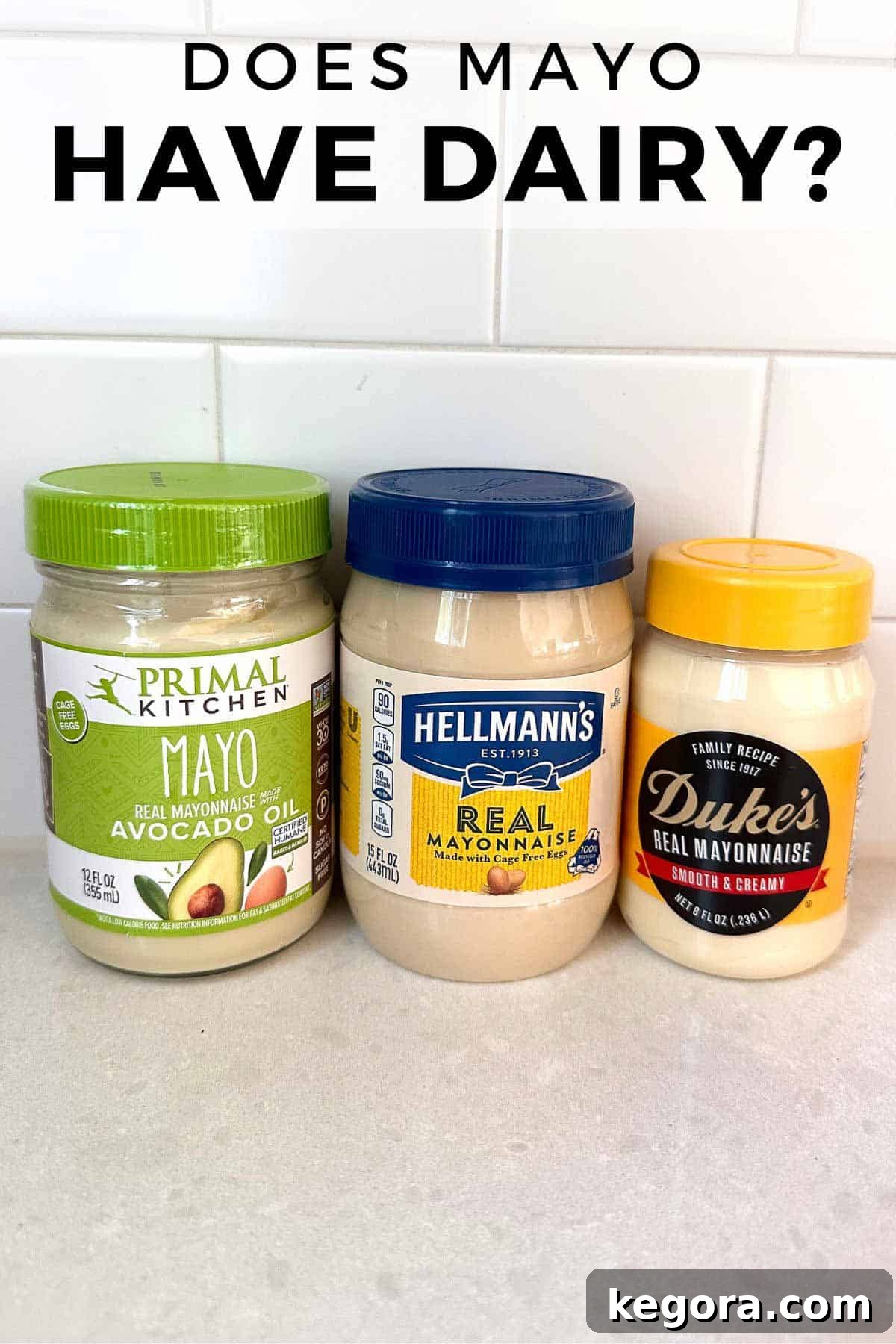
Mayonnaise, often simply called mayo, is a beloved condiment found in kitchens worldwide. From enhancing the flavor of sandwiches and burgers to acting as the creamy base for classic dishes like potato salad, coleslaw, and various dressings, its versatility is undeniable. However, for individuals navigating dietary restrictions, particularly those avoiding dairy due to lactose intolerance or a dairy allergy, a crucial question often arises: Does mayonnaise contain dairy?
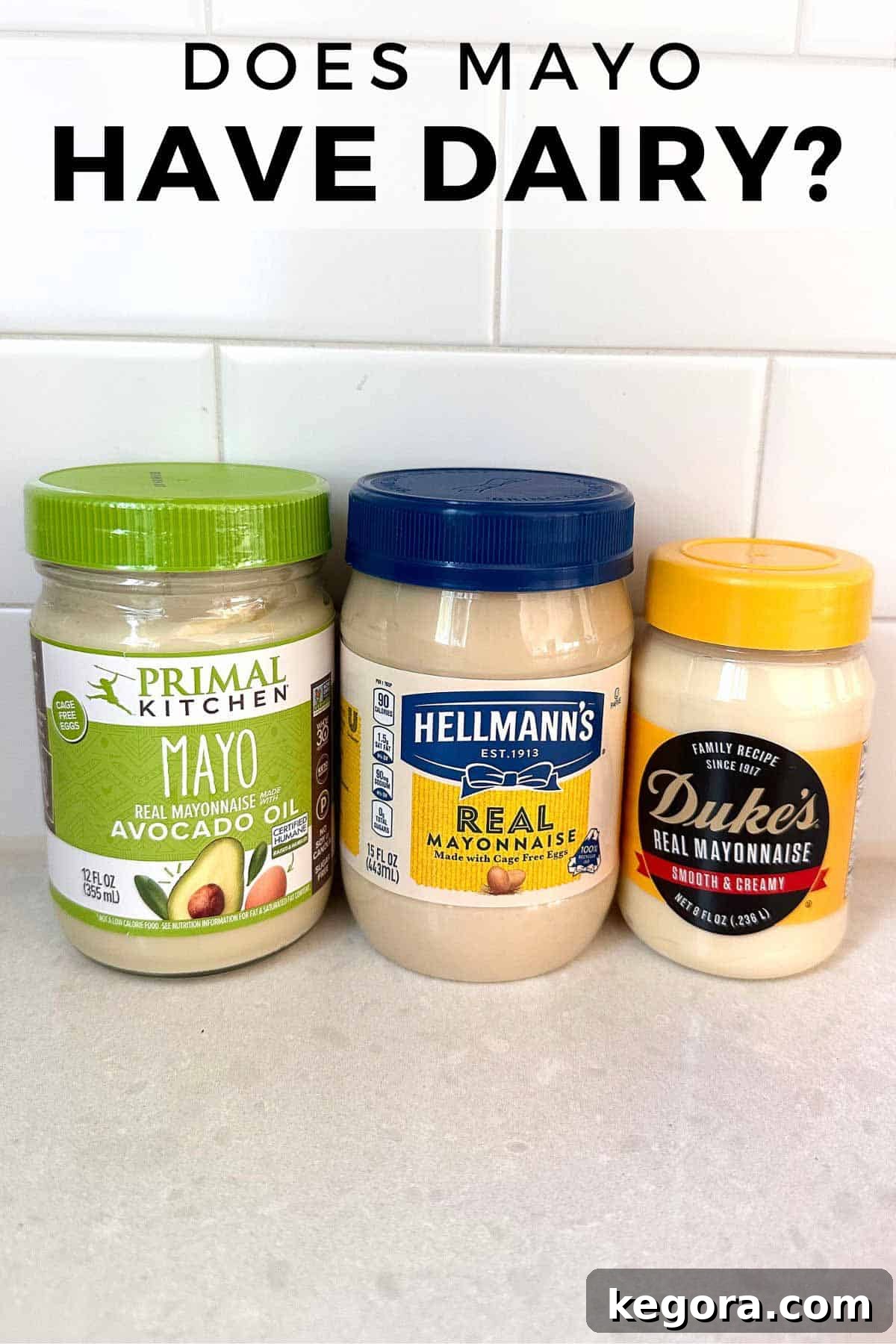
Understanding the ingredients in common foods is essential for managing health and dietary preferences. Given its creamy, often white appearance, it’s easy to mistake mayonnaise for a dairy product. This perception frequently leads to confusion and concern for those adhering to dairy-free diets. This comprehensive guide will delve into the composition of mayonnaise, clarify its dairy status, explore common misconceptions, and provide practical advice for making informed choices.
SHORT ANSWER: Mayonnaise is Dairy-Free!
Typically, no, mayonnaise does not contain dairy. The fundamental ingredients in traditional mayonnaise are oil, eggs, and an acid like vinegar or lemon juice. Most commercially produced mayonnaise brands are naturally dairy-free. Always remember to check product labels to confirm ingredients, especially if you have severe allergies or sensitivities.
Does Mayonnaise Contain Dairy? Unraveling the Misconception
The creamy, smooth texture and often pale-yellow to white color of mayonnaise lead many to assume it’s dairy-based. However, this is a common misconception. Authentic mayonnaise, in its purest form, is made from ingredients entirely free of milk or milk products. This means it does not contain lactose, the sugar found in milk that can cause digestive distress for individuals with lactose intolerance, nor does it contain milk proteins that trigger allergic reactions in those with dairy allergies.
The primary components of classic mayonnaise are vegetable oil, egg yolks, vinegar (or lemon juice), and seasonings like salt. None of these ingredients are derived from milk-producing animals. Therefore, standard mayonnaise fits perfectly into a dairy-free diet. It’s crucial to distinguish between dairy and eggs; while both are animal products, eggs are poultry products and do not come from mammary glands, thus classifying them as non-dairy.
Is Mayo Vegan? A Key Distinction
While mayonnaise is dairy-free, it is important to note that traditional mayonnaise is not vegan. This is because eggs are a fundamental ingredient, and eggs are considered an animal product. For those following a vegan lifestyle, which excludes all animal products, traditional mayonnaise is unsuitable. Fortunately, the market now offers a wide array of excellent vegan mayonnaise alternatives that substitute eggs with plant-based emulsifiers, ensuring everyone can enjoy this versatile condiment.
What Exactly Is Mayonnaise Made Of? Exploring Its Core Ingredients
Mayonnaise is a fascinating culinary creation: a stable emulsion of oil, egg yolk, and an acid. An emulsion is a mixture of two liquids that normally don’t mix, like oil and water. The egg yolk acts as an emulsifier, containing lecithin, which helps to bind the oil and water components together, preventing them from separating. This process is what gives mayonnaise its signature creamy, thick consistency.
Let’s break down the typical ingredients you’ll find in most store-bought mayonnaise:
- Oil: This is the largest component by volume. Common choices include soybean oil, canola oil, sunflower oil, olive oil, or avocado oil. The type of oil significantly impacts the flavor profile and nutritional content of the mayonnaise. For example, olive oil mayo will have a distinct taste compared to one made with neutral soybean oil.
- Eggs (Whole Eggs and/or Egg Yolks): Essential for creating the emulsion. The egg yolk provides the lecithin, a natural emulsifier, while contributing to the richness and flavor.
- Acid (Distilled Vinegar or Lemon Juice Concentrate): Adds the characteristic tangy flavor and also acts as a preservative. The acidity helps to prevent spoilage and balance the richness of the oil and eggs.
- Salt: A crucial seasoning that enhances the overall flavor.
- Sugar: Often added in small amounts to balance the acidity and enhance sweetness, though some brands offer sugar-free versions.
- Water: Used to adjust consistency and texture.
- Natural Flavors: These can vary but are used to enhance the taste profile.
- Preservatives (e.g., Calcium Disodium EDTA): Added to extend shelf life and maintain freshness, preventing oxidation.
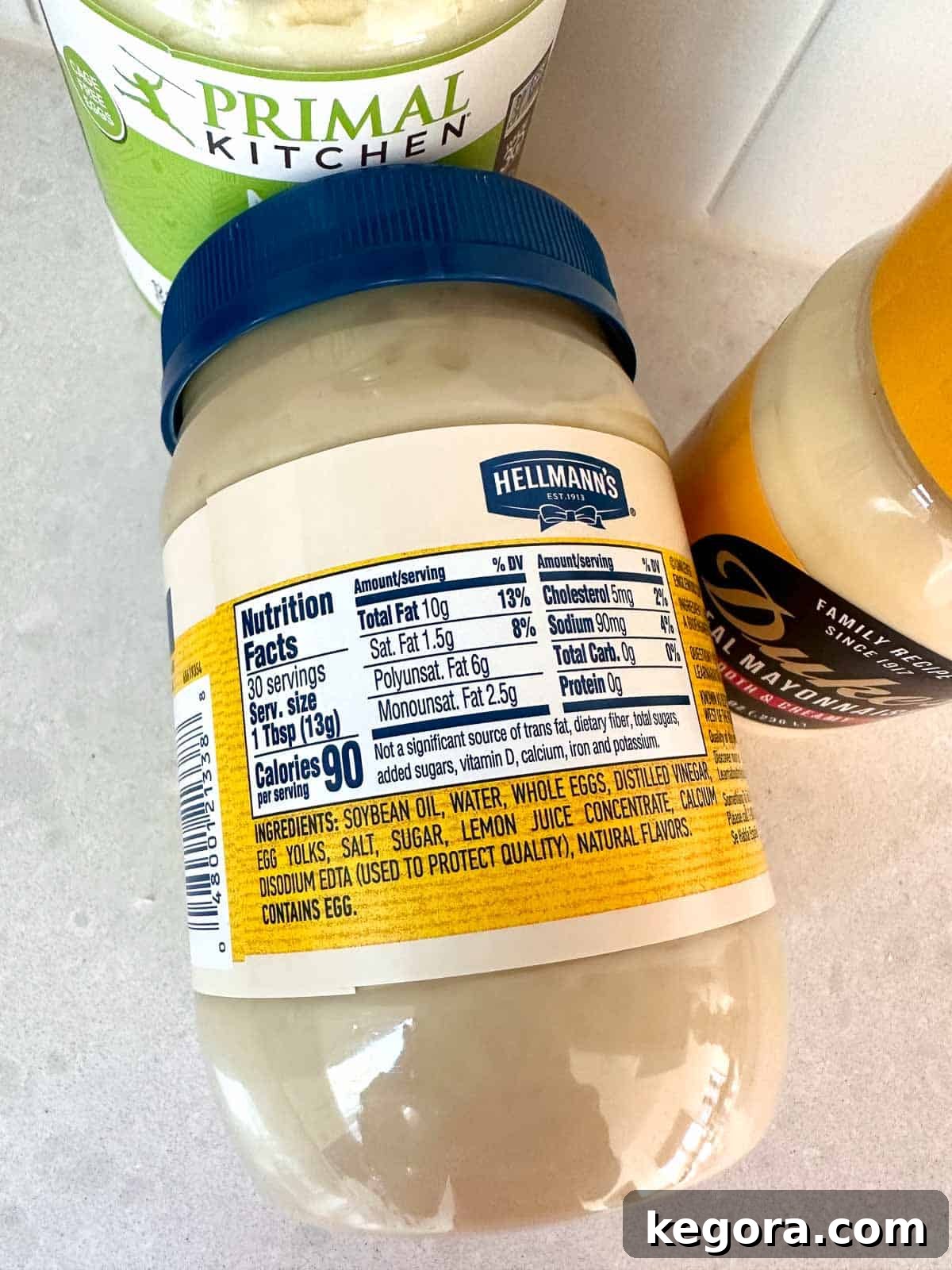
As an example, Hellmann’s Original Mayonnaise typically lists the following ingredients:
- Soybean oil
- Water
- Whole eggs
- Egg yolks
- Distilled vinegar
- Salt
- Sugar
- Lemon juice concentrate
- Calcium disodium EDTA (to protect quality)
- Natural flavors
While the vast majority of commercial mayonnaise brands adhere to this dairy-free formulation, it’s theoretically possible for a niche brand or a specialty product to incorporate milk or cream for a specific flavor or texture. This is why label checking remains the gold standard for anyone with dietary restrictions.
Are Eggs Dairy? Dispelling a Persistent Myth
This is one of the most frequently asked questions regarding food classifications, and the answer is a definitive **no, eggs are not dairy**. The confusion often stems from eggs being commonly found in the dairy section of grocery stores alongside milk, cheese, and yogurt. However, dairy products are specifically defined as products derived from the milk of mammals, such as cows, goats, or sheep.
Eggs, on the other hand, are laid by birds (most commonly chickens) and contain no milk or lactose. They are classified as poultry products. Therefore, if you are lactose intolerant or have a dairy allergy, eggs are generally safe to consume. Eggs are a fantastic source of protein, vitamins, and minerals, making them a valuable part of many diets, including those that are dairy-free.
Is All Mayonnaise Dairy-Free? The Importance of Label Reading
For the most part, yes, nearly all mayonnaise you find on supermarket shelves is dairy-free. As discussed, the core ingredients—oil, eggs, and vinegar—do not include any milk or milk derivatives. This makes traditional mayonnaise a safe and convenient condiment for individuals avoiding dairy.
However, the culinary landscape is constantly evolving, and specialty products can sometimes deviate from standard recipes. While rare, it is conceivable for a manufacturer to introduce a “creamy” or “rich” mayonnaise variant that might include milk solids, cream, or other dairy components. This is more likely to occur in gourmet or artisanal versions rather than mainstream brands.
Therefore, for absolute certainty, particularly if you have a severe dairy allergy, diligently checking the ingredient list on every jar of mayonnaise you purchase is crucial. Look for terms like “milk,” “cream,” “butter,” “whey,” “casein,” or “lactose.” If a product explicitly states “dairy-free,” that offers an additional layer of reassurance.
Is Mayonnaise Both Dairy-Free and Gluten-Free?
The good news continues for those with multiple dietary restrictions: mayonnaise is almost universally both dairy-free and gluten-free. Gluten is a protein found in wheat, barley, and rye. The primary ingredients of mayonnaise—oil, eggs, and vinegar—are naturally gluten-free.
According to the FDA guidelines, a food can be labeled “gluten-free” if it contains less than 20 parts per million (ppm) of gluten. Most commercial mayonnaise brands easily meet this standard. For individuals with celiac disease or severe gluten sensitivity, seeking a product with a “certified gluten-free” label provides the highest level of assurance. This certification indicates that the product has been tested and produced in a facility that minimizes the risk of cross-contamination with gluten-containing ingredients.
This dual dairy-free and gluten-free status makes mayonnaise a valuable staple for a wide range of restrictive diets, allowing for delicious and versatile meal preparation without compromise. Enjoy it as a base for creamy dips, a binder in salads, or simply as a flavorful spread!
If you’re exploring more dairy-free culinary options, consider incorporating mayo into these delightful recipes: try this dairy-free buffalo chicken dip, a creamy dairy-free spinach artichoke dip, a hearty dairy-free lasagna, fluffy dairy-free mashed potatoes, and a comforting dairy-free mac and cheese.
Mayonnaise is also an essential ingredient for creating the perfect coleslaw recipe, providing that classic creamy texture and tangy flavor.
Frequently Asked Questions About Mayonnaise and Dairy
No, Hellmann’s original mayonnaise is dairy-free. Both Hellmann’s Real Mayonnaise and Hellmann’s Light Mayonnaise are made without any dairy ingredients. Their classic recipe includes soybean oil, water, whole eggs, egg yolks, distilled vinegar, salt, sugar, lemon juice concentrate, calcium disodium EDTA, and natural flavors. This makes it a suitable choice for those avoiding dairy.
Yes, Duke’s Real Mayonnaise is indeed dairy-free. Known for its distinct tangy flavor, Duke’s mayo relies on a traditional blend of soybean oil, eggs, water, distilled and apple cider vinegar, salt, oleoresin paprika, natural flavors, and calcium disodium EDTA. It contains no milk products, making it a safe and delicious option for individuals on a dairy-free diet.
Generally, yes, traditional mayonnaise is safe for individuals with a dairy allergy. Standard mayonnaise recipes do not include milk or any ingredients derived from milk. However, due to the rare possibility of specialized products adding dairy, it is always recommended to meticulously check the ingredient label of any mayonnaise brand you intend to consume to confirm it is dairy-free and does not contain any hidden milk components.
No, Miracle Whip dressing, while often confused with mayonnaise, is also dairy-free. This popular condiment, recognized for its unique tangy and sweet flavor, typically contains water, soybean oil, high fructose corn syrup, vinegar, modified cornstarch, eggs, salt, natural flavor, mustard flour, potassium sorbate (as a preservative), paprika, spice, and dried garlic. Therefore, Miracle Whip is suitable for consumption by those with a milk allergy or lactose intolerance.
No, individuals following a vegan diet cannot consume traditional mayonnaise because it contains eggs, which are animal products. However, the market offers an excellent selection of plant-based, eggless mayonnaise alternatives specifically formulated for vegans. Look for brands such as Hellmann’s Vegan Dressing, Sir Kensington’s Classic Vegan Mayo, Follow Your Heart Vegenaise, or Primal Kitchen Vegan Mayo, among others, to enjoy the creamy texture without animal ingredients.
The Bottom Line: Enjoying Mayonnaise on a Dairy-Free Diet
In summary, the answer to “Does mayo have dairy?” is a resounding **no** for the vast majority of products. Traditional mayonnaise is fundamentally dairy-free, relying on oil, eggs, and acid for its iconic creamy texture and tangy flavor. While it does contain eggs, which are animal products, eggs are not classified as dairy.
This means mayonnaise is an excellent choice for individuals managing lactose intolerance, dairy allergies, or simply opting for a dairy-free lifestyle. It also generally qualifies as gluten-free, making it a versatile ingredient for even more restrictive diets.
As with any packaged food when dealing with dietary restrictions, the most important rule is to **always check the ingredient label**. While rare, a specific product could potentially deviate from the standard recipe and include dairy components. For those seeking egg-free options, a wide variety of delicious vegan mayonnaise brands are readily available, ensuring everyone can enjoy this beloved condiment.
So go ahead, spread that mayo generously and enjoy your favorite dishes, confident in its dairy-free status!