
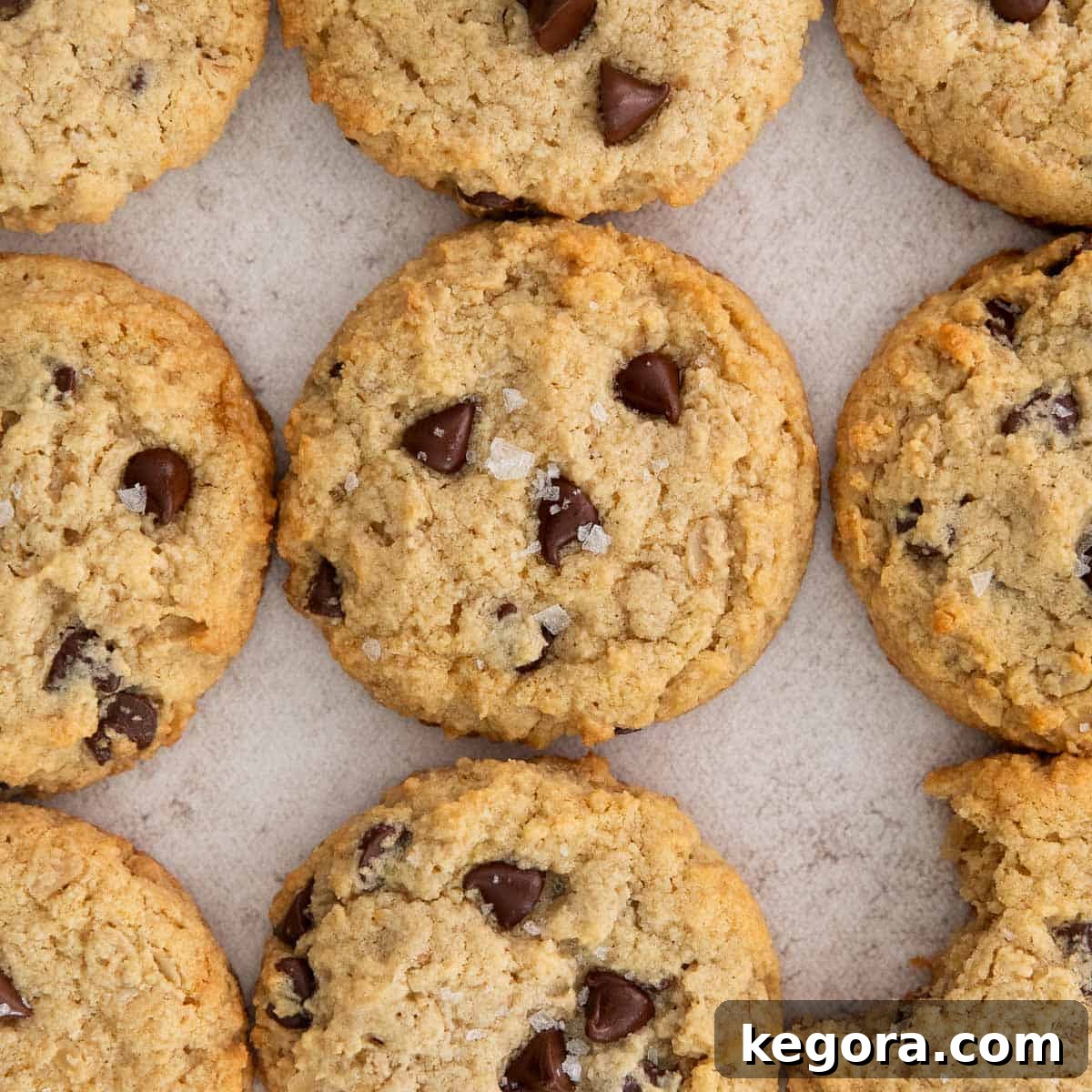
Delicious & Easy Gluten-Free Almond Flour Oatmeal Cookies: Your New Favorite Recipe
Are you on the hunt for a cookie recipe that’s not only incredibly delicious but also caters to dietary preferences without sacrificing flavor or texture? Look no further! These Almond Flour Oatmeal Cookies are designed to be soft, chewy, and wonderfully satisfying. Crafted with wholesome ingredients and a straightforward method, they offer a rich, nutty oat flavor that will impress even the most discerning palates. Best of all, they’re naturally gluten-free and come together effortlessly in just one bowl!
Why You’ll Adore These Almond Flour Oatmeal Cookies: Erin’s Top Picks
Erin, the creator of this amazing recipe, has put together a quick rundown of what makes these cookies truly special. Here’s an elaborated look at why these gluten-free almond flour oatmeal cookies are destined to become a staple in your kitchen:
- Irresistible Soft & Chewy Texture: Forget dry, crumbly cookies! This recipe guarantees a supremely soft interior with perfectly chewy edges, delivering that comforting, melt-in-your-mouth sensation that defines a great oatmeal cookie.
- Wholesome & Warm Flavor Profile: Each bite is a symphony of flavors – the rich, subtle nuttiness of almond flour perfectly complements the hearty, warm notes of oats. It’s a classic combination that tastes like a hug in cookie form.
- Effortless One-Bowl Preparation: Short on time or hate doing dishes? This recipe is your dream come true! It requires minimal cleanup, coming together in just one bowl. From start to oven, you can have a batch of these glorious cookies ready in approximately 30 minutes, making them ideal for quick treats or unexpected guests.
- Surprisingly Gluten-Free: One of the best qualities of these cookies is that their deliciousness completely masks their gluten-free nature. Friends and family will never guess they’re free from gluten, making them a fantastic option for everyone, including those with dietary restrictions.
- Versatile Customization: While absolutely divine on their own, these cookies are also a perfect canvas for your favorite additions. Easily elevate their flavor profile by folding in plump raisins for a traditional touch, or sweet chocolate chips for an extra layer of indulgence.
- Optimized for Gluten-Free Baking: This recipe specifically calls for blanched almond flour, preferred for its fine texture, and certified gluten-free oats to ensure a truly gluten-free product. Erin particularly recommends the large blue bag of blanched almond flour from Costco for its quality and value.
Inspired by our long-standing reader favorite almond flour chocolate chip cookie recipe, these oatmeal cookies carry forward the tradition of reliable, mouth-watering results. We are confident you’ll make them again and again!
Happy baking from Erin!
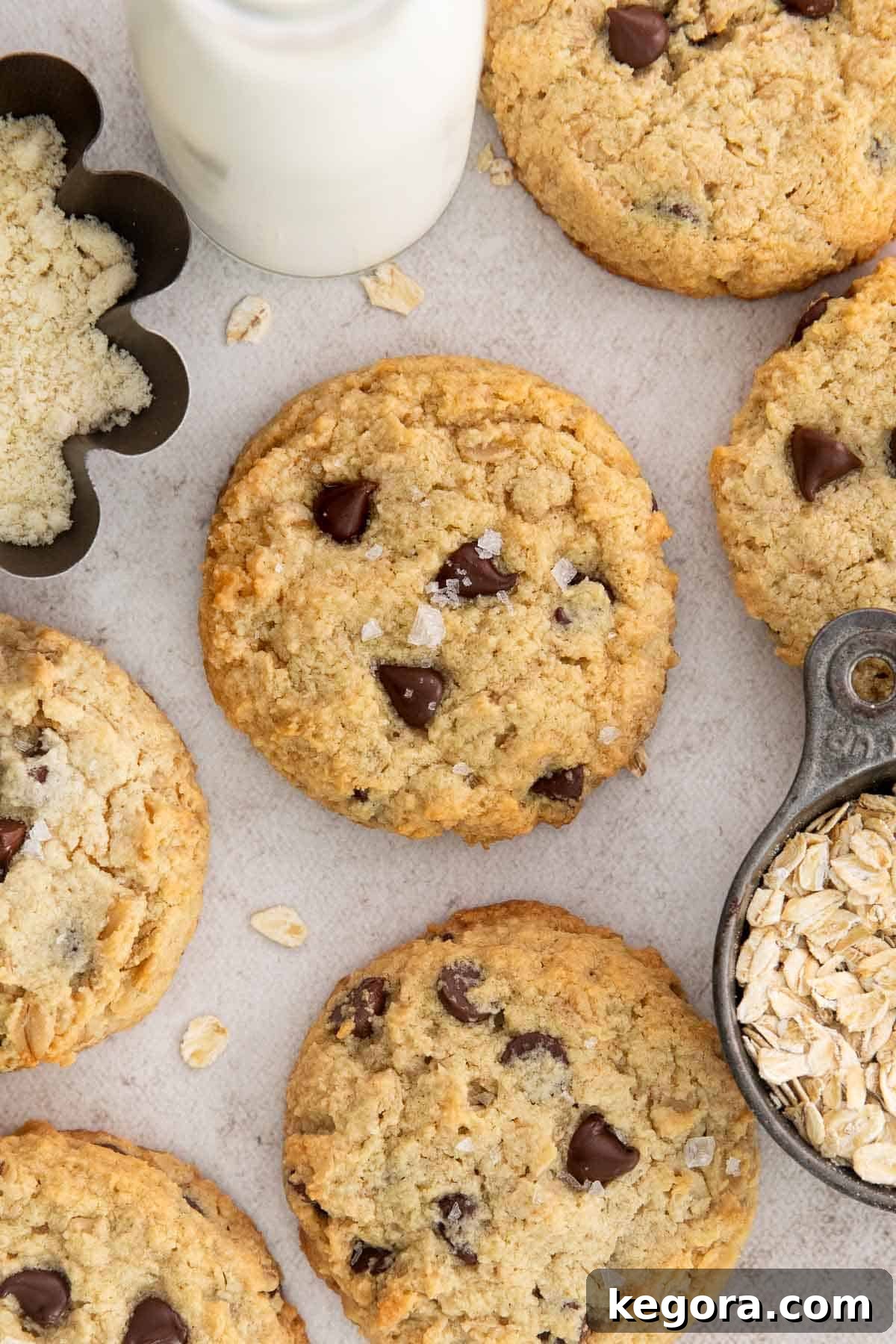
If your pantry is stocked with almond flour and you’re yearning for an easy, consistently delicious, and tried-and-true cookie recipe, your quest ends here. These almond flour oatmeal cookies embody everything you could wish for in a homemade treat: they are wonderfully soft, delightfully chewy, and surprisingly simple to prepare.
Crafted with basic, accessible ingredients, these cookies deliver an exquisite blend of wholesome oat and rich almond flavors. The result is so appealing, truly nobody will ever suspect they are entirely gluten-free! Prepare to make a batch that will vanish before you know it, earning you rave reviews from everyone who tastes them.
Featured Comment
From Jessica: “These cookies are the bomb! Even my grandbabies love them! They are so yummy the entire batch disappeared before the evening was up. Thank you! Best Almond oatmeal cookies EVER! XO”
Blanched Almond Flour vs. Almond Meal: A Baker’s Guide
When you venture into the world of almond-based baking, you’ll inevitably encounter two primary types of almond products: blanched almond flour and almond meal. Understanding the distinct differences between them is crucial for achieving the desired texture and appearance in your baked goods, especially when aiming for delicate and consistently soft cookies like these gluten-free oatmeal treats.
Almond meal is fundamentally made by grinding whole almonds, including their skins, into a relatively coarse flour. This process means almond meal retains more of the almond’s natural oils and typically has a speckled, rustic appearance due to the presence of the brown almond skins. While it imparts a robust, nutty flavor and a denser texture, making it excellent for more rustic breads or certain pie crusts, its coarseness can sometimes lead to a slightly grainy or heavier crumb in lighter baked goods.
In contrast, blanched almond flour undergoes an additional step where the almonds are briefly boiled to remove their skins before being finely ground. This meticulous process yields a flour that is notably lighter in color, finer in texture, and more uniform in consistency. The absence of skins results in a more delicate crumb and a smoother finish in your final baked product.
For recipes striving for a soft, tender, and consistently smooth texture, such as our Almond Flour Oatmeal Cookies, blanched almond flour is the unequivocally recommended choice. Its fine particle size ensures a more cohesive dough and a professional-quality cookie that is both visually appealing and perfectly chewy. Many dedicated gluten-free bakers, myself included, highly recommend purchasing the large blue bag of blanched almond flour from Costco. It offers excellent quality at a great value, making it a staple for all your gluten-free baking adventures.
Essential Ingredients for Perfect Gluten-Free Oatmeal Cookies
Creating these outstanding almond flour oatmeal cookies relies on a thoughtfully selected list of ingredients, each contributing to their delightful taste and signature chewy texture. Below, you’ll find notes on the key components and why they are important. (For exact measurements and a complete list, please refer to the comprehensive recipe card provided below.)
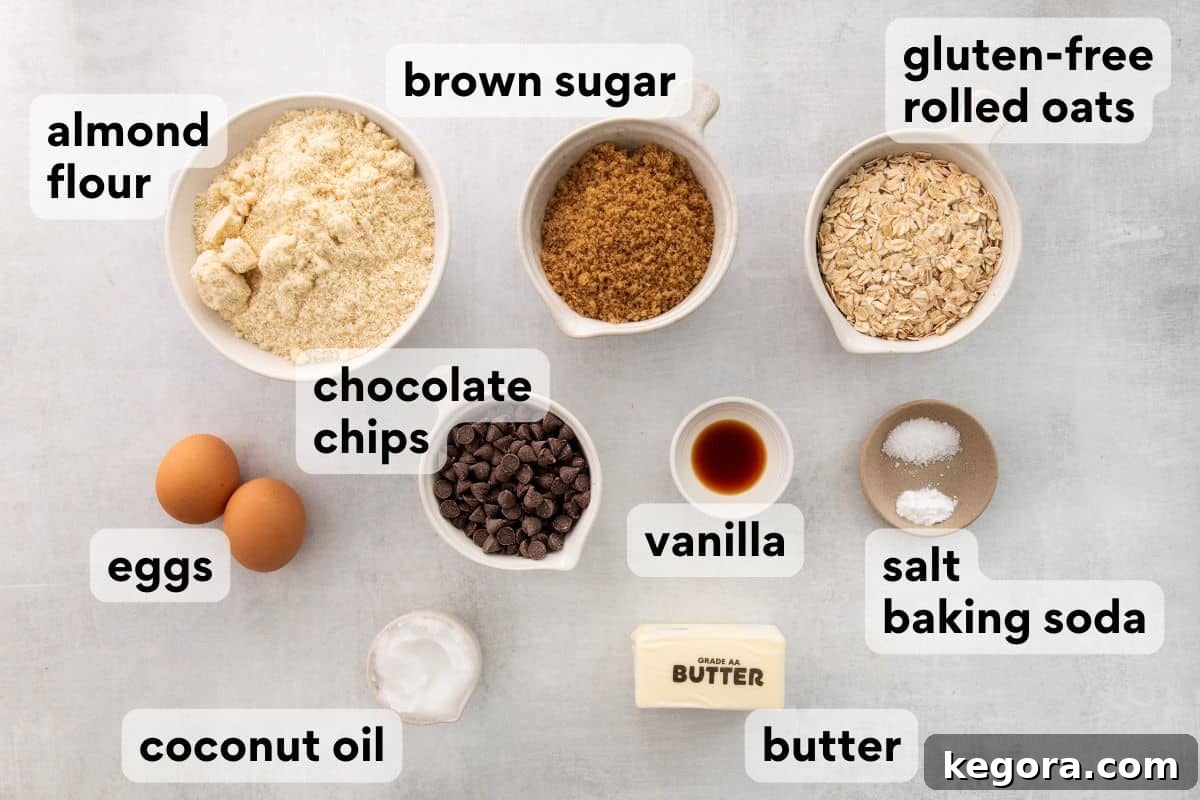
- Blanched Almond Flour: As previously highlighted, this is the cornerstone of our cookie’s incredible texture. Its fine, uniform grind results in a tender, lighter crumb compared to coarser almond meal. It also imparts a delicate, sweet almond flavor without being overpowering. Measuring accurately is important; spoon it into your cup and level it off.
- Certified Gluten-Free Oats: To ensure these cookies are completely safe for those with gluten sensitivities or celiac disease, always opt for oats specifically labeled as “certified gluten-free.” Regular oats can be cross-contaminated during harvesting or processing. Rolled oats (old-fashioned oats) are preferred for their hearty texture and the chewiness they lend to the cookies, though quick oats can be used for a slightly softer result.
- Brown Sugar: This isn’t just for sweetness; brown sugar plays a crucial role in both the flavor and moistness of these oatmeal cookies. Its molasses content provides a deeper, more complex caramel-like sweetness and, more importantly, contributes to the wonderfully soft and chewy texture of the final product. Coconut sugar can be a suitable alternative if you prefer, offering a similar depth with slightly less refined sweetness.
- Butter and Coconut Oil: The strategic combination of these two fats is a secret to the cookies’ exceptional chewiness. Butter brings a classic rich flavor and helps with the golden-brown edges, while softened coconut oil works magic to enhance the chewy factor without imparting an overpowering coconut taste. If you need a dairy-free option, simply substitute the butter with your favorite high-quality vegan butter.
- Large Eggs: Eggs serve as a vital binder in this recipe, holding the dough together and providing essential structure. They also contribute to the overall richness and moisture content of the cookies, ensuring they don’t turn out dry.
- Vanilla Extract: A splash of pure vanilla extract is indispensable in almost any cookie recipe. It elevates and harmonizes all the other flavors, adding a warm, aromatic depth that truly makes these cookies irresistible.
- Baking Soda: This powerful leavening agent is essential for the cookies’ slight rise and soft interior. It reacts with the acidic components in the dough (like brown sugar), creating carbon dioxide that results in a lighter texture.
- Kosher Salt: A small but mighty ingredient, salt is critical for balancing the sweetness of the sugar and enhancing the natural flavors of the almond and oats. It prevents the cookies from tasting one-dimensional.
- Chocolate Chips or Raisins (Optional): These beloved mix-ins offer a fantastic opportunity for customization. Plump raisins provide a classic, fruity sweetness, while high-quality chocolate chips add a decadent, melty contrast. Feel free to use one, both, or even other additions like chopped nuts or dried cranberries. Remember to check labels for gluten-free and dairy-free certifications if needed.
How to Make Almond Flour Oatmeal Cookies: Step-by-Step Guide
Baking these delectable almond flour oatmeal cookies is a surprisingly simple and rewarding process, suitable for bakers of all experience levels. With just one bowl and a few straightforward steps, you’ll be enjoying warm, chewy cookies in no time. Here’s a detailed, step-by-step guide to help you create your perfect batch. (For precise measurements and a printable version, please refer to the full recipe card below.)
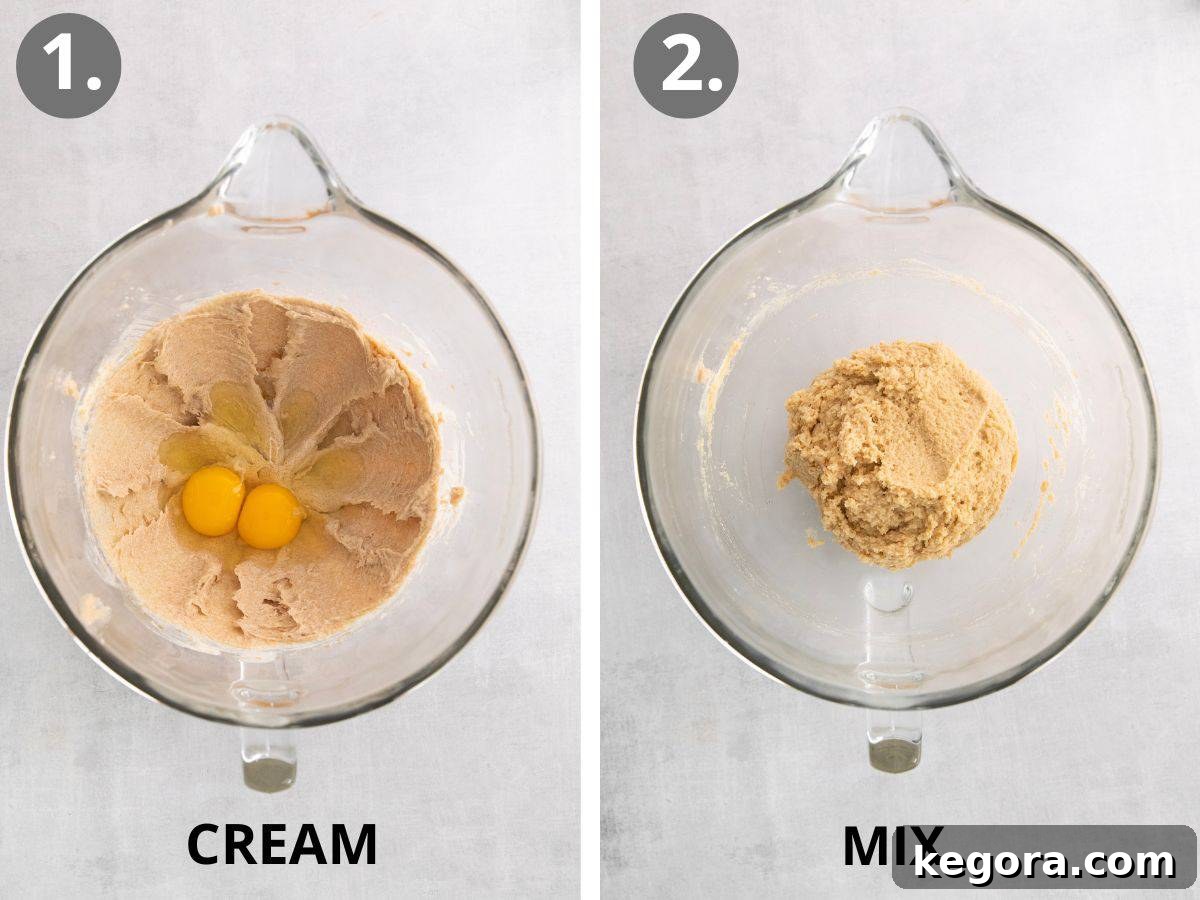
- Preheat Oven & Prepare Baking Sheet: Begin by preheating your oven to 350°F (175°C). This ensures your oven is at the correct temperature for even baking. Line a large baking sheet with parchment paper or a silicone baking mat. This step is crucial for preventing the cookies from sticking and aids in easy cleanup.
- Cream Wet Ingredients & Sugar: In a spacious mixing bowl (or the bowl of a stand mixer fitted with the paddle attachment), combine the softened butter, softened coconut oil, and brown sugar. Beat these ingredients together on medium speed until the mixture is light, fluffy, and thoroughly combined. This creaming process incorporates air into the fats and sugar, which is vital for the cookies’ soft texture. Next, beat in the vanilla extract, followed by the large eggs, adding them one at a time and mixing until just incorporated after each addition. Be careful not to overmix once the eggs are added.
- Incorporate Dry Ingredients: To the creamed wet mixture, sprinkle in the baking soda and kosher salt, mixing briefly to ensure they are well dispersed. Then, gradually add the blanched almond flour, approximately one cup at a time. Beat the dough thoroughly after each addition until the flour is fully incorporated and no dry pockets remain. The dough will be noticeably thick and rich at this stage.
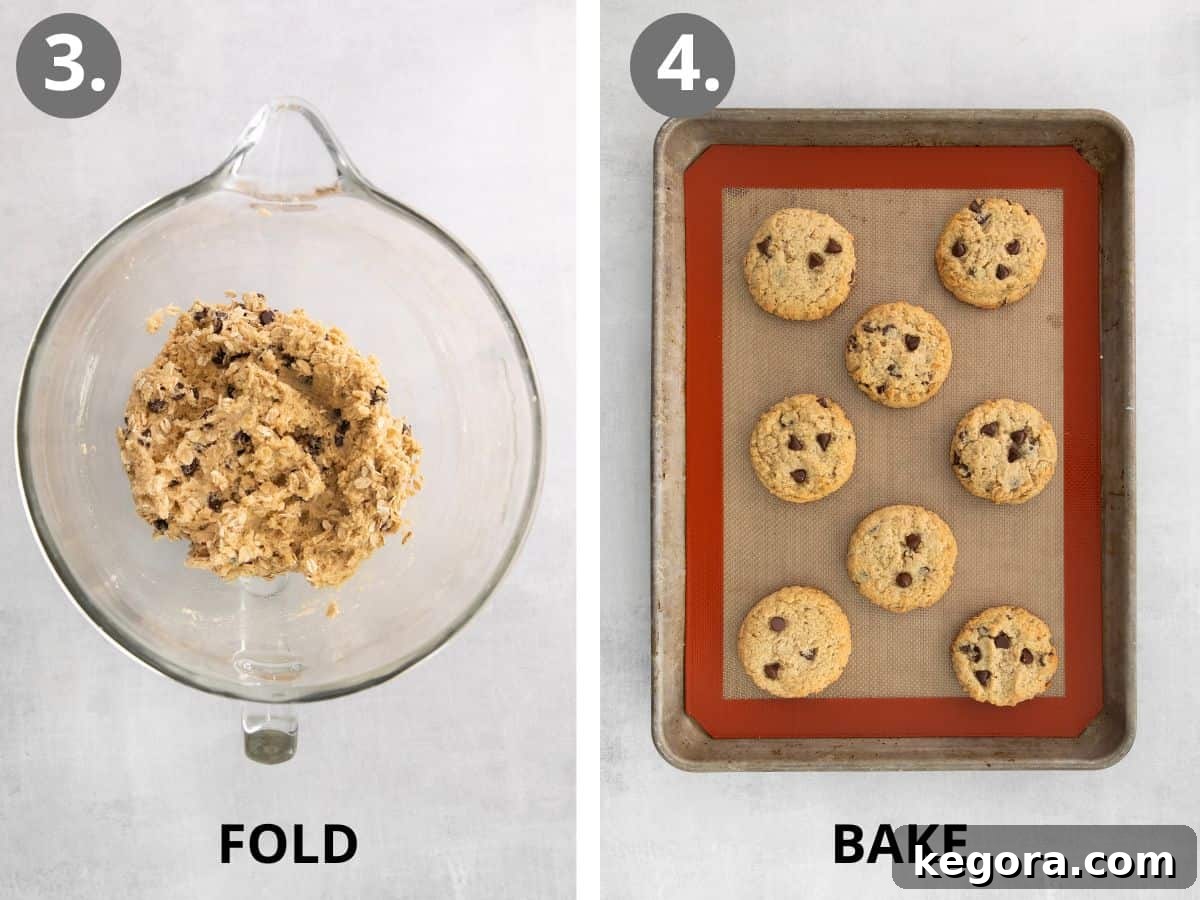
- Fold in Oats & Optional Mix-ins: With a spatula or spoon, gently fold the certified gluten-free rolled oats into the dough until they are evenly distributed. If you’ve decided to include chocolate chips or raisins, gently fold them in at this point as well. It’s important to fold gently to avoid overworking the dough, which can lead to tougher cookies.
- Scoop & Prepare for Baking: Using a tablespoon or a small cookie scoop, form the dough into uniform balls. Consistency in size helps ensure even baking. Place these dough balls onto your prepared baking sheet, leaving approximately 3 inches of space between each cookie. This spacing is crucial to allow for proper spreading during baking without the cookies merging.
- Bake to Golden Perfection: Transfer the baking sheet to your preheated oven and bake for 11-13 minutes. Keep a close watch on them; the ideal cookie will have beautifully golden brown edges while the centers still appear slightly soft and set. This indicates a perfectly chewy interior.
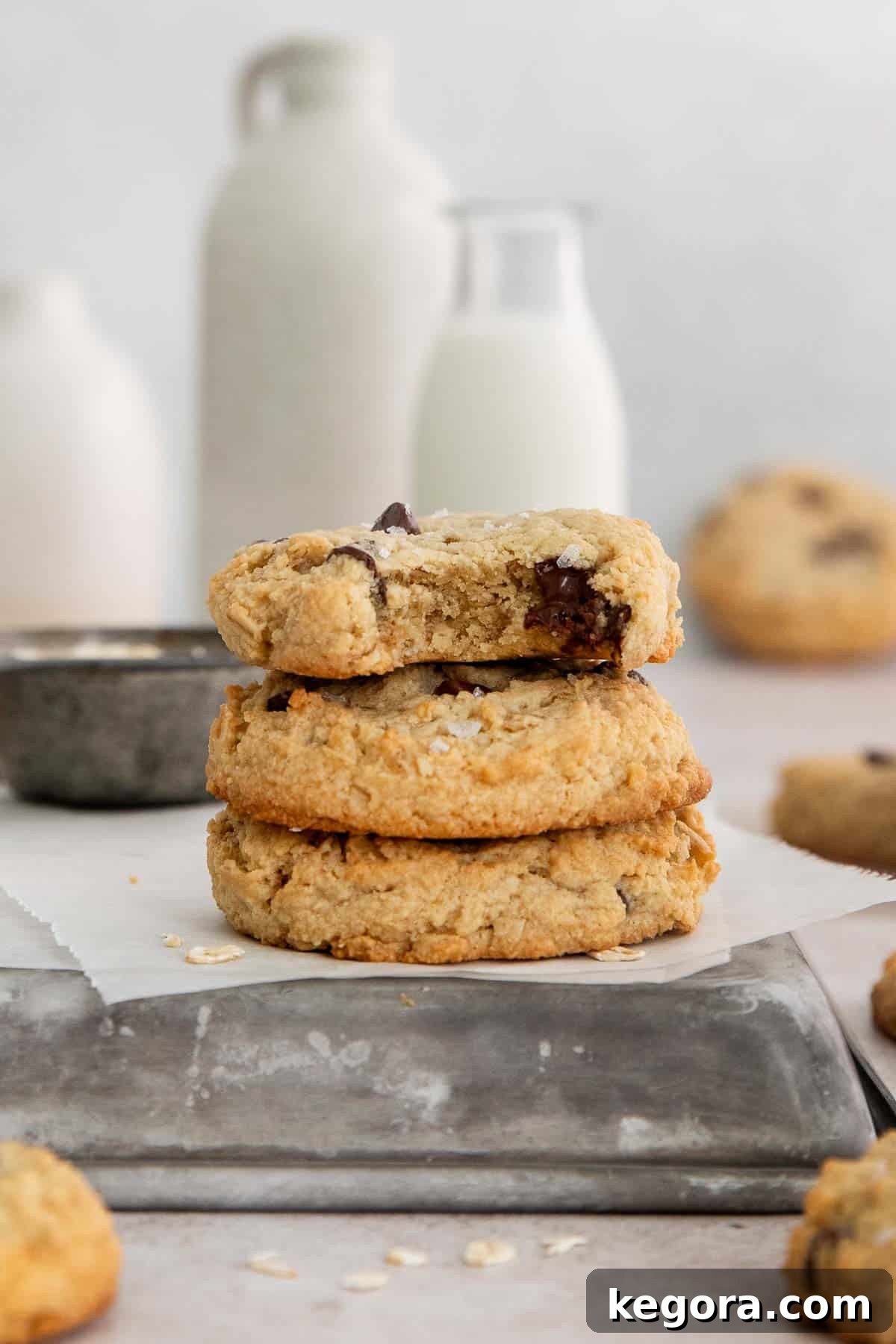
- Cool & Enjoy: Once baked, carefully remove the cookies from the oven. Allow them to cool on the baking sheet for a few minutes. This crucial cooling period helps the cookies to set properly and firm up, preventing them from breaking when transferred. After a few minutes, gently move them to a wire rack to cool completely. While tempting, allowing them to cool fully helps develop their ideal soft and chewy texture. These almond flour oatmeal cookies are truly at their absolute best when enjoyed on the very day they are baked.
Expert Tips for the Best Gluten-Free Oatmeal Cookies
To ensure every batch of your almond flour oatmeal cookies turns out perfectly soft, chewy, and utterly delicious, keep these expert tips in mind:
- Preventing Excessive Spread: If you notice your cookies are spreading a bit too much during baking, a simple trick can help. Refrigerate your cookie dough for at least 30 minutes (or up to 2 hours) before scooping and baking. Chilling helps to solidify the fats in the dough, preventing them from melting too quickly in the oven and allowing the cookies to hold their shape better.
- Accurate Flour Measurement: Precision in measuring almond flour is key. Always spoon the almond flour into your measuring cup and then level it off with a straight edge (like the back of a knife). Scooping directly from the bag can compact the flour, leading to an excess amount that can result in dry, crumbly cookies.
- Avoid Overbaking: This is perhaps the most critical tip for achieving perfectly soft and chewy cookies. Always pull your cookies from the oven when the edges are visibly golden brown, but the centers still look slightly soft or underdone. They will continue to cook and set on the hot baking sheet as they cool, achieving that ideal texture. Overbaking is the quickest way to end up with hard, dry cookies.
- Room Temperature Ingredients are a Must: Ensure your butter, coconut oil, and eggs are all at true room temperature before you begin mixing. This allows them to emulsify and cream together smoothly and evenly, incorporating more air into the dough. The result is a more uniform, lighter, and more tender cookie texture.
- Ingredient Quality Matters: The quality of your ingredients directly impacts the final taste and texture of your cookies. Invest in high-quality blanched almond flour and always choose certified gluten-free oats to guarantee purity and superior flavor.
- Get Creative with Customization: While chocolate chips and raisins are classic choices, don’t hesitate to experiment! Consider adding other mix-ins like chopped walnuts or pecans for extra crunch, dried cranberries for a tart counterpoint, or shredded coconut for added flavor and texture. A pinch of cinnamon or nutmeg can also introduce a wonderful warmth.
Make-Ahead, Storage, & Freezing Solutions for Convenience
These almond flour oatmeal cookies are so delightful, you’ll want to ensure you always have some on hand! Here are convenient instructions for making them ahead, storing leftovers, and freezing them for future enjoyment:
- To Make-Ahead (Cookie Dough): For ultimate baking convenience, consider preparing a double batch of the cookie dough! Once the dough is fully mixed, scoop it into uniform balls and arrange them on a small baking sheet or plate lined with parchment paper. Place them in the freezer until they are completely solid (this typically takes about 1-2 hours). Once firm, transfer the frozen dough balls to a freezer-safe zip-top bag or an airtight container. They can be stored in the freezer for up to 3 months. When you’re ready for fresh-baked cookies, simply place the frozen dough balls directly onto a prepared baking sheet and add an extra 1-2 minutes to the suggested baking time. This method is perfect for warm, homemade cookies on demand!
- To Store (Baked Cookies): While these cookies truly shine with their peak freshness and chewiness on the day they are baked, any leftover baked cookies can be stored effectively. Place them in an airtight container at room temperature, where they will remain delicious for up to 3 days. For a little revival of their soft texture, you can gently warm them in the microwave for a few seconds before serving.
- To Freeze (Baked Cookies): If you wish to preserve baked cookies for a longer period, allow them to cool completely to room temperature first. Then, arrange them in a single layer on a baking sheet and freeze until they are solid. Once frozen, transfer the cookies to a freezer-safe bag or an airtight container. To prevent them from sticking together, you can separate layers with small pieces of parchment paper. Frozen baked cookies will maintain their quality for up to 2 months. To enjoy, simply thaw them at room temperature or gently rewarm them in the oven for a few minutes.
Frequently Asked Questions (FAQs)
Here are answers to some of the most common questions about baking these gluten-free almond flour oatmeal cookies, ensuring you have all the information for a successful bake:
- Can these almond flour oatmeal cookies be made dairy-free?
Absolutely! Making this recipe dairy-free is quite simple. Just replace the butter with an equal amount of your favorite high-quality vegan butter. If you plan to add chocolate chips or any other mix-ins, be sure to select brands that are certified dairy-free to maintain the integrity of your dairy-free cookies. The coconut oil in the recipe is already naturally dairy-free. - How can I keep the cookies from spreading too much?
Cookie spread can sometimes be a concern, especially in gluten-free baking where the lack of gluten can affect dough structure. A highly effective trick is to refrigerate the cookie dough for at least 30 minutes before scooping and baking. This chilling period helps to firm up the fats in the dough, preventing them from melting too rapidly in the oven and allowing the cookies to hold their shape more effectively. Additionally, ensuring your oven thermometer is accurate can help, as an oven that runs too cool can contribute to excessive spreading. - Can I use almond meal instead of blanched almond flour?
While almond meal can be used in some recipes, for these particular oatmeal cookies, blanched almond flour is strongly recommended. Blanched almond flour offers a finer, more uniform texture, which is crucial for achieving the light, soft, and distinctly chewy cookie. Almond meal, being coarser and containing the almond skins, will likely result in a denser, more rustic cookie with a different, slightly grainier texture. - What kind of oats should I use for this recipe?
For the best balance of chewiness and texture in your almond flour oatmeal cookies, we recommend using certified gluten-free rolled oats (also commonly known as old-fashioned oats). Quick oats can be used as a substitute if that’s what you have on hand, but they absorb liquid faster and may result in a slightly softer or more uniform cookie with less distinct chew. Steel-cut oats are not suitable for this recipe as they are too coarse and require longer cooking times. - Are these cookies suitable for other dietary restrictions?
Yes! Beyond being naturally gluten-free (when using certified GF oats), this recipe is easily adaptable to be dairy-free by swapping the butter for vegan butter. As almond flour is a nut-based flour, it is also considered grain-free. This recipe offers a versatile option for various dietary needs.
More Gluten-Free Delights to Explore
If you thoroughly enjoyed baking and devouring these almond flour oatmeal cookies, then you’re in for a treat with more of our beloved gluten-free recipes! Discover additional simple-to-make, flavorful desserts that are perfect for any occasion:
- Flourless Oatmeal Almond Butter Chocolate Chip Cookies: Another fantastic one-bowl cookie option that is also dairy-free and packed with flavor.
- Almond Flour Blondies: Indulge in these rich, fudgy blondies, a wonderfully chewy gluten-free dessert that can also be made dairy-free.
- Oat Flour Chocolate Chip Cookies: Explore a different grain-free flour option with these delightful chocolate chip cookies made with oat flour.
- Gluten-Free Oatmeal Cream Pies: Recreate a cherished classic treat with this delicious, soft, and creamy gluten-free version.
- The Best Gluten-Free Chocolate Chip Cookies: A timeless favorite, this recipe delivers perfectly chewy and chocolatey gluten-free chocolate chip cookies every time.

★★★★★
Almond Flour Oatmeal Cookies
Erin Collins
15 mins
10 mins
30 mins (optional, for less spread)
25 mins (active baking time)
18 servings
Comments
Ingredients
Instructions
- Preheat your oven to 350°F (175°C). Line a large baking sheet with parchment paper or a silicone baking mat.
- In the bowl of a stand mixer (or a large mixing bowl with a hand mixer), cream together the softened butter, coconut oil, and brown sugar on medium speed until the mixture is light, fluffy, and smooth. Beat in the vanilla extract, then add the large eggs one at a time, mixing until just incorporated after each addition.
- Add the baking soda and kosher salt to the wet mixture, mixing briefly. Gradually add the blanched almond flour, about 1 cup at a time, beating well after each addition until a thick, cohesive dough forms.
- Gently fold in the certified gluten-free rolled oats until evenly distributed. If using, fold in the chocolate chips or raisins at this stage.
- Form the dough into tablespoon-sized rounds and place them onto the prepared baking sheet, ensuring they are approximately 3 inches apart to allow for proper spreading.
- Bake for 11-13 minutes, or until the edges are golden brown and the centers still look slightly soft.
- Remove from the oven and let the cookies cool on the baking sheet for a few minutes before carefully transferring them to a wire rack to cool completely. These cookies are best enjoyed on the day they are baked for optimal softness and chewiness.
Notes
- Almond Flour: For the best results and a light, chewy texture, this recipe works best with blanched almond flour. Erin recommends the large blue bag from Costco for its quality.
- Oats: To ensure these cookies are 100% gluten-free, use certified gluten-free oats. Rolled oats are preferred for their texture, but quick oats can be used as an alternative.
- Dairy-Free Option: To make this recipe dairy-free, simply substitute the butter with an equal amount of your preferred vegan butter. If adding mix-ins, be sure to use dairy-free chocolate chips.
- Make-Ahead Dough: Scoop cookie dough balls and freeze them on a parchment-lined tray until solid (1-2 hours). Transfer to an airtight freezer bag and store for up to 3 months. Bake directly from frozen, adding 1-2 minutes to the bake time.
- Storage: Baked cookies are best enjoyed on the day they are made. Store any leftovers in an airtight container at room temperature for up to 3 days.
- Freezing Baked Cookies: Allow baked cookies to cool completely. Freeze them in an airtight container, separating layers with parchment paper, for up to 2 months. Thaw at room temperature before serving.
Nutrition Information (per serving, estimated)
Calories: 236.3 kcal |
Carbohydrates: 16.06g |
Protein: 5.23g |
Fat: 18.14g |
Saturated Fat: 6.71g |
Cholesterol: 31.74mg |
Sodium: 149.82mg |
Potassium: 35.23mg |
Fiber: 2.43g |
Sugar: 9.64g |
Vitamin A: 183.98IU |
Calcium: 53.4mg |
Iron: 1.05mg