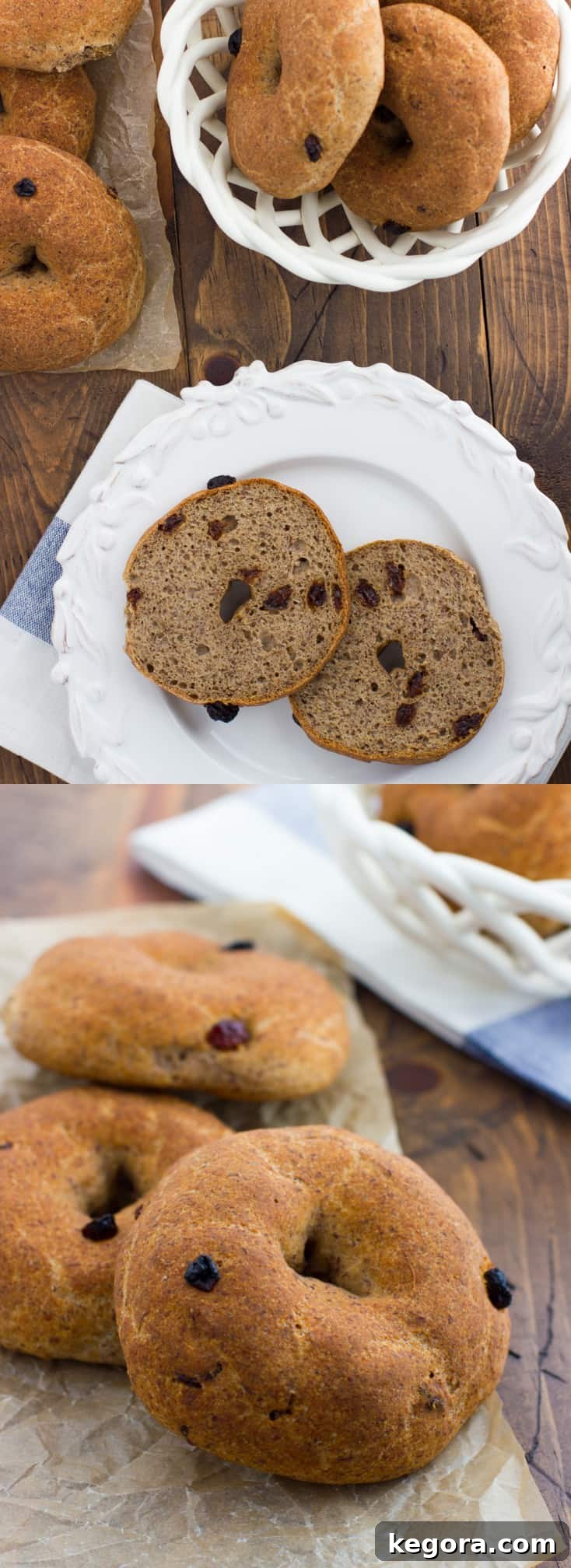
Buckwheat Cinnamon Raisin Bagels! Gluten-free, vegan and easy to make!
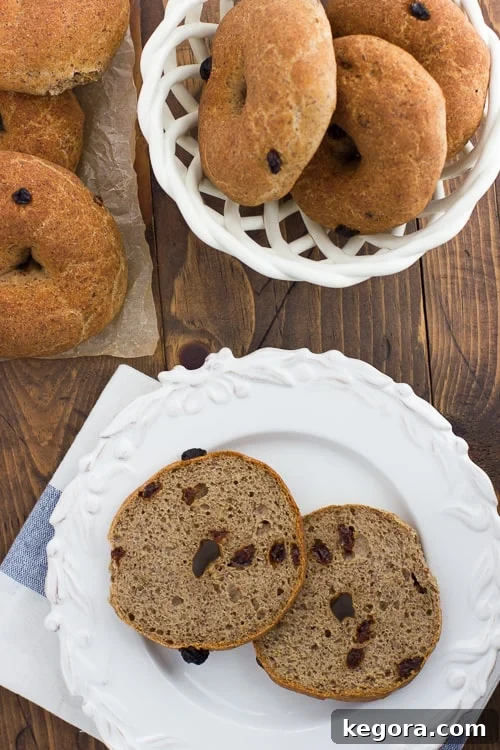
Delicious Gluten-Free Vegan Buckwheat Cinnamon Raisin Bagels: A Healthy Twist on a Classic
Prepare to revolutionize your breakfast routine with these incredible Buckwheat Cinnamon Raisin Bagels! As someone deeply passionate about healthy and flavorful baking, I am absolutely thrilled to share this recipe with you. These aren’t just any bagels; they are arguably some of the most delightful gluten-free, bread-like baked goods I’ve ever crafted. Imagine a warm, chewy bagel, subtly sweet with bursts of juicy raisins and a comforting hint of cinnamon – all while being packed with wholesome, nutrient-rich ingredients.
Crafted from a powerful trio of buckwheat, flaxseed, and psyllium husk, these bagels offer a truly satisfying and guilt-free indulgence. They boast an impressive profile of protein and fiber, making them an ideal choice for a breakfast that truly sustains you. Whether enjoyed fresh from the oven or toasted after a stint in the freezer, their texture and taste remain exceptional. My family, especially my kids, can’t get enough of them. I often bake a double batch to ensure we have plenty on hand for busy weekday mornings, slathered with almond butter or a simple dairy-free spread. I am confident that once you try these, they’ll become a staple in your kitchen too!
The Secret to Effortless Homemade Bagels: No Boiling Required!
For many, the thought of baking bagels conjures images of a multi-step process involving a tricky boiling bath. The good news? This recipe completely bypasses that step without sacrificing an ounce of flavor or texture. That’s right – no boiling necessary! These bagels rise beautifully and bake to golden perfection with surprising ease, making them much more approachable than traditional bagel recipes. Get ready to discover how simple homemade bagels can be!
Understanding Your Ingredients: The Power of Buckwheat, Flaxseed, and Psyllium Husk
What makes these bagels so incredibly good and good for you? Let’s dive into the core ingredients:
- Buckwheat Groats: Despite its name, buckwheat is not a form of wheat and is naturally gluten-free. It’s actually a fruit seed, related to rhubarb, and is an excellent source of fiber, plant-based protein, and essential minerals like magnesium and manganese. Using raw buckwheat groats (not toasted kasha) and grinding them into flour at home ensures maximum freshness and the best texture for these bagels. It provides a unique, earthy flavor profile that complements the cinnamon and raisins beautifully.
- Ground Flaxseed: A powerhouse of omega-3 fatty acids, fiber, and lignans. In gluten-free baking, ground flaxseed acts as a binder and helps create a moist, chewy texture. When combined with water, it forms a gelatinous mixture often used as an egg substitute in vegan recipes, contributing to the structural integrity of our bagels.
- Psyllium Husk: This incredible ingredient is pure dietary fiber, known for its ability to absorb large amounts of water and form a gel. In gluten-free baking, psyllium husk is crucial for mimicking the elasticity and binding properties of gluten, giving these bagels their satisfying chew and preventing them from becoming crumbly. It’s also fantastic for digestive health!
- Cinnamon and Raisins: These classic additions provide the comforting warmth and natural sweetness that elevate these bagels from good to extraordinary. The cinnamon infuses every bite with aromatic spice, while the raisins become plump and juicy during baking, adding delightful pockets of sweetness.
A Detailed Look at the Bagel Making Process
Creating these delightful bagels is a straightforward process. Here’s a more in-depth look at each step:
- Prepare Your Buckwheat Flour: The first crucial step is grinding your raw buckwheat groats into a very fine flour. This is best done in a dry, high-speed blender. The finer the flour, the smoother your bagel texture will be.
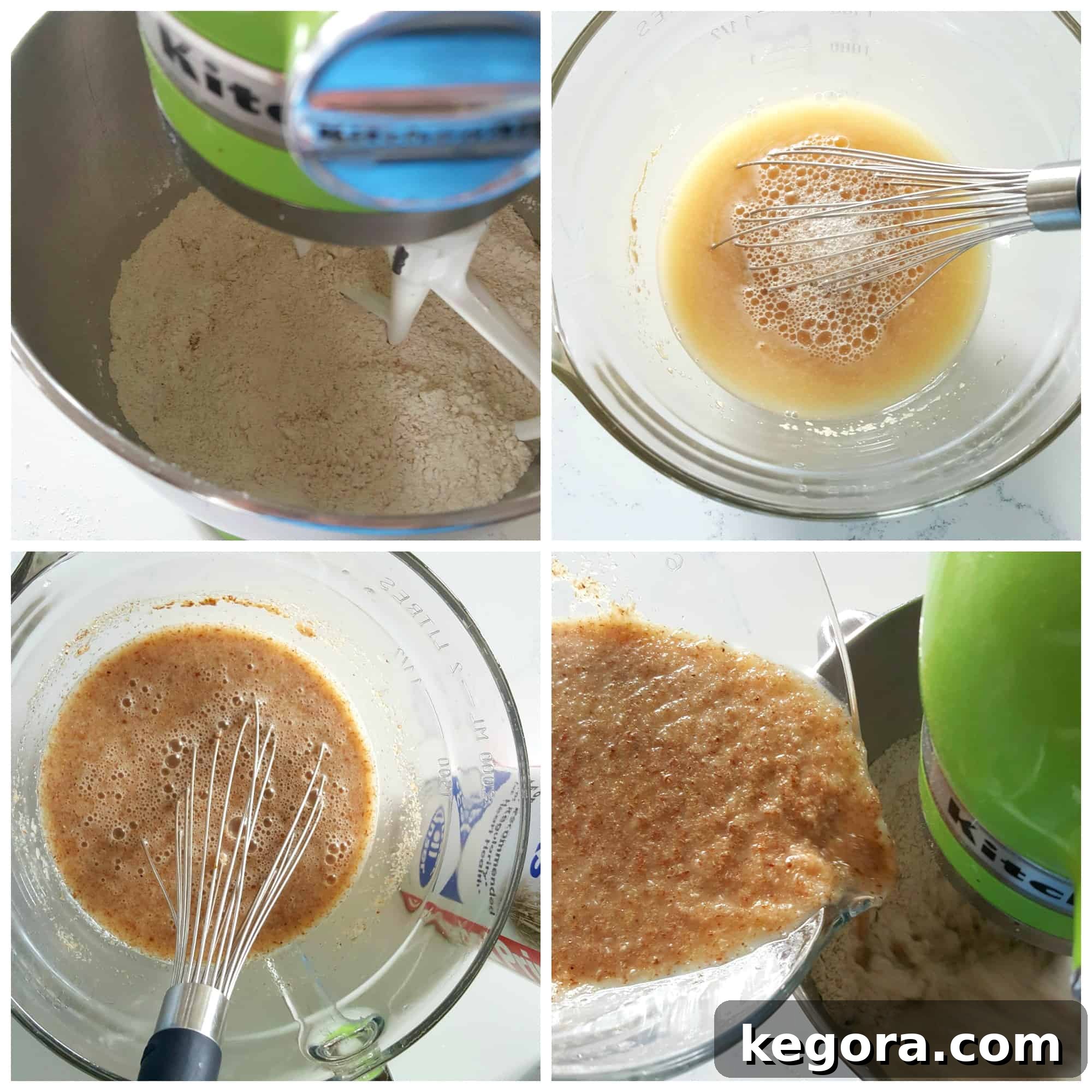
- Combine Dry Ingredients: In the bowl of your stand mixer, whisk together your freshly ground buckwheat flour, arrowroot powder (for lightness and structure), cinnamon, and fine salt. Ensure they are thoroughly combined to distribute the flavors evenly.
- Activate Wet Ingredients: In a separate large glass measuring cup, combine warm water (around 110°F is ideal for yeast activation), instant yeast, and maple syrup. Whisk gently, then incorporate the coconut oil, ground flaxseed, and psyllium husk. Whisk again until well combined. Let this mixture sit for a short period, about 90 seconds to 3 minutes. You’ll notice it transforming into a slightly gelatinous consistency – this is the flaxseed and psyllium husk working their magic!
- Mix the Dough: With your stand mixer running on low speed, slowly pour the activated wet ingredients into the dry mixture. Once all wet ingredients are incorporated, increase the mixer speed to medium-high and beat for a full 5 minutes. This beating time is essential for developing the dough’s structure. The resulting dough will be quite thick, resembling a rich cookie dough rather than a traditional bread dough. Finally, add your raisins and mix just until they are evenly distributed.
- Shape the Bagels: Lightly grease a baking sheet or line it with parchment paper or a silicone mat. This prevents sticking. Using wet hands is key for shaping gluten-free dough, as it tends to be sticker. Take about 1/2 cup of dough, roll it into a ball, and then gently work your fingers through the center to create a hole. Remember to make the hole slightly larger than you’d expect, as it will shrink during the rising and baking process. Re-wet your hands as needed between each bagel. This recipe yields 8 perfectly sized bagels.
- Rise and Bake: Arrange your shaped bagels on the prepared baking sheet and let them rise in a warm spot for 35-40 minutes. Meanwhile, preheat your oven to 400°F (200°C). Once risen, brush each bagel lightly with a little extra coconut oil for a beautiful golden crust. Bake for 35-40 minutes, or until deeply golden brown and cooked through.
- Cool and Enjoy: Allow the bagels to cool on the baking sheet for about 5 minutes before transferring them to a wire rack to cool completely. Cooling for an additional 10-15 minutes helps them firm up and allows the internal structure to set, ensuring the best texture when you slice into them. Then, they are ready to be savored!
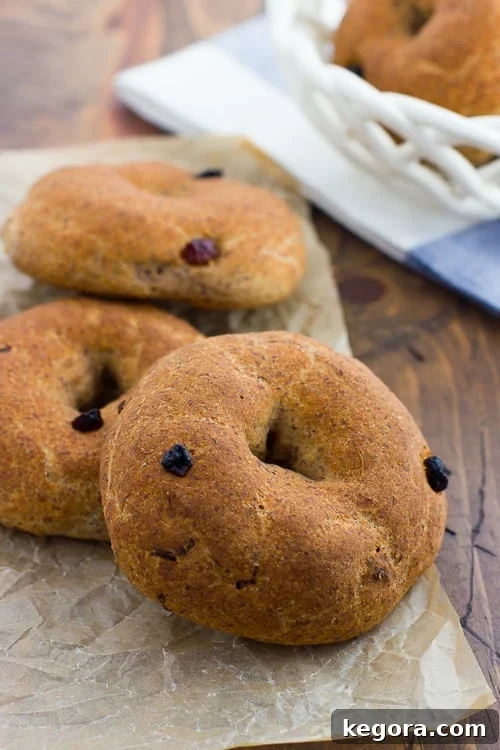
Tips for Perfect Buckwheat Cinnamon Raisin Bagels Every Time
- Quality of Buckwheat: Always use raw buckwheat groats, not kasha (toasted buckwheat). Raw groats have a milder flavor and grind into a better flour for this recipe.
- Yeast Activation: Ensure your water is the correct temperature (around 110°F). Water that’s too hot will kill the yeast, and water that’s too cold won’t activate it properly, resulting in dense bagels.
- Don’t Skimp on Mixing Time: The 5 minutes of mixing on medium-high speed in the stand mixer is crucial for developing the dough’s structure and incorporating air, leading to a lighter bagel.
- Wet Hands are Your Friend: Gluten-free dough can be sticky. Keeping your hands thoroughly wet while shaping prevents the dough from adhering to your skin and makes the process much easier.
- Generous Hole Size: Remember that the holes will shrink during rising and baking. Make them a little larger than you think they need to be to ensure they remain open.
- Storage: These bagels are best enjoyed fresh, but they store well in an airtight container at room temperature for up to 2-3 days.
- Freezing for Later: For longer storage, these bagels freeze exceptionally well. Once completely cooled, place them in a freezer-safe bag or container for up to 3 months. To reheat from frozen, a quick 30-second microwave zap followed by slicing and toasting works wonders.
Serving Suggestions to Elevate Your Bagel Experience
These buckwheat cinnamon raisin bagels are incredibly versatile and delicious on their own, but here are some ideas to take them to the next level:
- Classic Sweet: Spread with your favorite dairy-free butter and sprinkle with a touch of coconut sugar for a simple, comforting treat.
- Nut Butter Heaven: Almond butter, cashew butter, or even a classic peanut butter spread creates a protein-packed breakfast that’s incredibly satisfying.
- Fruity & Fresh: Top with a generous dollop of dairy-free cream cheese and slices of fresh fruit like banana or berries.
- Savory Twist: While they have cinnamon and raisins, the buckwheat flavor can also lend itself to savory toppings. Try them with a slice of avocado and a sprinkle of everything bagel seasoning for an adventurous palate.
- Kid-Approved Snack: My children adore these with just a simple spread of jam or a quick toast and a pat of butter. They’re perfect for school lunches or after-school snacks.
Frequently Asked Questions About Buckwheat Bagels
Q: What is the difference between buckwheat groats and kasha?
A: Buckwheat groats are raw, hulled kernels of buckwheat. Kasha is roasted buckwheat groats. For this recipe, it’s essential to use raw buckwheat groats as they have a milder flavor and grind into a lighter flour, which is crucial for the bagel’s texture and taste profile.
Q: Can I use pre-made buckwheat flour instead of grinding my own?
A: While possible, grinding your own buckwheat groats fresh typically yields the best results. Pre-made buckwheat flour can sometimes be coarser or have a stronger flavor, which might affect the final texture and taste of the bagels. If you do use pre-made flour, ensure it’s finely ground and labeled as “gluten-free” if necessary.
Q: My dough is too sticky/dry. What should I do?
A: Gluten-free doughs can be sensitive to moisture. If your dough seems too sticky, add a very small amount (1-2 teaspoons) of extra arrowroot powder until it’s workable. If it’s too dry and crumbly, add a teaspoon of warm water at a time until it comes together. Always use wet hands when shaping to manage stickiness.
Q: Can I make these bagels without a stand mixer?
A: While a stand mixer makes the process much easier, you can technically mix the dough by hand. Be prepared for a good arm workout, as the dough is quite thick and requires vigorous mixing for the full 5 minutes to achieve the desired consistency.
Q: Are these bagels suitable for people with nut allergies?
A: Yes, this recipe is naturally nut-free, provided you don’t use any nut-based toppings. Buckwheat is a seed, not a nut, making these a safe option for those with nut allergies.
More Gluten-Free & Vegan Breakfast Inspirations
If you loved these bagels, you might also enjoy exploring other healthy and delicious gluten-free and vegan baked goods:
- These Buckwheat Muffins offer another fantastic way to enjoy the goodness of buckwheat in a different form.
- For another excellent bagel option, try these Gluten-Free Bagels from Salted Plains.
- And if you’re looking for a delightful, fluffy accompaniment to any meal, these Gluten-Free Biscuits from This Vivacious Life are a must-try!

Buckwheat Cinnamon Raisin Bagels {Gluten-Free, Vegan}
Comments
Ingredients
Dry Ingredients:
- 2 cups buckwheat groats
- 3/4 cup arrowroot powder
- 1 tablespoon cinnamon
- 1 1/2 teaspoons fine salt
Wet Ingredients:
- 2 cups warm water about 110F
- 1 tablespoon highly active instant yeast
- 1/4 cup maple syrup
- 2 tablespoons coconut oil plus more for brushing
- 1/2 cup ground flaxseed
- 1/4 cup psyllium husk
- 1/2-3/4 cup raisins
Instructions
-
Place the buckwheat in the jar of a dry, high-speed blender. Blend into a very fine flour.
-
In the bowl of a stand mixer, combine the buckwheat flour, arrowroot powder, cinnamon and salt. Mix to evenly combine.
-
In a large glass measuring cup, combine the water, yeast, and maple syrup. Whisk to combine. Add the coconut oil, flaxseed, and psyllium. Whisk to combine and let sit for at least 90 seconds and no more than 3 minutes, until it gets slightly gelatinous.
-
With the mixture running on low, slowly pour the wet ingredients into the dry. Once they are all added, increase the speed to medium-high and beat for 5 minutes. Add the raisins and mix to combine.The dough will resemble thick cookie dough.
-
Lightly grease a baking sheet or line it with parchment/a silicone mat. Using wet hands, roll about 1/2 cup of dough into a ball then work your fingers into the middle to create a whole. Make the hole slightly larger than a finished bagel as it will close slightly during rising and baking. Place on the prepared baking sheet. Wet your hands thoroughly in-between shaping each bagel. This should make 8 bagels.
-
Let the bagels rise for 35-40 minutes. Preheat the oven to 400F. When the bagels are done rising, brush each one with some coconut oil. Bake for 35-40 minutes. Cool on the pan for 5 minutes then transfer to a rack and cool for another 10-15 minutes before serving. Enjoy!
Nutrition