
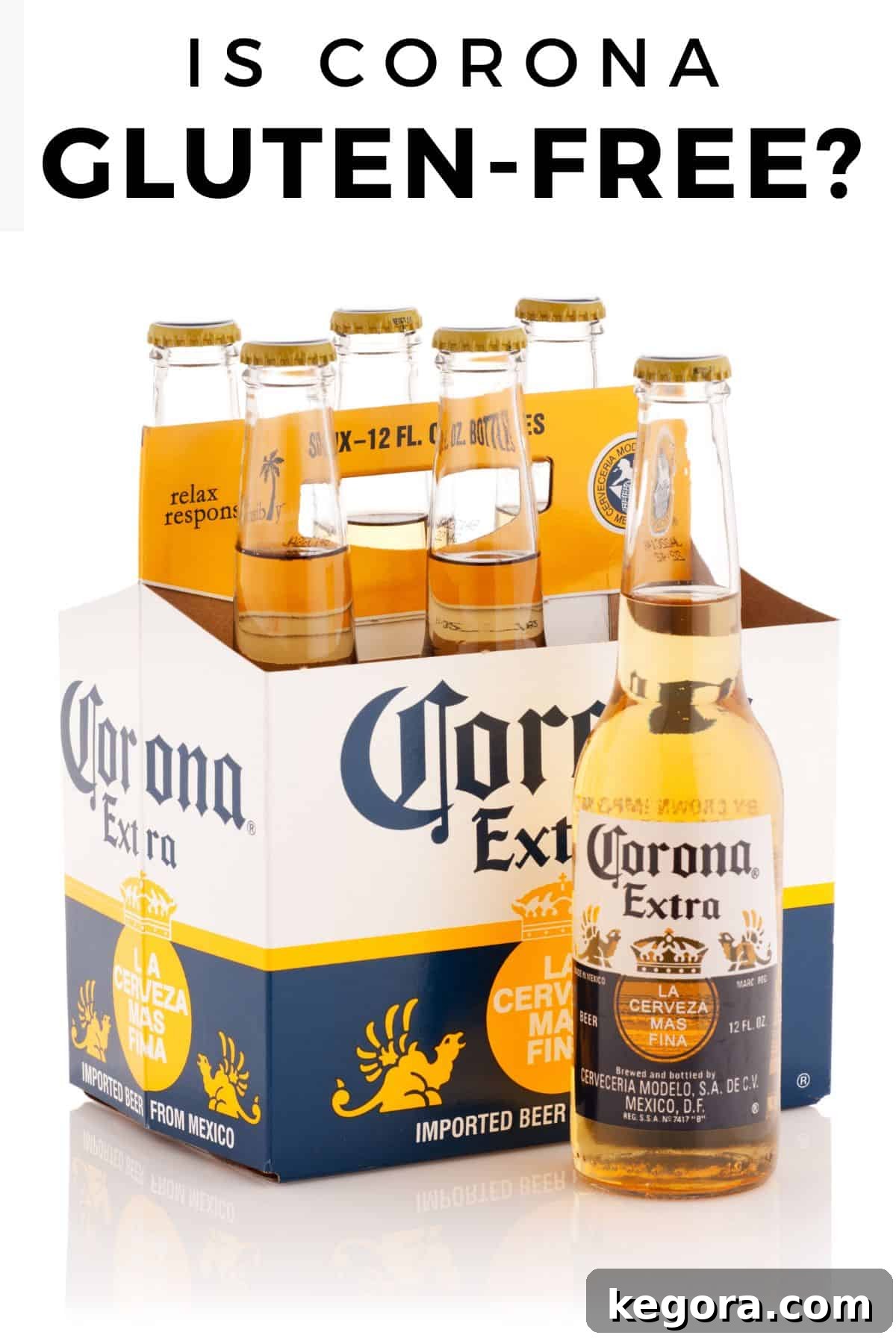
Thinking about unwinding with a cold Corona, perhaps with a slice of lime? Before you crack open that iconic bottle, an important question for many is: Is Corona beer gluten-free? For individuals managing Celiac disease, gluten intolerance, or simply choosing a gluten-free lifestyle, understanding what’s in your beverage is crucial. This comprehensive guide will delve into Corona’s ingredients, explore the nature of gluten in beer, and offer a variety of safe, delicious gluten-free alternatives.
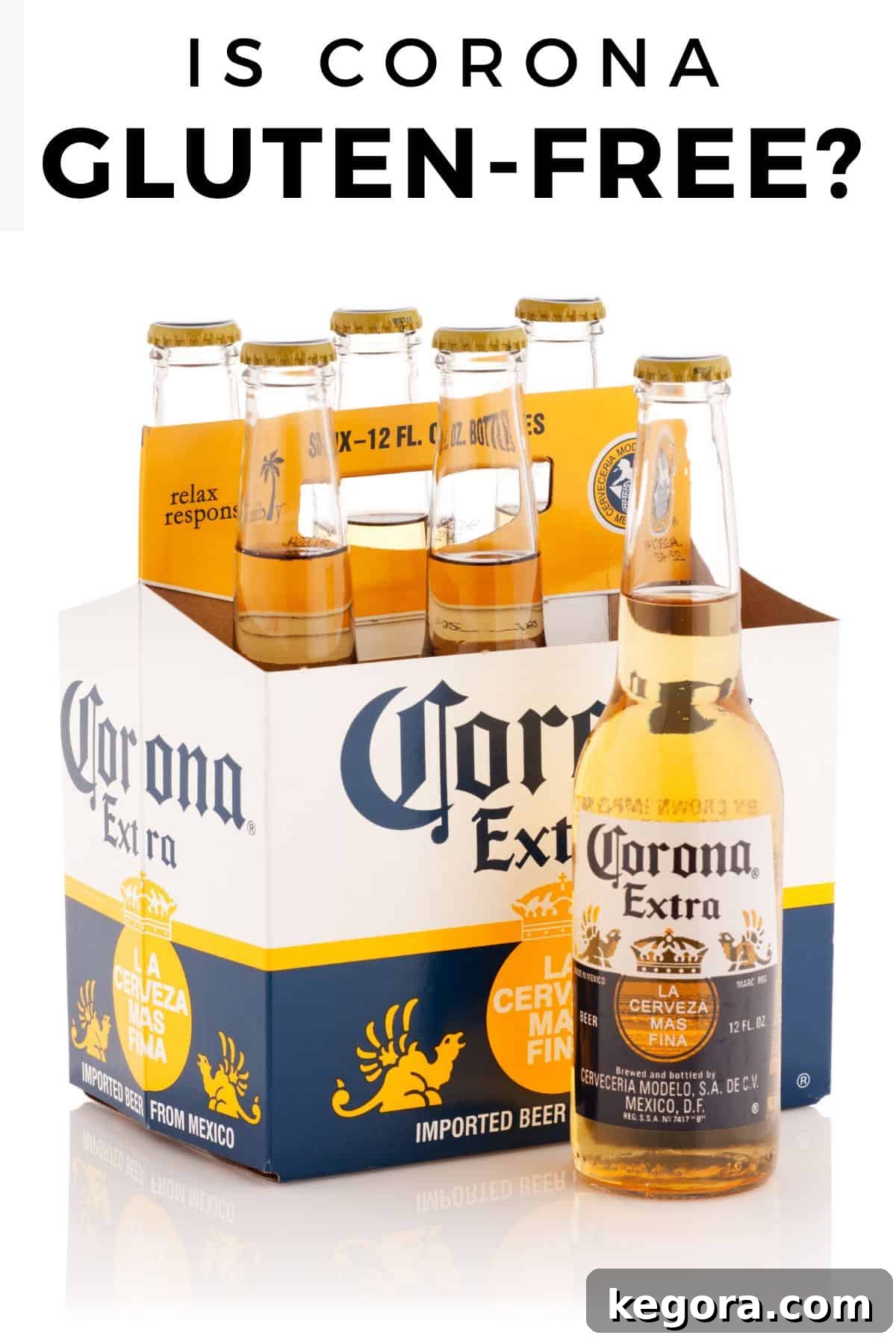
Corona beer, in its various beloved forms like Extra, Light, Familiar, and Premier, shares a common primary ingredient: malted barley. This grain, fundamental to traditional brewing, naturally contains gluten. Therefore, if you’re asking whether Corona is suitable for a gluten-free diet, the answer is straightforward and critical for your health.
SHORT ANSWER: NO!
No, Corona is unequivocally not a gluten-free beer. It is brewed using malted barley, a grain that contains gluten. For anyone adhering to a strict gluten-free diet, due to Celiac disease or gluten sensitivity, it is essential to choose beverages specifically crafted from certified gluten-free ingredients.
Is Corona Beer Gluten-Free? A Detailed Look
Corona Extra, the quintessential pale lager, originated in Mexico in 1925, courtesy of Grupo Modelo. It made its way to the United States in the 1980s and has since become the best-selling imported beer in the country, celebrated for its crisp, light flavor and refreshing, beach-inspired image. Its popularity is undeniable, making the question of its gluten content particularly relevant for a vast audience.
The simplicity of Corona’s ingredients is often highlighted, yet it’s this very simplicity that clarifies its gluten status. Corona is brewed with just four core components:
- Water
- Barley malt
- Non-malted cereals (like corn or rice, which are typically gluten-free, but barley malt overshadows this)
- Hops
The critical ingredient here is barley malt. As the second item on this list, barley malt is a fundamental source of naturally-occurring gluten, a protein complex that can trigger adverse reactions in individuals with Celiac disease or gluten sensitivity.
The official stance from Corona USA’s website confirms this: “Corona Extra, Corona Light, Corona Familiar, and Corona Premier are made from malted barley which naturally contains gluten. The fermentation process significantly lowers its content, however, there are traces of gluten in Corona Extra, Corona Light, Corona Familiar, and Corona Premier.”
While the fermentation process might reduce the gluten content, it does not eliminate it entirely. For individuals with Celiac disease, even trace amounts of gluten, often less than 20 parts per million (ppm), can cause intestinal damage and other severe health issues. Therefore, despite any reduction, Corona beers are not considered safe for a strictly gluten-free diet. It’s important to differentiate Corona beer from other Corona brand products; for instance, Corona hard seltzers, which are fermented from sugar, are indeed gluten-free. However, the traditional beer varieties will always contain gluten.
If you’re exploring other aspects of a gluten-free lifestyle, you might find these articles helpful: gluten-free coffee, gluten-free alcohol, gluten-free beer, gluten-free boba and is bourbon gluten-free.
Understanding Gluten in Beer: The Brewing Process Explained
To understand why most traditional beers contain gluten, it helps to know a little about the brewing process. Beer begins with a ‘mash,’ a mixture of crushed grains and hot water. This mash typically includes wheat, barley, or rye – all of which are gluten-containing grains. During mashing, enzymes convert the starches in the grains into fermentable sugars, which are then extracted to create ‘wort.’
The wort is boiled with hops for flavor and preservation, and then yeast is added for fermentation. Yeast consumes the sugars, producing alcohol and carbon dioxide. While much of the gluten content may be altered or broken down during the complex processes of mashing, boiling, and fermentation, beers that start with gluten-containing grains cannot genuinely be labeled gluten-free. Even if the final product has a lower gluten level, it’s still derived from gluten-rich ingredients.
For those with Celiac disease or a pronounced gluten intolerance, most mainstream beers will be off-limits. However, this doesn’t mean you have to forsake beer entirely! The good news is that the craft beer movement, alongside larger brewers, has embraced the demand for gluten-free options. These specialty beers are intentionally brewed from alternative, naturally gluten-free ingredients, offering a delicious and safe experience for everyone.
Navigating the Gluten-Free Beer Landscape: Identifying Safe Choices
When it comes to major, widely available beers, the vast majority, including popular brands like Miller Lite, Budweiser, Bud Light, Heineken, Coors, Coors Light, Michelob Ultra, and of course, Corona, are all made with gluten-containing ingredients in their mash bills. This means they are not suitable for a gluten-free diet.
However, the landscape of gluten-free beer has expanded dramatically, particularly within the craft brewing sector. These innovative breweries are creating exceptional beers using naturally gluten-free grains such as sorghum, rice, buckwheat, and millet. While these craft labels might not have the marketing reach of global brands, their presence is growing.
Many fantastic gluten-free craft breweries, such as Ghostfish Brewing from Washington State and Holidaily Brewing based in Colorado, often start with local distribution, making their unique brews a regional delight. However, a growing number of certified gluten-free beers are becoming available in health food stores like Whole Foods, specialty liquor stores, and through online ordering. Some of the more widely accessible gluten-free beer options include:
- Redbridge: Brewed from sorghum, Redbridge is often considered one of the easiest gluten-free beers to find nationwide. Introduced by Anheuser-Busch in 2006, it was a pioneer as the first nationally available sorghum beer in the U.S. Anheuser-Busch worked closely with the National Foundation for Celiac Awareness (NFCA) during its development, showcasing a commitment to meeting the needs of the gluten-free community.
- Bard’s Tale: Another popular choice crafted from sorghum, known for its traditional beer-like flavor.
- Glutenberg: A highly acclaimed brand offering a range of styles (lager, IPA, Blonde, Stout, etc.) brewed using a blend of millet, buckwheat, and corn, providing diverse flavor profiles.
- New Grist: Produced by Lakefront Brewery, this beer is made from sorghum and rice and is certified gluten-free.
- Schnitzer Brau: A German brand that offers a selection of gluten-free beers made from millet.
For a beer to be labeled “gluten-free” in the United States, it must meet stringent FDA guidelines, meaning it contains less than 20 parts per million (ppm) of gluten. Crucially, true gluten-free beers are made exclusively from mash ingredients that do not contain gluten grains and are bottled in facilities free from cross-contamination with gluten-containing beverages. This meticulous process ensures safety for individuals with Celiac disease.
It’s vital to distinguish between “gluten-free beer” and “gluten-reduced beer” (or “gluten-removed beer”). Gluten-reduced beers are initially brewed with gluten-containing grains, but enzymes are later used to break down and filter out the gluten proteins. While this process can significantly lower gluten levels, it doesn’t guarantee full removal, and the final product may still contain detectable amounts of gluten. For someone with a mild gluten sensitivity, this might be acceptable. However, for individuals with Celiac disease, who require strict adherence to a gluten-free diet to prevent intestinal damage and painful symptoms, the safest choice is always a 100% certified gluten-free beer.
Frequently Asked Questions About Corona and Gluten
While some analyses might suggest that Corona Extra contains very low levels of gluten, potentially even below the 20 parts per million (ppm) FDA standard for gluten-free labeling, it’s crucial to remember that Corona is brewed from malted barley. Barley is a primary source of gluten, and accurately measuring gluten in fermented beverages can be complex and inconsistent. The official Corona USA website acknowledges that “there are traces of gluten” in their beers. For individuals with Celiac disease or non-Celiac gluten intolerance, any amount of gluten, even trace amounts, can lead to intestinal damage and uncomfortable symptoms, regardless of whether physical symptoms are immediately apparent.
No, Corona Light, like all other traditional Corona beer varieties (Extra, Familiar, Premier), is not gluten-free. It is brewed using malted barley, a grain that naturally contains gluten. Although the fermentation process may reduce the overall gluten content, it does not eliminate it to a safe level for those with Celiac disease or a gluten intolerance. Therefore, it is best to avoid Corona Light if you are following a strict gluten-free diet. Instead, look for dedicated gluten-free craft beers or other gluten-free alcoholic options.
No, Corona Premier, marketed as a low-carb option, still contains gluten. All Corona beer variants are brewed using malted barley, which is a gluten-containing grain. This means that while Premier might be lighter in calories or carbohydrates, it retains gluten proteins, making it an unsuitable and potentially harmful choice for anyone with Celiac disease, gluten sensitivities, or a wheat allergy. Fortunately, the market for certified gluten-free craft beers is expanding rapidly across the United States, offering many excellent alternatives.
Corona Extra, the original and most well-known Corona beer, is not gluten-free. Its primary ingredients include malted barley, which is a natural and significant source of gluten. While the brewing and fermentation processes can reduce gluten levels, the final product still contains enough gluten to be unsafe for individuals with Celiac disease or severe gluten sensitivity. For a truly gluten-free beer experience, consider options from smaller breweries specializing in gluten-free recipes, or look for nationally distributed brands like Anheuser-Busch’s Redbridge, which is made from sorghum.
Yes, while Corona beer itself contains gluten, the Corona brand does offer other alcoholic beverages that are gluten-free. According to Corona USA’s online FAQs, products such as “Corona Hard Seltzer, Corona Seltzerita, and Corona Hard Seltzer Limonada are fermented from sugar, and are gluten-free.” These are safe choices for those on a gluten-free diet, providing a different kind of refreshing option under the Corona name.
The Bottom Line: Enjoying Your Gluten-Free Lifestyle
To reiterate clearly: Corona is not a gluten-free beer. This holds true for all its traditional beer variants, including the original Corona Extra, Corona Light, Corona Familiar, and Corona Premier. The presence of malted barley as a core ingredient ensures that these beers contain gluten, making them unsuitable for anyone managing Celiac disease or a gluten sensitivity.
If you’re living a gluten-free lifestyle, you’ll need to bypass Corona and opt for certified gluten-free craft beers. These are typically brewed from naturally gluten-free grains such as sorghum, millet, rice, or buckwheat, and their availability is continuously expanding across local markets and even some national distributors. A little searching might lead you to a new favorite brew!
Should gluten-free craft beer be difficult to locate in your area, or if it simply doesn’t appeal to your palate, rest assured that there are numerous other delicious and safe gluten-free alcoholic beverage choices available:
Many alcoholic beverages are naturally made without gluten grains, making them inherently gluten-free. Always double-check labels to verify, but these are generally safe bets:
- Rum: Distilled from sugarcane.
- Tequila: Made from the blue agave plant.
- Wine: Produced from grapes.
- Hard ciders: Fermented from apples.
- Brandy: Distilled from fruit.
- Cognac: A specific type of brandy, also distilled from fruit.
- Hard seltzer: Often fermented from sugar.
Furthermore, certain distilled spirits that might originate from gluten-containing grains (like wheat, barley, or rye) are generally considered safe for those with Celiac disease or gluten sensitivity. This is because the distillation process effectively removes the gluten protein. The intense heat and separation involved in distillation leave the final product virtually gluten-free. This is excellent news for fans of:
- Scotch
- Vodka
- Whiskey
- Gin
- Bourbon
While the raw ingredients for these spirits contain gluten, the scientific consensus and major Celiac organizations agree that distillation purifies them to a point where they are safe for most individuals on a gluten-free diet. Always be cautious with flavored versions or those with added ingredients, as these might introduce gluten post-distillation. However, plain, unflavored distilled spirits are a great choice.
The world of gluten-free beverages is vibrant and growing. With a little awareness and informed choices, you can confidently enjoy a wide array of drinks without compromising your health or lifestyle. Cheers to finding your perfect gluten-free sip!