
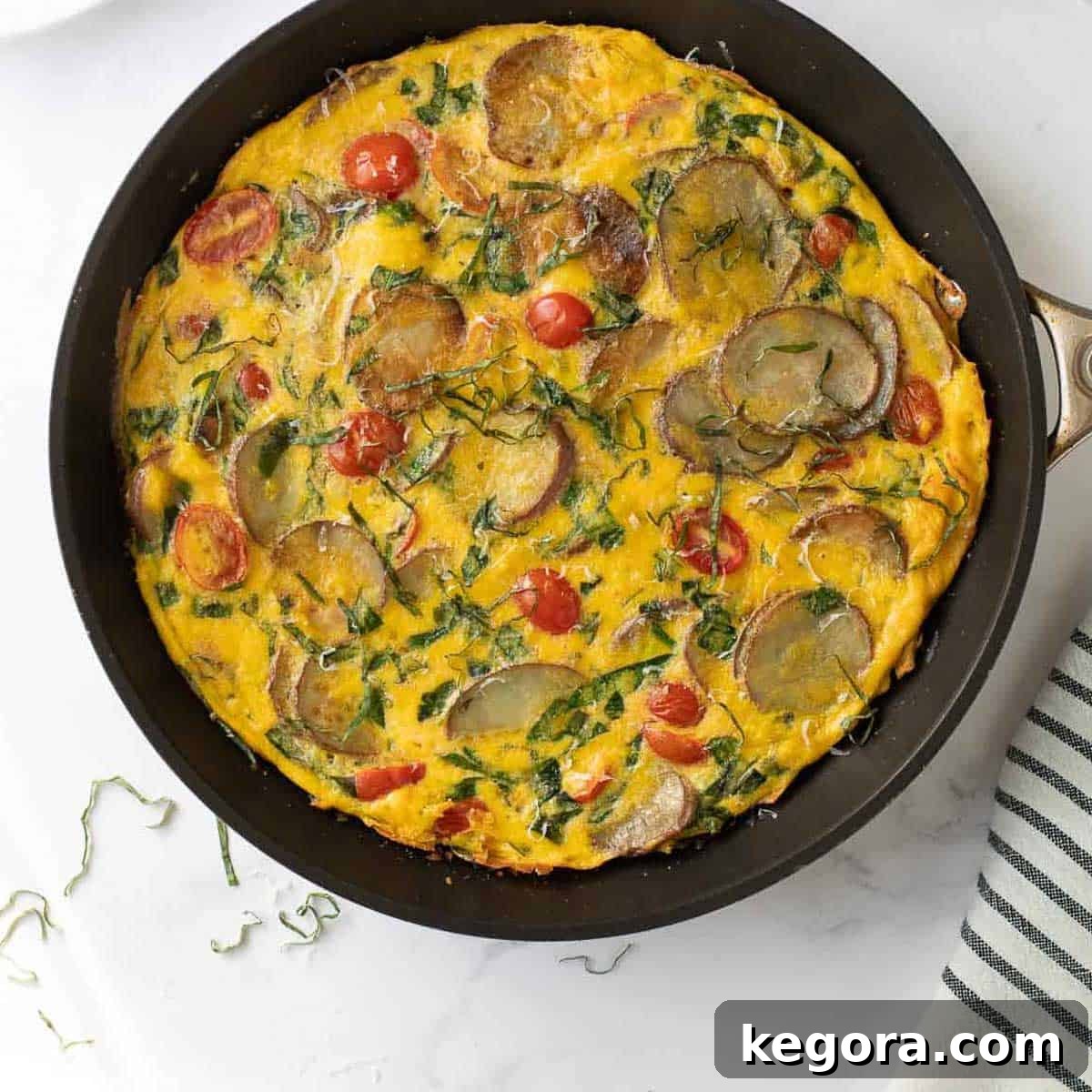
Welcome to your new favorite breakfast, lunch, or dinner! This incredible Potato Spinach Vegetable Frittata is more than just a recipe; it’s a culinary cornerstone that simplifies meal planning and delights every palate at your table. Forget complicated cooking – this dish is the epitome of ease and versatility, making it a beloved staple in countless kitchens, including ours. Prepare to discover a healthy, satisfying, and utterly delicious meal that seamlessly fits into any part of your day.
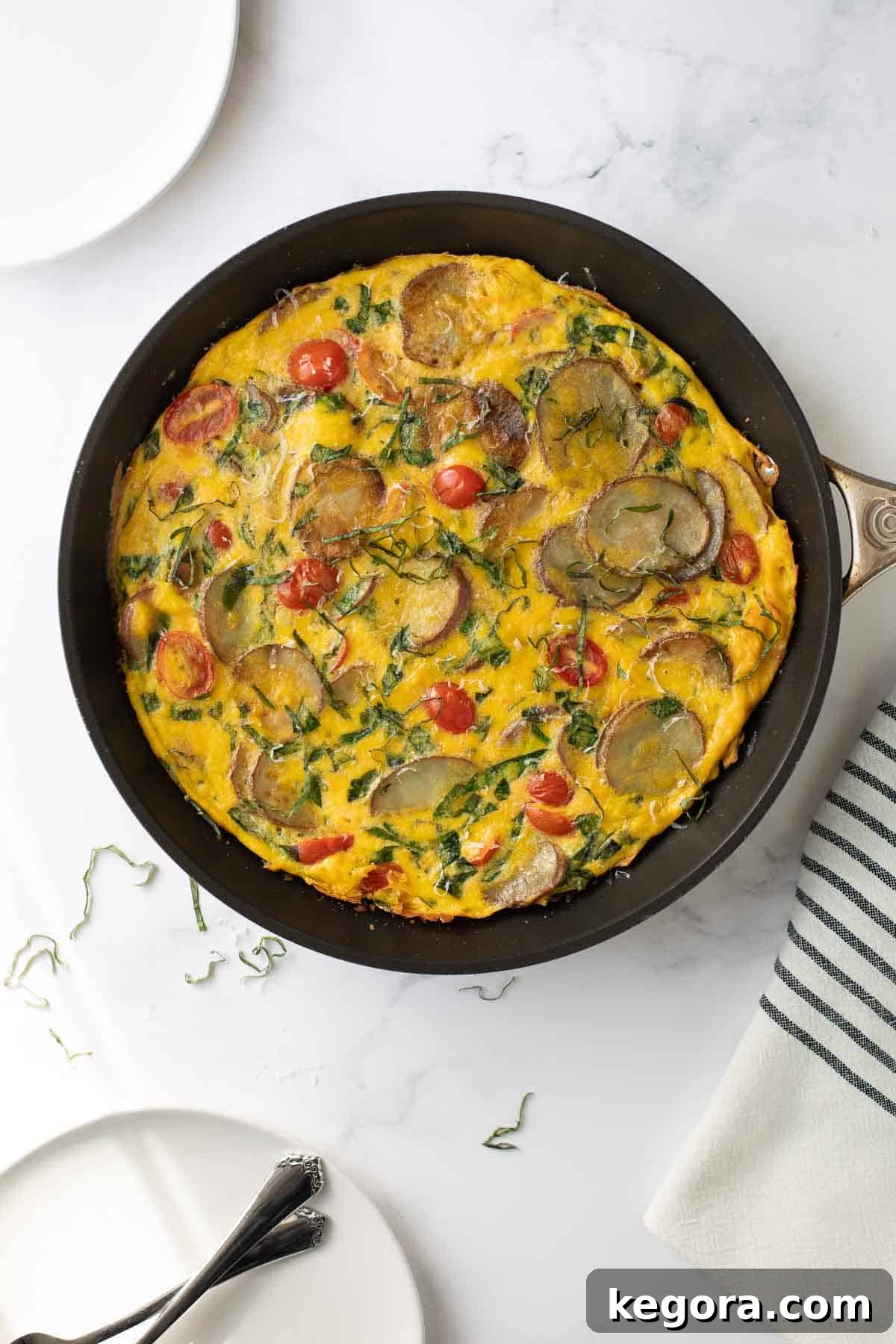
Frittatas hold a special place in the realm of simple, wholesome cooking. They are a brilliant solution for utilizing whatever fresh ingredients you have on hand, transforming a handful of humble vegetables and eggs into a gourmet experience. This particular vegetable frittata recipe stands out as one of my all-time favorite combinations. The hearty earthiness of potatoes, the fresh vibrancy of spinach, and the rich creaminess of cheese, all bound together with fluffy eggs, create a symphony of flavors that consistently earns rave reviews from my entire family. It’s a truly effortless dish that delivers maximum taste and minimal fuss.
Why You’ll Love This Easy Vegetable Frittata Recipe
There are countless reasons why this Potato Spinach Frittata will quickly become a go-to in your recipe repertoire. Its simple preparation, adaptable nature, and health benefits make it a winner for busy weeknights, leisurely brunches, or even quick breakfasts on the go. Here’s why this recipe shines:
- Effortlessly Easy to Make: With straightforward steps and common ingredients, this recipe is perfect for beginner cooks and seasoned chefs alike. Minimal prep and a quick bake mean less time in the kitchen and more time enjoying your meal.
- Incredibly Versatile: Don’t have spinach? Swap it for kale. No red potatoes? Yukon Golds work beautifully. This recipe is a template, inviting you to experiment with any vegetables, herbs, or cheeses you have readily available in your fridge.
- Perfect for Any Meal: While often associated with breakfast or brunch, a frittata is a fantastic choice for a light lunch or a satisfying weeknight dinner. Serve it warm straight from the oven or enjoy it cold as a convenient packed meal.
- Nutritious and Wholesome: Packed with protein from eggs, essential vitamins from fresh spinach and other vegetables, and complex carbohydrates from potatoes, this frittata is a balanced and healthy option that nourishes your body. It’s naturally gluten-free and can easily be made dairy-free too!
- Family-Friendly: Even picky eaters will love this dish! The familiar flavors and satisfying texture make it a hit with kids and adults, ensuring everyone gets a nutritious meal they’ll enjoy.
Frittata vs. Quiche: Understanding the Distinct Differences
It’s a common question: what exactly sets a frittata apart from a quiche? While both are savory egg-based dishes that often grace breakfast and brunch tables, they possess distinct characteristics that define their culinary identity. Understanding these differences can help you appreciate each dish more and choose the perfect one for your occasion.
- Cooking Method: This is perhaps the most significant difference. A traditional frittata begins its journey on the stovetop, cooking in an oven-safe skillet until the edges are set, then it finishes baking in the oven. This creates a beautifully golden-brown crust on top and a tender, moist interior. Quiche, on the other hand, is baked entirely in the oven from start to finish, typically in a pie dish.
- Egg Mixture: Quiche features a richer, custard-like filling made with eggs and a significant amount of cream or half-and-half. This results in a dense, almost pudding-like texture, similar to a rich dessert pie. Frittatas use a simpler egg mixture, often just whisked eggs, sometimes with a splash of milk or water, leading to a lighter, fluffier texture that’s more akin to baked scrambled eggs.
- The Crust Factor: One of the most defining visual differences is the crust. Quiche is almost always baked in a buttery pastry crust, which adds a flaky texture and rich flavor. While there are modern variations like paleo quiche or sweet potato crusted quiche that omit the traditional pastry, a frittata is inherently crustless. This makes frittatas a naturally gluten-free option and often a lighter choice.
- Fillings and Add-ins: Both dishes are incredibly versatile when it comes to fillings. You can incorporate a wide array of ingredients, from vegetables like spinach, mushrooms, and bell peppers to various meats like bacon, ham, or sausage. The key is that for both frittatas and quiches, any solid ingredients are usually pre-cooked or at least par-cooked before being added to the egg mixture to ensure they are tender and flavorful.
Both frittatas and quiches are excellent choices for breakfast, brunch, or a light dinner. Your preference might depend on whether you crave a rich, custardy pie with a crust or a lighter, more adaptable, and often healthier, crustless egg dish. For more delightful morning meal inspiration, don’t miss these other fantastic recipes: Savory Grit Cakes, Cream Cheese Grits, Hearty Sausage Hashbrown Breakfast Casserole, and Irresistible Gluten-Free Tater Tot Breakfast Casserole.
You might also enjoy exploring these options: Zesty Breakfast Tacos, Naturally Sweet Banana Egg Pancakes, a robust Cast Iron Frittata, and a classic Gluten-Free Bacon and Cheese Quiche. This particular spinach, egg, and potato frittata recipe is meatless, making it an ideal choice for a vegetarian meal, and it’s always naturally gluten-free.
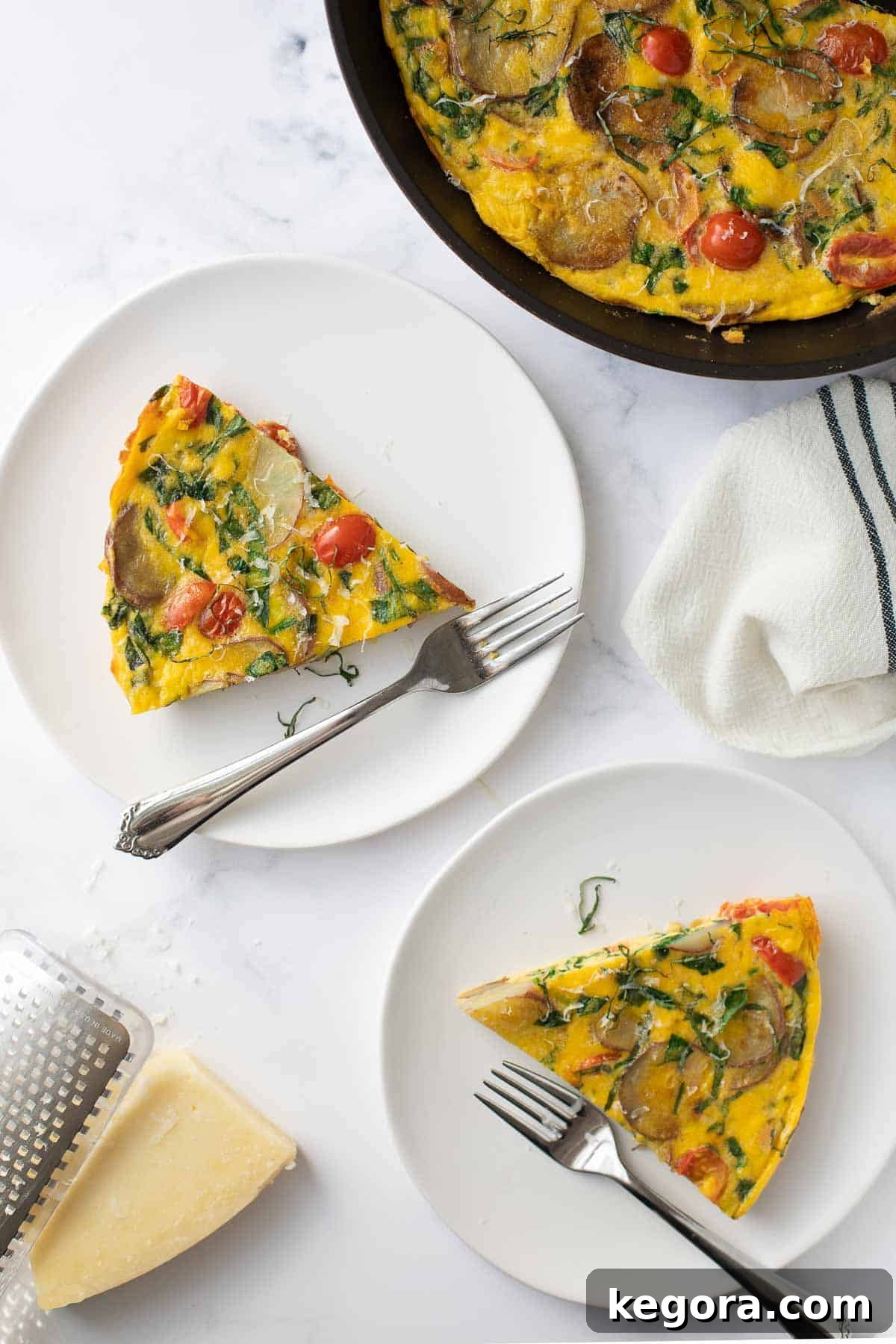
Essential Vegetable Frittata Ingredient Notes for Success
While this is a glorious vegetable frittata, a crucial step for achieving the best texture and flavor is to ensure your ingredients are properly prepared before they meet the egg mixture. Raw, dense vegetables will not cook through adequately in the relatively short baking time of a frittata, resulting in an unpleasant crunch or undercooked taste. Pre-cooking your vegetables ensures they are tender, flavorful, and integrate perfectly into the fluffy egg base.
The only exceptions to this pre-cooking rule are ingredients that cook exceptionally fast and wilt quickly, such as baby spinach or fresh herbs, which can often be added directly to the pan just before the eggs. However, for most other vegetables, a quick sauté, roast, or steam is highly recommended. This principle also applies rigorously when making meat frittatas; ensuring any meat is cooked thoroughly to a safe internal temperature is paramount for both food safety and taste.
Choosing the Best Potatoes for Your Frittata
When crafting a potato frittata of any kind, the type of potato you select makes a significant difference in the final texture of your dish. For a frittata that holds its shape beautifully and offers a delightful mouthfeel, opt for waxy potatoes. These varieties have a thin skin and contain less starch compared to their floury counterparts like russets.
Waxy potatoes are preferred because they maintain their structural integrity during cooking, preventing them from turning mushy or breaking down excessively in the egg mixture. Their firm texture offers a pleasant contrast to the soft eggs and other vegetables. In this vegetable frittata recipe, I highly recommend using red potatoes for their appealing color and ideal texture. If red potatoes aren’t available or you prefer an alternative, Yukon Gold potatoes are another excellent choice, offering a slightly creamier texture while still holding their form well.
Mastering the Art: How to Make a Fluffy Vegetable Frittata
Crafting this delightful vegetable frittata is a straightforward process that yields impressive results. Follow these simple steps to create a hearty and wholesome meal that’s perfect for any time of day:
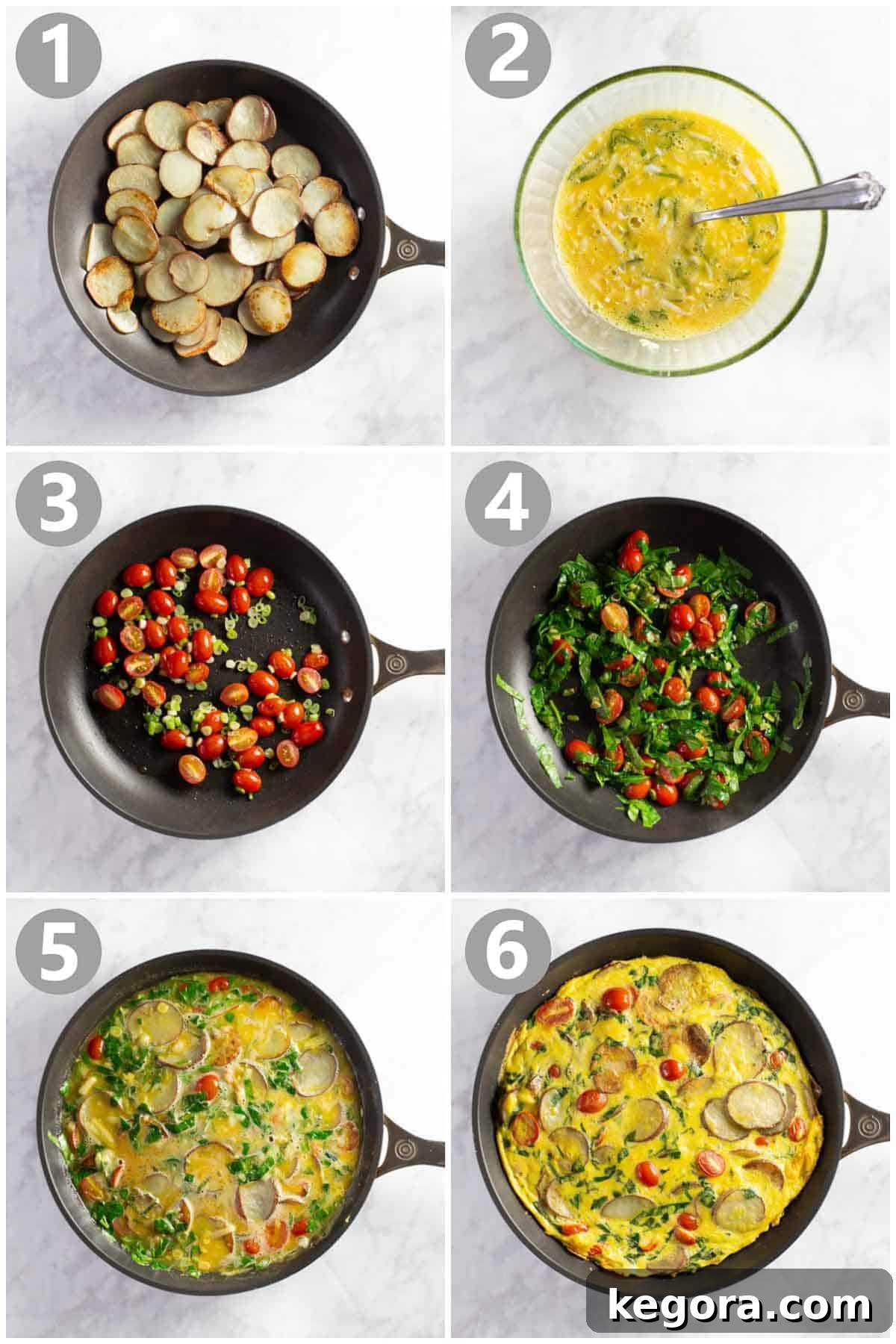
- Prepare Your Skillet and Potatoes: Begin by preheating your oven to 375°F (190°C). Place an oven-safe skillet (preferably cast iron or a good quality non-stick pan) over medium heat on your stovetop. Add about 1 tablespoon of olive oil. Once the oil is shimmering, add your thinly sliced potatoes. Sauté them for 7-10 minutes, stirring occasionally, until they are tender and slightly golden. While the potatoes are cooking, you can move on to preparing the egg mixture.
- Whisk the Egg Mixture to Perfection: In a large mixing bowl, combine the eggs, fresh basil, and ½ teaspoon of salt. Whisk vigorously until the egg whites and yolks are thoroughly combined and slightly frothy. Now is the time to add your chosen shredded cheese! Asiago, Parmesan, sharp cheddar, goat cheese, or Gruyere all work wonderfully to enhance the flavor and create a rich, melty texture. Set this mixture aside.
- Sauté the Remaining Vegetables: Once the potatoes are tender, carefully remove them from the skillet and set them aside on a plate. Reduce the heat to medium-low, and add another tablespoon of olive oil to the pan if needed. Add the cherry tomatoes (halved), frozen peas, and thinly sliced green onions. Sauté these vegetables for 3-4 minutes until they begin to soften and release their flavors.
- Incorporate Spinach and Garlic: Add the minced garlic and baby spinach (roughly chopped) to the pan with the other vegetables. Cook for just another 30 seconds to 1 minute, or until the spinach has wilted and the garlic is fragrant. Be careful not to overcook the garlic, as it can turn bitter.
- Combine Eggs and Vegetables on the Stovetop: Pour the whisked egg mixture evenly over the sautéed vegetables in the skillet. Immediately reduce the burner heat to low. Gently scramble the eggs for about 1 minute, allowing the bottom to set slightly. Then, evenly distribute the pre-cooked potatoes back into the pan. Continue to cook on the stovetop for another 3-4 minutes, or until the edges of the frittata begin to set and pull away from the sides of the pan. Smooth the top into an even layer before transferring the skillet to the preheated oven.
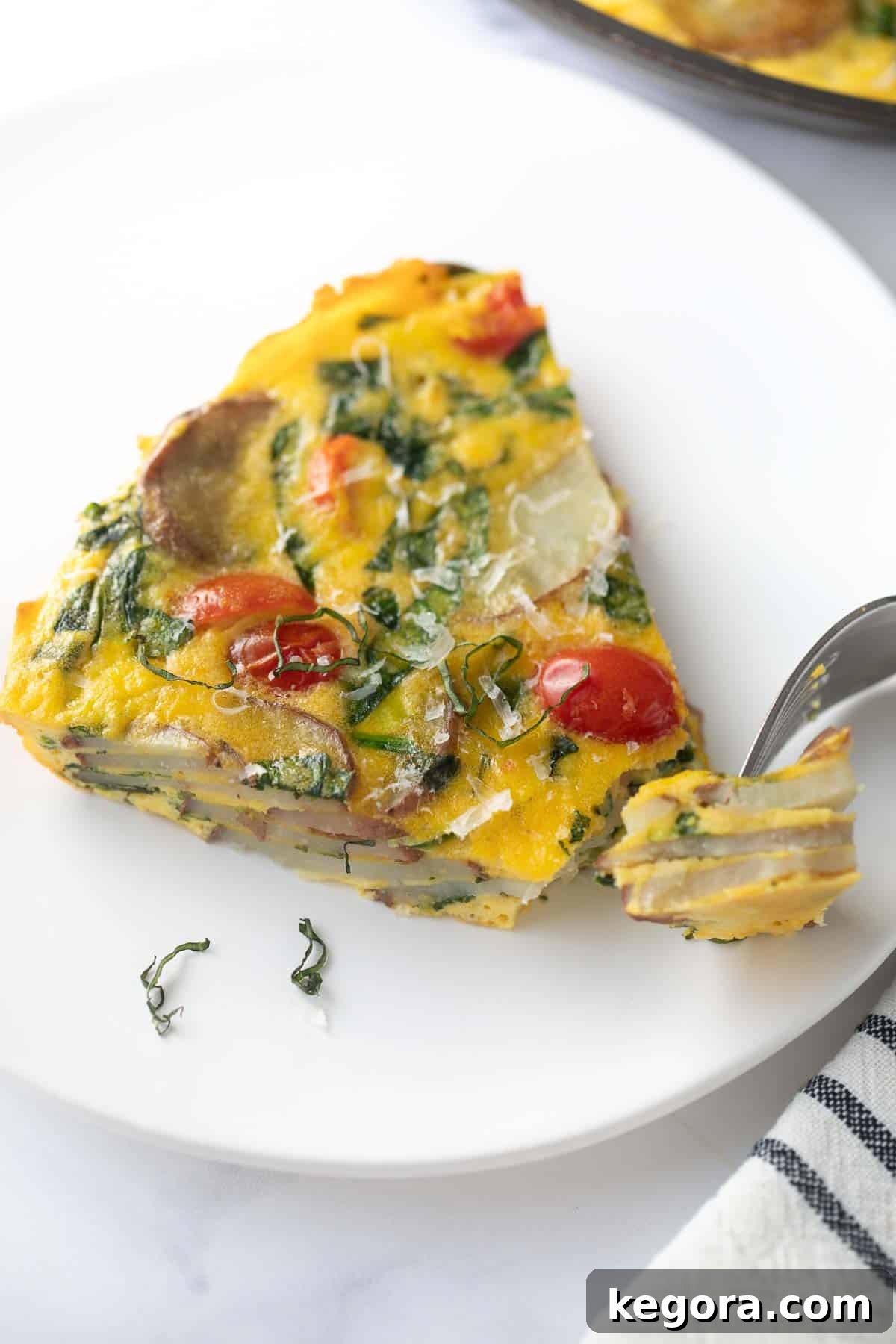
- Bake to Golden Perfection: Bake in the preheated oven for 10-12 minutes, or until the center of the frittata is set, and the top is lightly puffed and golden brown. You can check for doneness by gently shaking the pan; the center should be firm and not liquid.
Pro Tip: This recipe is incredibly adaptable! Feel free to use your favorite seasonal vegetables or any leftover cooked vegetables you have on hand. Adding vibrant red bell peppers or sweet red onion can introduce more color and flavor. Don’t shy away from experimenting with different fresh herbs like chives, parsley, or oregano to customize the taste to your liking!
Storing and Freezing Your Frittata for Easy Meal Prep
Frittatas are fantastic for meal prep, allowing you to enjoy a delicious, healthy meal throughout the week with minimal effort. However, because they are egg-based, proper storage is essential to maintain freshness and safety.
Refrigeration: Yes, any leftover frittata must be refrigerated promptly. Once the frittata has cooled to room temperature (within two hours of cooking), slice it into individual portions or wrap the entire frittata tightly in plastic wrap, then aluminum foil, or place it in an airtight container. Store it in the refrigerator for up to five days. To reheat, you can warm individual slices in a microwave for 30-60 seconds, in a toaster oven, or a conventional oven at 300°F (150°C) until heated through.
Freezing for Future Meals: If you’re looking to extend the shelf life even further and streamline your meal prep, frittatas freeze beautifully. Prepare the recipe as instructed, then allow the cooked frittata to cool completely to room temperature. Once cooled, you can slice it into individual servings or freeze it whole. Wrap each portion tightly in plastic wrap, then aluminum foil, and place in a freezer-safe bag or container. It should keep well frozen for about a month. For best results, thaw frozen frittata portions overnight in the refrigerator before reheating. Reheat in a microwave or oven until warmed through.
Serve this healthy and satisfying vegetable frittata with a refreshing side of fresh fruit, a vibrant simple green salad with a light vinaigrette, or a slice of crusty bread to complete your meal. It’s a complete meal that feels both comforting and light.
MORE DELICIOUS BREAKFAST & BRUNCH RECIPES
Sausage Hashbrown Breakfast Casserole (Gluten-Free)
Banana Oat Egg Pancakes (Grain-Free, Dairy-Free)
Sweet Potato Crust Quiche (with Goat Cheese and Leeks)
Creamy Grits and Eggs
We truly hope you and your family fall in love with this versatile and delicious frittata recipe as much as we have! If you give it a try, please take a moment to leave a comment below and share your experience. Your feedback is greatly appreciated! ♥
Vegetable Frittata (Potato & Spinach!)
Comments
Ingredients
- 2 tablespoons olive oil plus more for drizzling
- 5 small red potatoes washed and thinly sliced
- 1 bunch green onion thinly sliced
- 1 cup cherry tomatoes halved
- 1/2 cup frozen peas
- 1 clove garlic minced
- 1-2 cups baby spinach roughly chopped
- 8 eggs
- 1 tablespoon fresh basil chopped
- 1-2 cups shredded cheese Asiago, sharp cheddar, or Gruyere all work great
- 1/2 teaspoon salt
Instructions
-
Preheat the oven to 375F (190°C).
-
Heat 1 tablespoon of olive oil in a non-stick, oven-safe pan (or cast iron skillet) over medium heat. Add the thinly sliced potatoes and sauté for 7-10 minutes until they are tender and slightly golden.
-
Meanwhile, in a large bowl, whisk the eggs, fresh basil, shredded cheese, and salt together until well combined. Remove the cooked potatoes from the pan and set them aside on a plate.
-
Add the remaining 1 tablespoon of olive oil to the pan. Add the green onion, cherry tomatoes (halved), and frozen peas. Sauté for 3-4 minutes over medium heat until softened. Add the baby spinach and minced garlic and cook for another 30 seconds to 1 minute, until the spinach has wilted.
-
Pour the egg mixture evenly over the sautéed vegetables in the pan. Reduce the burner heat to low. Gently scramble the eggs for 1 minute on the stovetop, allowing the bottom to set slightly. Then, evenly distribute the reserved cooked potatoes back into the pan. Cook for another 3-4 minutes on the stovetop until the edges of the frittata begin to set. Smooth the top into an even layer and then carefully transfer the skillet to the preheated oven. Bake for 10-12 minutes, or until the frittata is set in the center and lightly golden brown on top. Slice into wedges and serve warm, optionally topped with more fresh basil or cheese. Enjoy!
Notes
How to FREEZE: To freeze your frittata for convenient meal prep, prepare the recipe as instructed, then allow it to cool completely to room temperature. Wrap individual portions or the whole frittata tightly in plastic wrap and then aluminum foil before freezing. It will keep well in the freezer for about a month.
MAKE IT DAIRY-FREE: For a delicious dairy-free version, simply omit the shredded cheese. The frittata will still be incredibly flavorful and satisfying!