
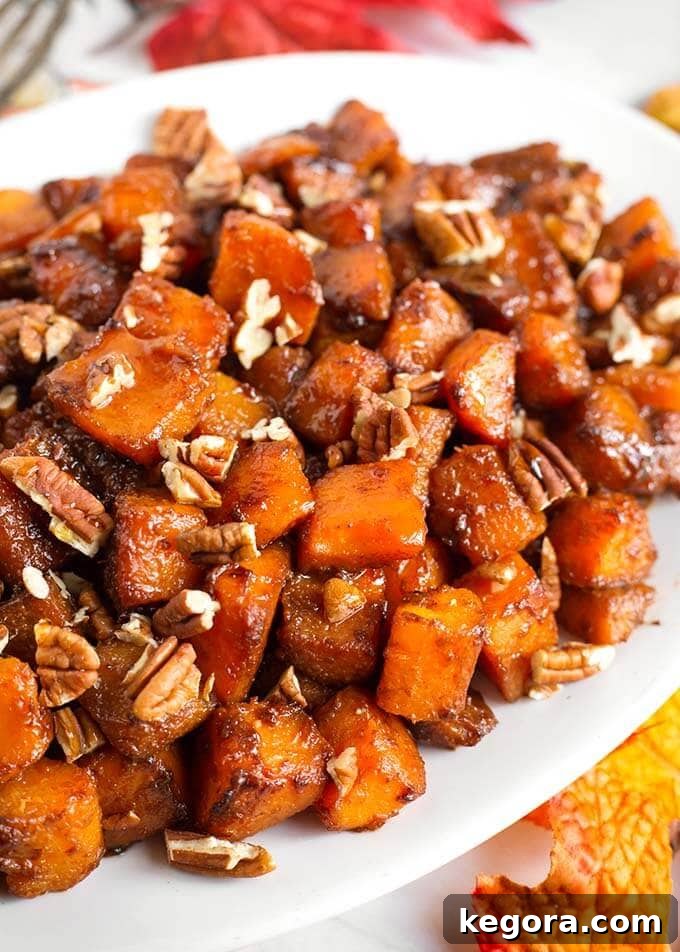
As the leaves turn golden and the air grows crisp, our kitchens begin to fill with the comforting aromas of autumn and winter. Few ingredients embody this season quite like the humble yet versatile butternut squash. And when it comes to transforming this vibrant orange gourd into something truly spectacular, look no further than our Cinnamon Roasted Butternut Squash recipe. This dish isn’t just a side; it’s a celebration of cozy flavors, combining the natural sweetness of oven-baked butternut squash with the warm embrace of cinnamon and the rich, caramelized notes of brown sugar. It’s an effortless addition to your holiday table, particularly Thanksgiving, or any meal that calls for a touch of seasonal elegance.
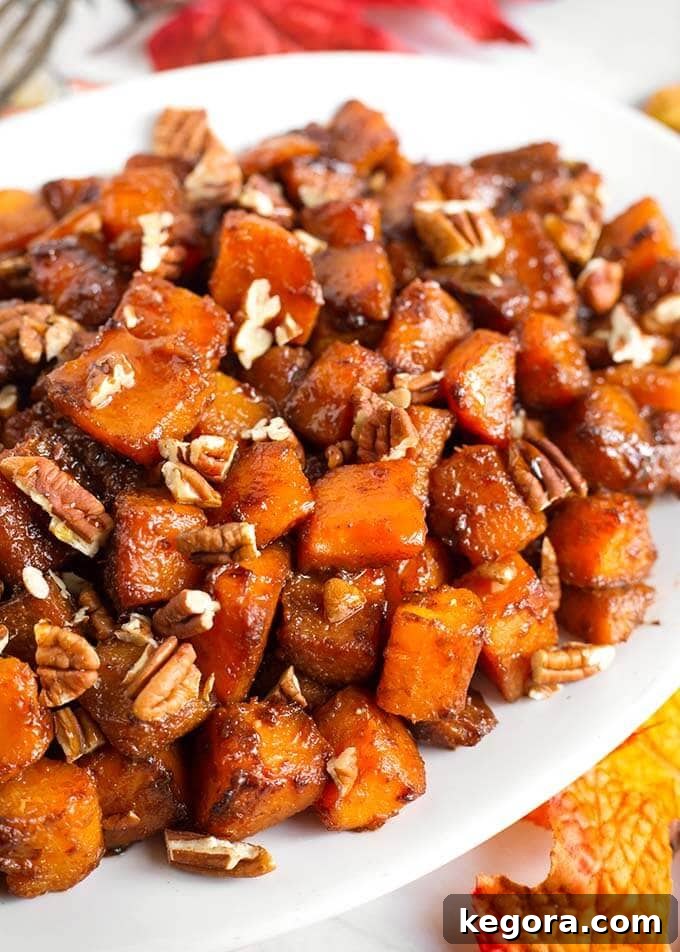
Cinnamon Roasted Butternut Squash: A Holiday Favorite
Originally published on Oct 22, 2018
Butternut squash can sometimes present a culinary puzzle – what exactly do you *do* with it once you’ve brought it home? While a creamy Butternut Squash Soup is a beloved classic, this winter squash offers a bounty of other delicious possibilities. Our cinnamon-kissed roasted version stands out as a sweet, yet not overwhelmingly sugary, side that beautifully complements any main course you’re serving. Its subtle spice and deep, earthy flavor make it a showstopper.
Mastering the Butternut Squash: From Whole to Perfectly Cubed
For many, the most daunting part of preparing roasted butternut squash is the initial task of cutting it into uniform cubes. Butternut squash is known for its firm, dense flesh, which can be challenging to tackle. But don’t let this deter you! With a few simple tricks, you can make the process much easier and safer, ensuring you get those perfect, evenly sized pieces that roast beautifully.
Tips for Safely and Easily Cutting a Butternut Squash:
- Softening the Squash: A clever trick to make slicing easier is to slightly soften the squash before peeling and cutting. Pierce the whole butternut squash several times with a sharp paring knife. Place it in the microwave for approximately five to six minutes. This step won’t cook the squash through, but it will significantly soften the skin and flesh, making it much more manageable to cut.
- Stabilize for Safety: Always cut on a stable surface. Placing a damp kitchen towel under your cutting board can prevent it from slipping.
- Top and Tail: Begin by carefully slicing off both ends of the squash to create flat surfaces. This allows you to stand the squash upright, making it more stable for peeling.
- Peeling with Ease: Using a sharp vegetable peeler, carefully remove the tough outer skin. Work from top to bottom, turning the squash as you go. Alternatively, you can use a sharp chef’s knife to slice off the peel if you find that easier, though it may result in more waste.
- Halving and Deseeding: Once peeled, carefully slice the squash in half lengthwise. Use a spoon to scoop out the seeds and fibrous pulp from the bulbous end. You can save the seeds for roasting if you wish!
- Cubing Technique: Now, lay the squash halves cut-side down on your board. Slice each half into long strips, then dice those strips into even, 1-inch cubes. Uniformity is key for even roasting, so try your best to make the cubes roughly the same size.
The Magic of Roasting: Unlocking Flavor and Texture
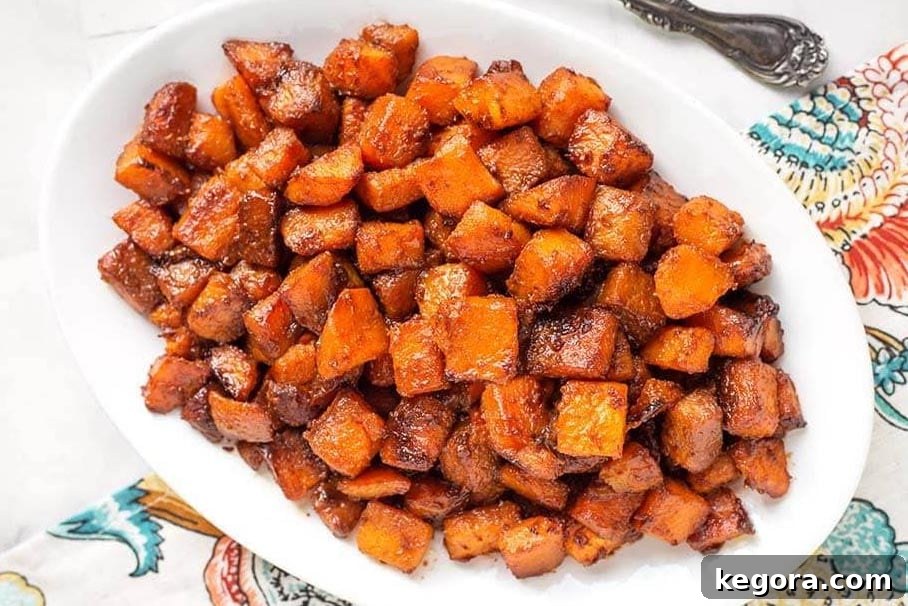
Roasting cubed butternut squash in a hot oven is where the true magic happens. The high temperature encourages the edges of the squash to become beautifully dark and tender-crisp. More importantly, it facilitates the caramelization of the natural sugars in the squash, alongside the added brown sugar. This caramelization process deepens the flavors, creating a rich, complex taste that is both sweet and savory, with a delightful hint of bitterness that balances the dish perfectly. The result is a squash that’s tender on the inside, with irresistibly chewy, flavorful edges.
Beyond being a fantastic side dish, butternut squash is incredibly versatile. Once roasted, you can easily transform it into a smooth puree. This puree can then be incorporated into an array of dishes, from adding moisture and flavor to pancakes and muffins, to enriching pasta sauces, or even boosting the nutritional content of your morning smoothies!
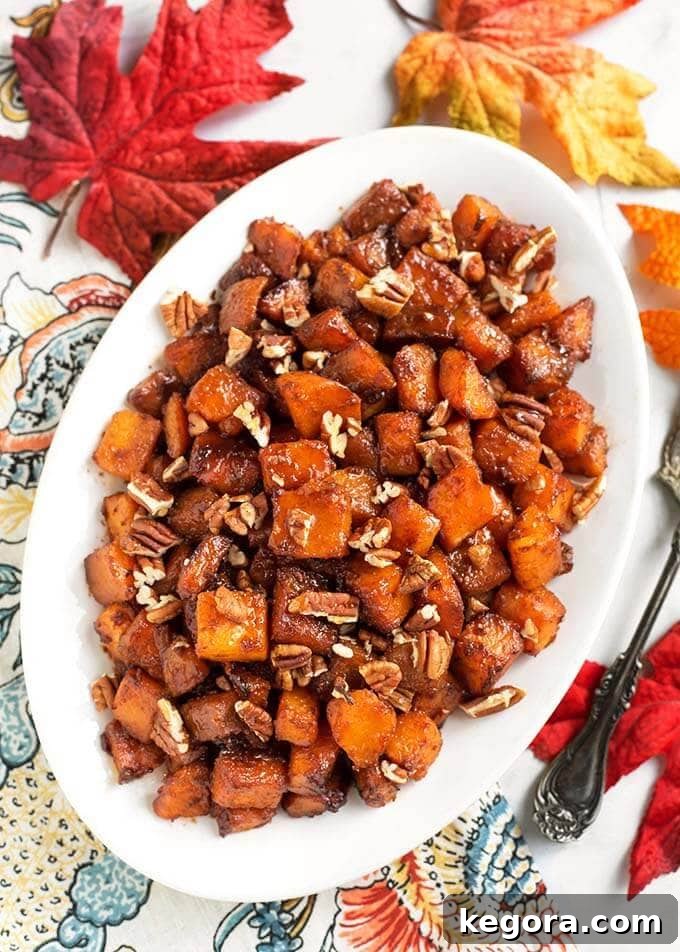
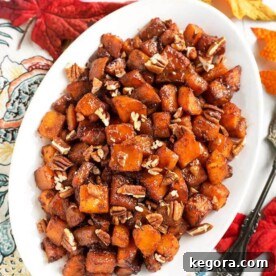
For an extra special touch, I love to garnish roasted butternut squash with a sprinkle of chopped toasted pecans and a generous drizzle of maple syrup. These additions enhance the textural contrast and introduce another layer of comforting sweetness, elevating the dish from simply delicious to truly unforgettable.
Recipe: Cinnamon Roasted Butternut Squash
This Cinnamon Roasted Butternut Squash recipe delivers a sweet and savory experience with the warm embrace of cinnamon and the rich, caramelized notes of brown sugar. It’s the perfect addition to any holiday meal, especially Thanksgiving, and is sure to become a family favorite.
5 from 2 votes
Cinnamon Roasted Butternut Squash
By Sandy Clifton
Cinnamon Roasted Butternut Squash is a delicious recipe with the warm spice of cinnamon and sweet caramelized brown sugar. A perfect Thanksgiving side dish.
25 mins
20 mins
45 mins
4 – 6
Equipment
- Sheet Pan
Ingredients
Main Dish
- 2 lbs Butternut Squash, cubed (precut is fine!)
- 2 ½ Tablespoons Brown Sugar, packed
- ¾ teaspoon Kosher Salt (or ½ tsp table salt)
- 1 teaspoon Cinnamon
- 1 pinch Pepper
- 4 Tablespoons Melted Butter (or 2 Tbsp olive oil for a dairy-free option)
Garnish (optional)
- ¼ cup Toasted Pecans, chopped
- 1 – 2 Tablespoons Maple Syrup
Instructions
- If you are using a whole butternut squash, you will need to peel, deseed, and cube it. For easier handling, pierce the squash with a knife a few times and then microwave the whole squash for 5-6 minutes. This softens it just enough for easier cutting, not cooking.
- Preheat your oven to 425° F (220° C).
- In a large mixing bowl, combine the brown sugar, kosher salt, cinnamon, pepper, and melted butter. Whisk these ingredients together until well combined.
- Add the squash cubes to the mixture in the bowl. Toss thoroughly to ensure all of the butternut squash cubes are evenly coated with the delicious spice and butter mixture.
- Spread the coated squash cubes out onto a parchment-lined baking sheet in a single layer. It’s crucial to give them space; if necessary, use two baking sheets to avoid overcrowding, which can steam the squash instead of roasting it.
- Bake at 425° F for 15 minutes. At this point, check on them. The total cooking time will vary depending on the size of your cubes and whether the squash was microwaved to soften it.
- Continue baking for an additional 5 to 15 minutes, or until the squash is tender when pierced with a fork and the edges are lightly caramelized and browned. You may stir them once halfway through the second baking period for more even browning.
- Carefully remove the roasted butternut squash from the oven and transfer it to a serving dish.
- If desired, garnish with chopped toasted pecans and a drizzle of maple syrup for an extra layer of flavor and texture. Serve warm and enjoy!
Notes
This roasting method, with minor adjustments to spices, can also be successfully applied to many other varieties of winter squash, such as acorn squash or delicata squash.
Nutrition
Calories: 192 kcal
Nutrition information is automatically calculated, so should only be used as an approximation.
Additional Info
Course: Side Dish
Cuisine: American
Why This Cinnamon Roasted Butternut Squash Will Be Your New Favorite
This recipe isn’t just about roasting squash; it’s about creating a harmonious blend of flavors and textures that delight the senses. The sweetness of the butternut squash, amplified by brown sugar, is beautifully complemented by the warm, earthy notes of cinnamon. A subtle pinch of black pepper and kosher salt ensures that the dish isn’t cloyingly sweet, but rather a perfectly balanced sweet-and-savory treat. This balance makes it incredibly versatile, pairing wonderfully with a wide array of main courses from roasted turkey and chicken to pork loin and even vegetarian entrées.
Perfect for Any Occasion
While often hailed as a quintessential Thanksgiving side dish, this cinnamon roasted butternut squash is far too delicious to be reserved for just one holiday a year. It’s equally at home at a casual Sunday dinner, a festive Christmas spread, or simply as a comforting weeknight addition. Its vibrant color adds a visual appeal to any plate, making it a standout vegetable dish that even picky eaters might enjoy.
Tips for Success & Variations
- Don’t Overcrowd the Pan: This is arguably the most important tip for perfectly roasted vegetables. If the squash cubes are too close together, they will steam instead of roast, resulting in a soggy texture rather than caramelized edges. Use two sheet pans if necessary.
- Experiment with Spices: While cinnamon is the star, feel free to add other warming spices like a pinch of nutmeg, ground ginger, or even a tiny dash of allspice for a more complex flavor profile.
- Make it Savory: If you prefer a less sweet squash, you can reduce or omit the brown sugar. Instead, try adding minced garlic, dried rosemary, or fresh sage for a savory twist. A sprinkle of Parmesan cheese towards the end of roasting can also be delicious.
- Storage and Reheating: Leftover roasted butternut squash can be stored in an airtight container in the refrigerator for up to 3-4 days. To reheat, spread the squash on a baking sheet and warm in a 350°F (175°C) oven until heated through, about 10-15 minutes, or gently warm in a microwave.
Health Benefits of Butternut Squash
Beyond its delicious taste, butternut squash is also incredibly nutritious. It’s packed with vitamins, particularly Vitamin A (in the form of beta-carotene), and Vitamin C, which are powerful antioxidants. It’s also a good source of dietary fiber, potassium, and magnesium. Incorporating this vibrant vegetable into your diet is a wonderful way to boost your intake of essential nutrients, especially during the colder months.
Frequently Asked Questions About Roasted Butternut Squash
- Do I need to peel butternut squash before roasting?
- Yes, it is highly recommended to peel butternut squash before roasting. While the skin is technically edible, it can be tough and fibrous, detracting from the tender texture of the roasted flesh.
- How do I prevent my butternut squash from becoming mushy?
- The key to preventing mushy squash is to ensure it roasts, not steams. This means not overcrowding your baking sheet and roasting at a relatively high temperature (like 425°F). Make sure your cubes are roughly the same size for even cooking.
- Can I prepare butternut squash ahead of time?
- Yes! You can peel and cube the butternut squash up to 2-3 days in advance. Store the cubes in an airtight container in the refrigerator. You can also mix the squash with the butter and spices a few hours before roasting and keep it refrigerated.
- What else can I do with roasted butternut squash leftovers?
- Leftover roasted butternut squash is incredibly versatile. You can puree it for soup, add it to salads, stir it into pasta dishes, or even mash it with a fork and use it as a base for fritters or a component in grain bowls.
- Can I use olive oil instead of butter?
- Absolutely! Olive oil works beautifully as a dairy-free alternative to melted butter. Use 2 tablespoons of olive oil for the same amount of squash to achieve a similar coating and roasting effect.
If you try this Cinnamon Roasted Butternut Squash recipe, please take a moment to leave a comment and a star rating below. Your feedback helps other home cooks discover and enjoy this wonderful dish!

Roasted Pumpkin Seeds (or Squash Seeds)
Slow Cooker Acorn Squash
Classic Irish Coffee Recipe
Chocolate Peanut Butter No Bake Cookies
Tried this recipe?
Mention @simply_happy_foodie