
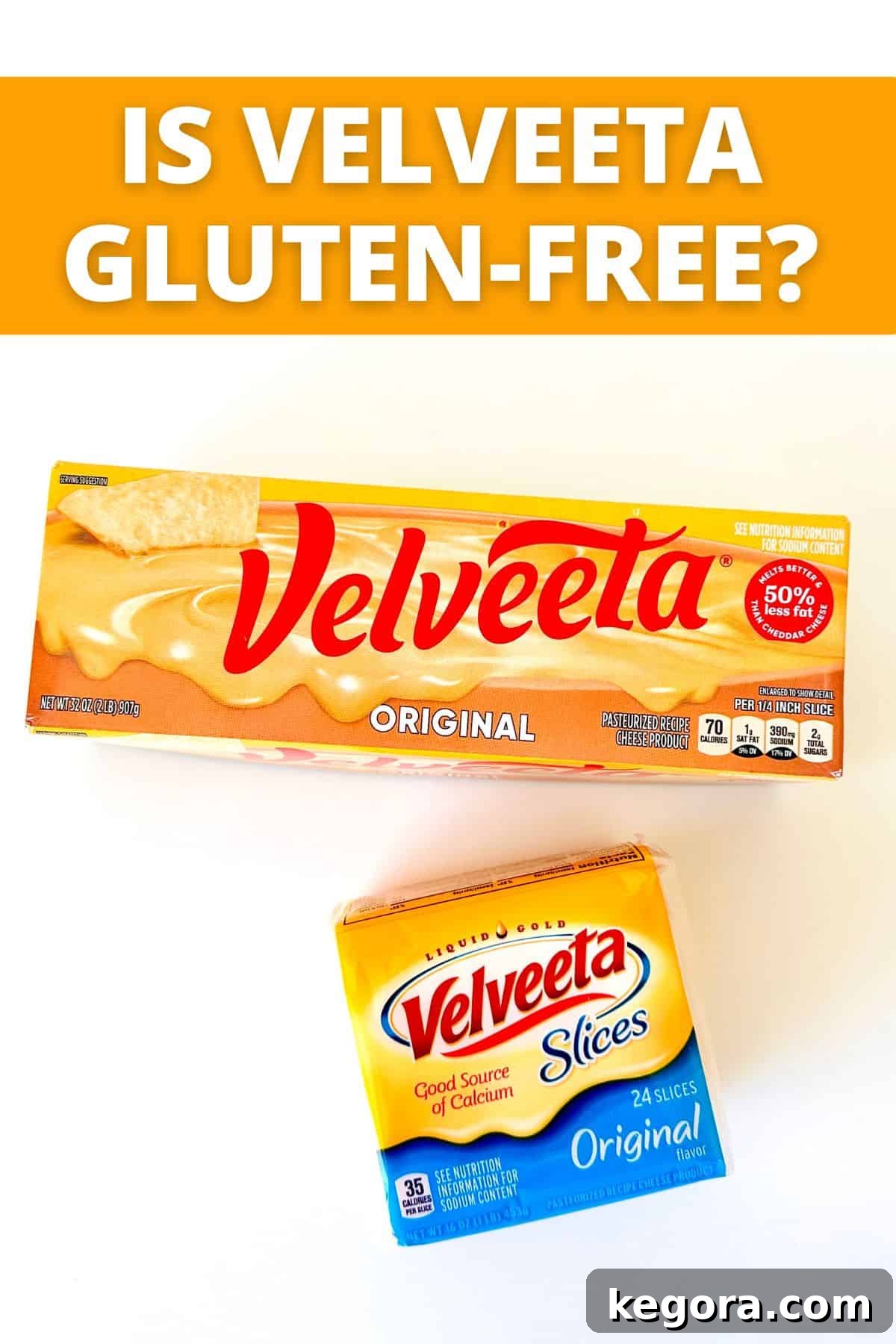
Dive into the creamy, dreamy world of Velveeta! But for those managing a gluten-free diet, a crucial question arises: Is this beloved cheese alternative safe to enjoy? Let’s melt away the mystery and discover the definitive answer.
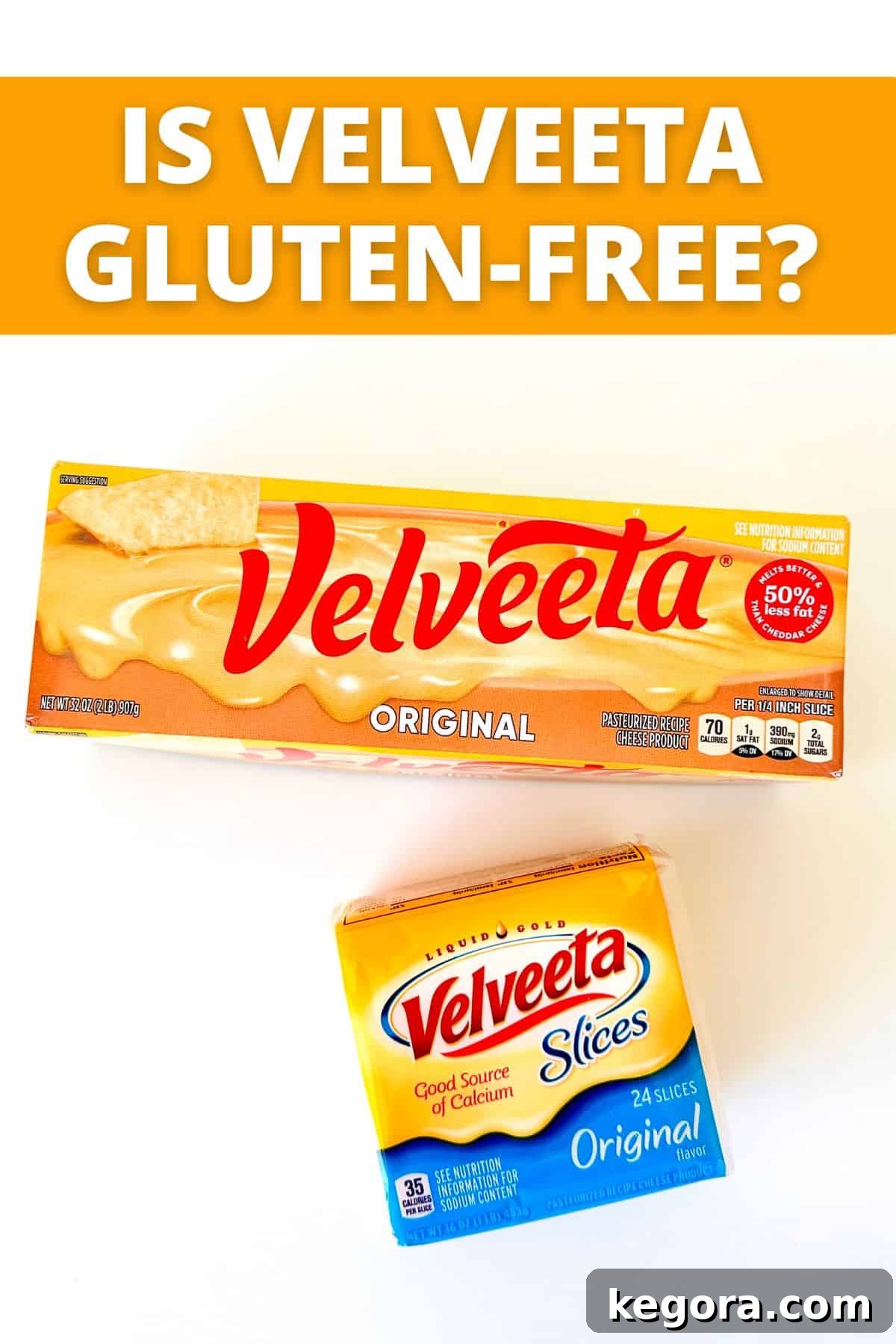
Velveeta, often hailed as “liquid gold,” is more than just a processed cheese product; it’s a culinary icon deeply woven into the fabric of American comfort food. With its distinct salty, creamy, and undeniably satisfying flavor, it evokes a sense of nostalgia for many, tasting perhaps like childhood itself. Unlike traditional cheeses, Velveeta boasts a uniquely smooth melt, making it the perfect foundation for gooey mac-and-cheese, perfectly grilled cheese sandwiches, and rich, irresistible queso dips. Its versatility and distinctive texture have cemented its place in kitchens across the nation.
For individuals adhering to a gluten-free diet, whether due to celiac disease, gluten sensitivity, or personal preference, navigating the supermarket aisles can often feel like a culinary minefield. Products that appear safe might harbor hidden gluten-containing ingredients, making careful label reading essential. This brings us to a frequently asked question:
But is Velveeta gluten-free?
SHORT ANSWER: Yes! Original Velveeta is indeed a gluten-free processed cheese product. It is primarily made from dairy milk combined with a carefully selected list of other ingredients, none of which include wheat, barley, rye, or any other derivatives known to contain gluten. Therefore, plain Velveeta is perfectly safe to consume as a part of a gluten-free diet.
For those looking to expand their gluten-free culinary knowledge, explore whether Doritos are gluten-free, discover if Fritos are gluten-free, check on Corn Flakes’ gluten status, find out about marshmallows and gluten, confirm if ketchup is gluten-free, and learn more about potato chips being gluten-free.
What Is Velveeta? A Deep Dive into its History and Composition
The fascinating story of Velveeta dates back to 1918, a time when resourcefulness was key. Swiss cheesemaker Emil Frey, working at the Monroe Cheese Company in Monroe, New York, embarked on an innovative experiment. Instead of discarding cheese scraps, a common practice in cheesemaking, Frey ingeniously combined these remnants with whey – a liquid byproduct typically deemed waste. The result was a revelation: a remarkably creamy, smooth-melting cheese product unlike any other. Thus, Velveeta was born, destined to revolutionize American kitchens.
Velveeta quickly soared in popularity, becoming a household staple throughout the 1930s, 40s, and 50s. Its convenient, shelf-stable nature and unique melting properties made it an instant hit during times when fresh dairy options weren’t always readily available or easy to store. Today, this iconic “pasteurized recipe cheese product” is a flagship brand under the Kraft Heinz company, widely distributed across the U.S. and in several other countries. Over the decades, the Velveeta product line has expanded far beyond its original block or loaf form, now including individual slices, a diverse array of mac-and-cheese products, skillet meals, and various snack options, all designed to bring that signature Velveeta creaminess to a wider audience.
One of Velveeta’s standout features is its shelf-stability. Unlike many traditional dairy products, a sealed package of Velveeta doesn’t require refrigeration, allowing it to be conveniently stored in the center aisles of grocery stores alongside other prepared and packaged foods. This ease of storage and use makes Velveeta an appealing and indulgent flavor solution for busy families and anyone seeking a quick, tasty meal or snack.
So, what exactly gives Velveeta its distinctive taste and texture? Let’s break down the ingredients found on a package of Original Velveeta, understanding that each component plays a specific role in its delicious chemistry:
- Skim Milk and Milk: These form the dairy base of Velveeta, providing its fundamental cheesy flavor and creamy texture.
- Canola Oil: A vegetable oil included for its smooth consistency and to contribute to Velveeta’s characteristic melt.
- Milk Protein Concentrate and Whey Protein Concentrate: These dairy derivatives enhance the protein content and contribute to the product’s body and smooth texture. Whey is, of course, a key component in Velveeta’s original formulation story.
- Sodium Phosphate and Calcium Phosphate: These are emulsifying salts. They are crucial for preventing the fat and protein in the cheese product from separating when heated, ensuring Velveeta melts into that perfectly smooth, consistent liquid gold.
- Less than 2% of Modified Food Starch: While “modified food starch” can sometimes be a red flag for gluten-conscious consumers, Kraft Heinz confirms that the starch used in Velveeta is derived from corn, making it gluten-free. It acts as a thickener and stabilizer.
- Maltodextrin: A common food additive often derived from corn, rice, potato, or wheat. In the context of Velveeta, given its gluten-free status, it would be from a gluten-free source (e.g., corn). It acts as a filler and thickener.
- Whey: The liquid byproduct of cheesemaking, integral to Emil Frey’s original invention and contributing to the product’s dairy notes.
- Salt: A fundamental flavor enhancer, providing Velveeta’s characteristic savory taste.
- Lactic Acid: Contributes to the tanginess and acts as a preservative.
- Sorbic Acid (preservative): Helps extend shelf life by inhibiting mold and yeast growth.
- Milkfat: Adds richness and creaminess.
- Sodium Alginate and Sodium Citrate: Additional emulsifiers and stabilizers that contribute to the smooth melt and texture.
- Enzymes and Cheese Culture: While Velveeta is a “cheese product,” these ingredients help develop some cheesy flavor characteristics, even if it’s not traditional aged cheese.
- Apocarotenal and Annatto (color): Natural colorings derived from plants, giving Velveeta its signature vibrant orange hue.
- Vitamin A Palmitate: A vitamin supplement often added to dairy products.
Is Velveeta Gluten-Free? A Definitive Answer for Your Diet
For individuals managing celiac disease, non-celiac gluten sensitivity, or simply choosing a gluten-free lifestyle, the good news is emphatic: Yes, Original Velveeta is gluten-free! You can confidently incorporate it into your diet without concerns about gluten contamination. Gluten is a protein found in wheat, barley, and rye, and even trace amounts can cause adverse reactions for those sensitive to it. Velveeta’s ingredient list has been carefully reviewed and confirmed to exclude these gluten-containing grains.
It is crucial, however, to distinguish between plain Velveeta products (like the block, loaf, or slices) and prepared Velveeta meals. While the base Velveeta product is gluten-free, many convenience items under the Velveeta brand include pasta, which is traditionally made using wheat flour and, therefore, contains gluten. Always exercise diligence when selecting Velveeta-branded items, especially those that appear to be complete meals.
To ensure you maintain a strictly gluten-free diet, it is essential to avoid these Velveeta products, as they contain gluten-containing pasta or other wheat ingredients:
- Velveeta Shells & Cheese (all varieties, including original, creamy, bold, etc.)
- Velveeta Skillets Philly Cheesesteak
- Velveeta Skillets Creamy Beef Stroganoff
- Velveeta Skillets Chicken & Broccoli
- Velveeta Skillets Nacho Supreme
- Velveeta Skillets Chicken Bacon Ranch
- Velveeta Skillets Ultimate Cheeseburger Mac
- Velveeta Skillets Chicken Alfredo
- Velveeta Skillets Classic Lasagna
- Velveeta Cheesy Bowls Bacon Mac & Cheese
- Velveeta Cheesy Bowls Ultimate Cheeseburger Mac
- Velveeta Cheesy Bowls Chicken Alfredo
- Velveeta Cheesy Bowls Lasagna with Meat Sauce
- Velveeta Rotini & Cheese
- Velveeta Cheesy Bites (all varieties, as these often have a breaded coating)
Always double-check the ingredient list and allergen statements on any Velveeta product you purchase, as formulations can change over time, and new products are frequently introduced. When in doubt, plain Velveeta block or slices remain your safest bet for a gluten-free indulgence.
Are Velveeta Cheese Sauce Packets Gluten-Free?
Absolutely, yes! Velveeta cheese sauce packets are also confirmed to be gluten-free, offering another convenient option for those avoiding gluten. These packets provide the same signature creamy Velveeta taste in an easy-to-use format, perfect for quickly elevating various dishes. According to the Kraft Heinz website, the ingredients used to make Velveeta Original Cheese Sauce in these convenient pouches are:
- Whey
- Milk
- Canola Oil
- Whey Protein Concentrate
- Less than 2% of Salt, Sodium Phosphate, Potassium Phosphate, Modified Food Starch, Lactic Acid, Sodium Alginate, Sorbic Acid (preservative), Paprika and Annatto Extract (color), Milkfat, Cheese Culture, Natural Flavor, and Enzymes.
As you can see, this list does not include any gluten-containing ingredients. It’s important to note that while Velveeta cheese sauce is free from gluten, it does contain milk, which is a common allergen for individuals with dairy sensitivities or lactose intolerance. Apart from milk, it does not typically contain other major common allergens like soy, nuts, or eggs, but always consult the specific packaging for the most up-to-date allergen information.
This gluten-free cheese sauce makes it incredibly simple to create your own homemade gluten-free mac and cheese. Simply boil your favorite brand of gluten-free pasta, drain it, and then stir in a packet of Velveeta cheese sauce for a quick, delicious, and safe meal. You might also enjoy using it to enhance dishes like this Cheesy Smoked Sausage Pasta, ensuring your pasta choice is gluten-free.
Understanding “Gluten-Free” Labeling and Velveeta
When a product is labeled “gluten-free” in the United States, it means it meets the Food and Drug Administration’s (FDA) strict criteria. This standard dictates that the product must contain less than 20 parts per million (ppm) of gluten. This threshold is widely accepted as safe for individuals with celiac disease. While original Velveeta does not contain any gluten-derived ingredients, it’s worth noting that Kraft Heinz does not officially label or certify all Velveeta products as “gluten-free” according to the FDA standard, likely due to internal company policies or potential for trace cross-contamination in shared facilities (though this is less common for the solid block/sauce than for mixed products). However, based on its ingredient list, it is generally considered safe for a gluten-free diet.
The absence of an official “gluten-free” label does not automatically mean a product contains gluten. Many companies choose not to undergo the certification process for various reasons, including cost or simply because their primary market isn’t strictly gluten-free. Always prioritize reading the ingredient list thoroughly. If wheat, barley, rye, or their derivatives (like malt or brewer’s yeast) are not listed, the product is highly likely to be gluten-free, especially for basic, single-ingredient items like plain Velveeta.
Velveeta vs. Other Cheeses in a Gluten-Free Diet
Generally, most natural cheeses are inherently gluten-free, as they are primarily made from milk, enzymes, and cultures. However, vigilance is still important:
- Shredded Cheeses: Be cautious with pre-shredded cheeses. Some brands use anti-caking agents, like wheat starch or cellulose powder derived from wheat, to prevent clumping. Always check the ingredient label carefully.
- Blue Cheese: Certain types of blue cheese are made with molds (like Penicillium roqueforti) that are grown on bread or other gluten-containing grains. While the amount of gluten typically remaining in the final product is often minimal, it can still pose a risk for highly sensitive individuals. Look for blue cheeses specifically labeled “gluten-free” or verify the mold culture source.
- Dairy-Free Cheeses: Plant-based cheese alternatives can sometimes contain gluten as a thickener or binder. Always scrutinize the ingredient lists of these products, as their composition varies widely.
- Cottage Cheese: While typically gluten-free, some brands of cottage cheese may include modified food starch or other additives that could potentially contain gluten. Again, the label is your best guide.
Velveeta, being a processed cheese product, has a consistent and clearly defined ingredient list, making it often easier to verify its gluten-free status compared to some more complex or less transparent cheese products on the market. Its consistent formulation is a significant advantage for those on restricted diets.
Frequently Asked Questions About Velveeta and Gluten-Free Living
While most natural cheeses are naturally gluten-free, it’s always wise to exercise caution and thoroughly check product labels. Certain cheeses can contain hidden gluten. For instance, shredded cheeses sometimes use wheat starch as an anti-caking agent to prevent clumping. Blue cheese can occasionally contain gluten if the mold cultures used in its production were grown on gluten-containing bread. Dairy-free cheese alternatives might also contain gluten as a binder or thickener. To be entirely safe, prioritize cheeses that are explicitly labeled “FDA certified gluten-free,” meaning they have been tested to contain less than 20 parts per million (ppm) of gluten.
Unfortunately, no, Velveeta Shells & Cheese, which is Velveeta’s popular take on classic macaroni and cheese, is not gluten-free. The pasta shells included in these convenience meal kits are made from traditional wheat flour, making them unsuitable for individuals on a gluten-free diet. If you crave that creamy Velveeta mac and cheese experience, you can easily create a gluten-free version at home. Simply cook your favorite brand of certified gluten-free pasta according to package directions, drain it thoroughly, and then mix in the gluten-free Velveeta cheese sauce (available in packets or from a Velveeta block). This method allows you to enjoy a safe, delicious, and satisfying gluten-free meal.
American cheese and Velveeta share many similarities, both being processed dairy products with comparable mild, cheesy flavors and smooth textures. However, there are subtle differences in their composition and melting properties. Velveeta is specifically formulated to melt exceptionally smoothly into a liquid, making it particularly popular for sauces, dips, and very gooey applications like queso. American cheese, while also melting well, tends to hold its shape a bit more, making it ideal for sandwiches and burgers. Often, these two can be substituted for one another in many recipes, depending on the desired consistency and how liquid you want the melted result to be.
Yes, there’s excellent news for fans of Velveeta Queso Blanco: it is also gluten-free! Velveeta Queso Blanco is primarily made from skim milk, milk, canola oil, milk protein concentrate, sodium phosphate, and whey. It also contains small amounts of other ingredients, including modified food starch. Importantly, the Kraft Heinz website explicitly clarifies that this modified food starch is derived from corn, not wheat, confirming its gluten-free status. This makes it a safe and delicious option for gluten-free dips and recipes.
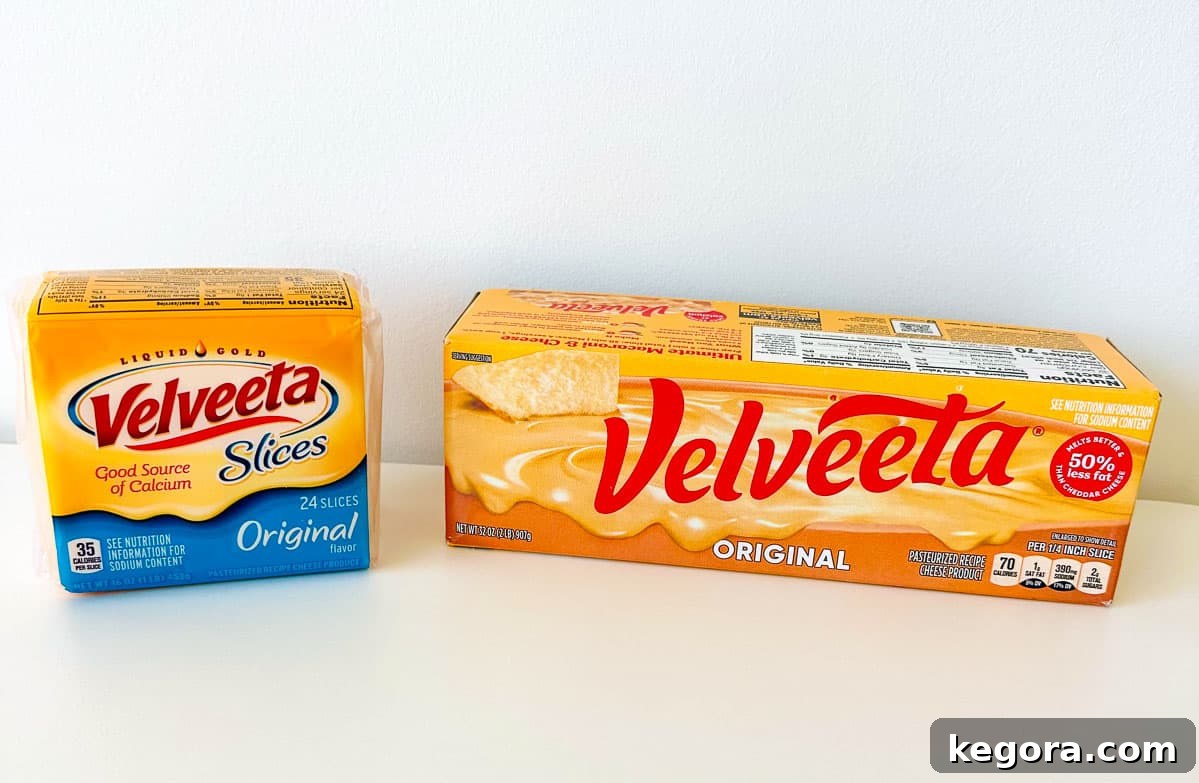
Yes, Velveeta Slices are gluten-free, just like the original Velveeta block. These convenient slices do not contain any ingredients that include gluten. While they may not carry an official “FDA certified gluten-free” label, their ingredient list confirms they are safe for consumption as part of a gluten-free diet. This makes Velveeta Slices a convenient and safe option for gluten-free sandwiches, burgers, or any recipe requiring individual cheese slices.
Yes, Velveeta is a dairy-based product. Its primary ingredients include skim milk, milk, milk protein concentrate, and milkfat. Therefore, it is not suitable for individuals who are lactose intolerant, have a milk allergy, or follow a dairy-free or vegan diet.
Unopened Velveeta blocks are shelf-stable, meaning they can be stored at room temperature in a cool, dry pantry until their “best by” date. Once opened, however, Velveeta should be refrigerated to maintain its freshness and quality. It’s best to wrap any unused portions tightly in plastic wrap or store them in an airtight container to prevent drying out and absorb odors from other foods in the refrigerator.
The Bottom Line: Velveeta and Your Gluten-Free Lifestyle
To reiterate, Original Velveeta cheese product is entirely free from gluten-containing ingredients. Although it may not always carry an official “FDA certified gluten-free” label, its composition makes it a safe and delicious choice for individuals managing celiac disease or gluten sensitivity. Its consistent formulation and clear ingredient list offer peace of mind for those navigating a gluten-free diet.
However, it is paramount to exercise caution and steer clear of Velveeta meal and snack products that incorporate noodles or breaded components made from wheat. Specifically, Velveeta Skillets, Cheesy Bowls, Shells & Cheese, Rotini & Cheese, and Cheesy Bites all contain wheat-based pasta or coatings and should be strictly avoided by anyone adhering to a gluten-free diet. Always opt for the plain Velveeta block, slices, or cheese sauce packets, and combine them with your own gluten-free ingredients for safe and satisfying meals.
How to Creatively Use Gluten-Free Velveeta in Your Kitchen
The culinary possibilities with gluten-free Velveeta are virtually endless! Its incredibly smooth melt and rich flavor make it a versatile ingredient for countless dishes. Here are some inspiring ideas to incorporate Velveeta into your gluten-free cooking:
- Ultimate Queso Dip: Melt Velveeta and combine it with a can of gluten-free Ro-Tel diced tomatoes and green chilies for an effortlessly easy and incredibly satisfying fiesta dip. Serve it warm with your favorite gluten-free tortilla chips or fresh veggie sticks.
- Creamy Breakfast Topping: Drizzle warm, melted Velveeta over scrambled eggs, crispy gluten-free hash browns (check out are potatoes gluten-free?), or your morning gluten-free tacos for an indulgent start to your day. Don’t forget to use gluten-free taco seasoning!
- Gourmet Gluten-Free Grilled Cheese: Elevate a classic grilled cheese sandwich by using Velveeta slices between two pieces of your homemade gluten-free sandwich bread. The Velveeta melts perfectly, creating a gooey, satisfying center.
- Pretzel Perfection: Imagine dipping warm, fluffy gluten-free soft pretzels into a bowl of creamy, melted Velveeta. It’s a match made in heaven for a snack or appetizer.
- Cheesy Tortilla Wraps: Spread a generous layer of melted Velveeta onto gluten-free flour tortillas before filling them with your choice of lean protein, sautéed vegetables, and fresh salsa for a quick and flavorful wrap or quesadilla.
- Loaded Potato Casserole: Incorporate melted Velveeta into a creamy sauce for a decadent gluten-free loaded potato casserole, complete with bacon, chives, and more cheese.
- Broccoli Cheddar Soup: Stir Velveeta into a homemade broccoli and cheddar soup for an extra layer of creaminess and rich flavor, perfect for a cozy, gluten-free meal.
Embrace the versatility of Velveeta and enjoy its unique texture and taste as a safe and delicious component of your gluten-free culinary adventures. Enjoy!