
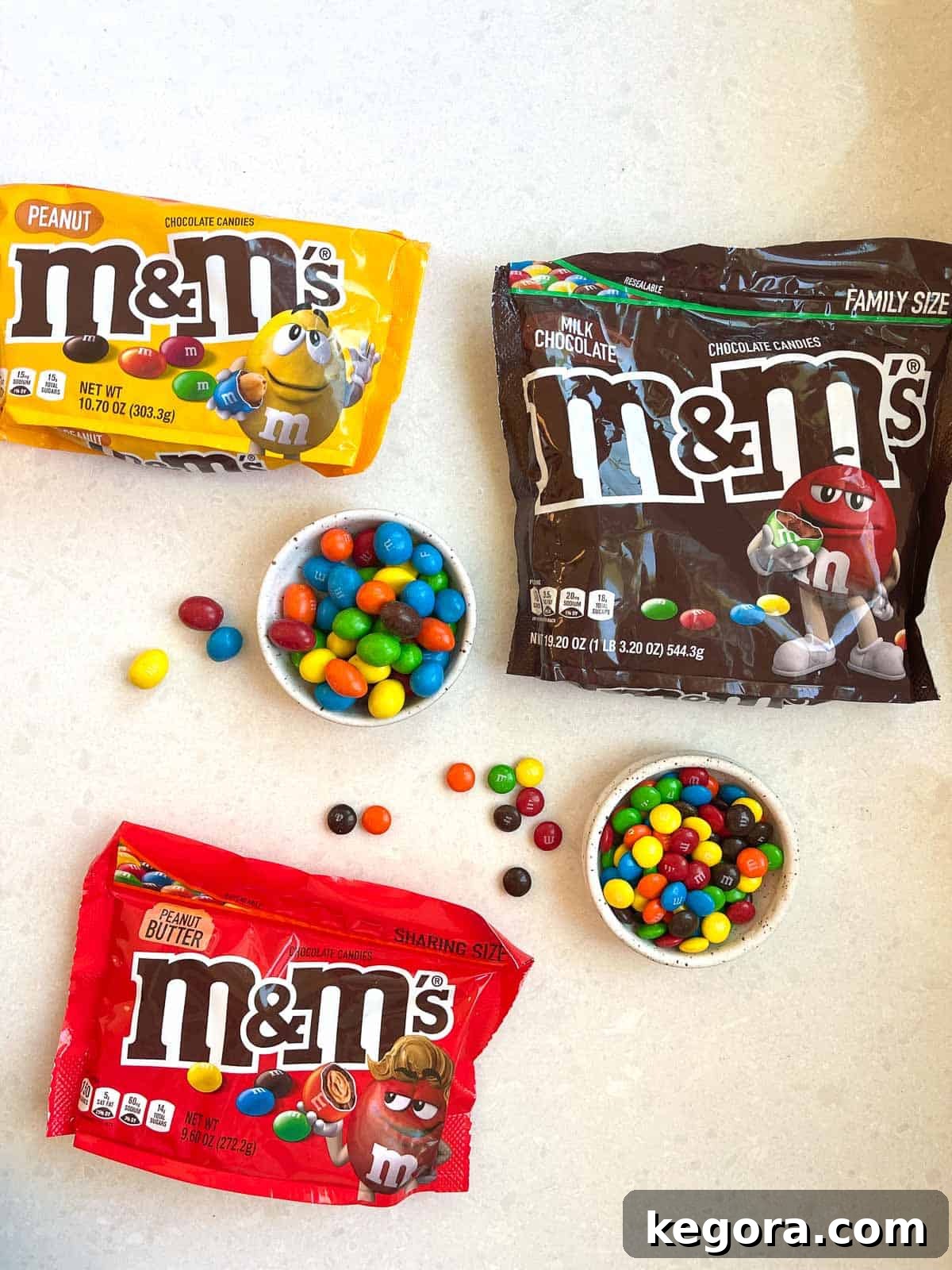
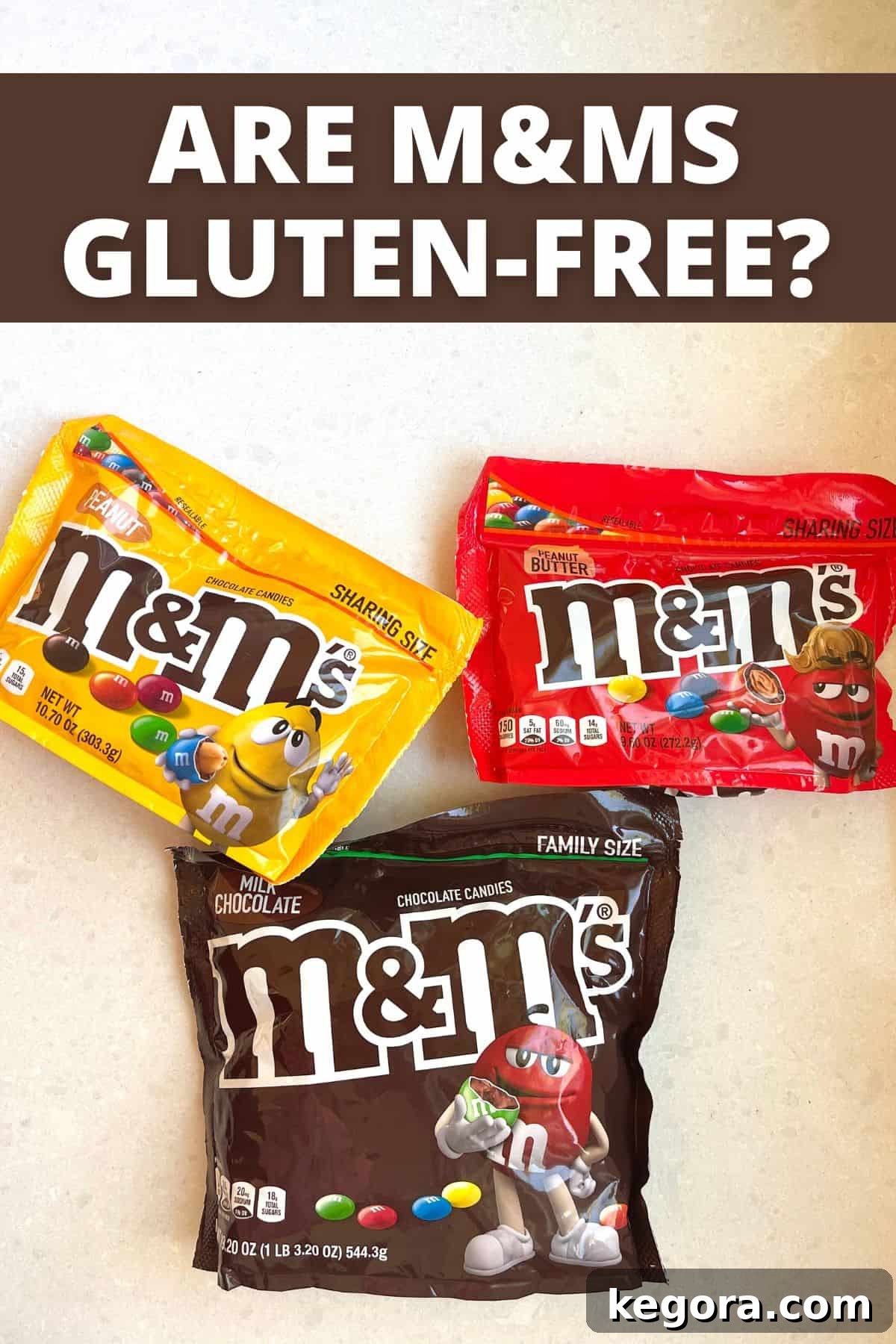
Navigating a gluten-free diet can be challenging, especially when it comes to enjoying your favorite treats. A common question among those with Celiac disease or gluten sensitivity is: “Are M&M’s gluten-free?” In this comprehensive guide, we’ll delve into the world of M&M’s, revealing which flavors are safe for a gluten-free lifestyle and which ones to avoid, ensuring you can snack confidently and deliciously.
M&M’s are far more than just a simple chocolate candy; they are a global phenomenon, an iconic brand woven into the fabric of popular culture since their introduction in the 1940s. These colorful, button-shaped chocolates have captivated generations, evolving from a wartime innovation into a beloved snack. Today, M&M’s boast an impressive array of more than 13 distinct flavors, distributed and cherished in countries across the globe. From classic milk chocolate to adventurous new concoctions, M&M’s are a staple at celebrations, movie nights, and as everyday indulgence.
The brand’s innovative spirit extends to seasonal offerings that fly off shelves during holidays, and a continuous stream of exciting new products that keep consumers engaged. Given their widespread appeal and constant evolution, it’s perfectly natural for individuals managing a gluten-free diet, particularly those with Celiac disease, to wonder if these delightful treats can be safely enjoyed.
So, let’s address the crucial question: are M&M’s gluten-free?
The straightforward answer is: mostly, but with important exceptions. Many varieties of M&M’s are naturally free of gluten ingredients, making them suitable for a gluten-free diet. However, it’s vital to be aware that not all flavors are safe. Specifically, you should steer clear of Pretzel M&M’s and Crispy M&M’s, as these varieties unequivocally contain gluten. Always prioritize checking the ingredient labels on any M&M’s product you consider purchasing.
Quick Answer: Are M&M’s Gluten-Free?
For those seeking a swift overview, here’s a concise summary regarding the gluten status of M&M’s:
While M&M’s are not explicitly marketed or certified as “gluten-free” products by their manufacturer, Mars Wrigley, many of their popular varieties are indeed considered safe for individuals following a gluten-free diet. The key lies in scrutinizing the ingredient list. Most M&M’s flavors are formulated without gluten-containing ingredients, making them a permissible treat for those with Celiac disease or gluten sensitivity. However, caution is paramount, especially with certain flavors. For instance, Pretzel M&M’s contain wheat flour, and Crispy M&M’s often contain barley malt, both of which are gluten-containing ingredients. Therefore, it’s always recommended to check the specific nutrition label for any M&M’s product you intend to consume.
If you’re exploring other gluten-free candy options, you might find these articles helpful:
- Are Starburst Gluten-Free?
- Are Marshmallows Gluten-Free?
- Are Reese’s Gluten-Free?
- Are Skittles Gluten-Free?
- Are Sour Patch Kids Gluten-Free?
- Are Oreos Gluten-Free?
- Is Nutella Gluten-Free?
- Are Swedish Fish Gluten-Free?
- Are Snickers Gluten-Free?
- Is Jello Gluten-Free?
For more delicious gluten-free meal ideas, explore this collection of gluten-free recipes.
Which M&M’s Flavors Are Generally Safe for a Gluten-Free Diet?
Despite the absence of an official “gluten-free” label in the United States, a significant portion of M&M’s flavors are formulated without gluten-containing ingredients. This is a common scenario in the world of packaged foods, where a product may be naturally gluten-free but the manufacturer opts not to seek formal certification due to various factors, including potential cross-contamination risks during production or simply business strategy.
Reliable sources, such as Celiac.com, have reported findings from Nima Sensor tests, which are portable devices designed to detect gluten in food. These tests indicated no detectable gluten content in most M&M’s flavors, even in some cases where a “may contain wheat” warning was present. This suggests that for many, these varieties are a safe bet.
The following M&M’s flavors are widely considered probably safe for individuals avoiding gluten, based on their ingredients and independent testing:
- Milk Chocolate M&M’s: The original and most classic variety, typically free from gluten ingredients.
- Peanut M&M’s: A perennial favorite, these crunchy, chocolate-covered peanuts are generally gluten-free.
- Peanut Butter M&M’s: Offering a delightful blend of chocolate and peanut butter, these are also typically safe.
- Almond M&M’s: For almond lovers, this variety is usually free of gluten.
- Coffee Nut M&M’s: A newer, more gourmet flavor that generally fits a gluten-free profile.
- Caramel M&M’s: These chewy, caramel-filled chocolates are typically gluten-free.
- Thai Coconut Peanut M&M’s: An exotic flavor that is often found to be gluten-free.
- Hazelnut Spread M&M’s: Indulgent and usually safe for gluten-free consumption.
- Mint Chocolate M&M’s: A refreshing twist, generally without gluten ingredients.
- White Chocolate M&M’s: These creamy M&M’s are typically a safe option.
For a broader understanding of gluten-free confectionery, you might enjoy this post on what candy is gluten-free. And if you’re feeling creative, try these delightful gluten-free M&M cookies!
Understanding “May Contain Wheat” Warnings and Which Flavors Are Safest
Many M&M’s packages carry an advisory statement indicating they “may contain wheat.” This warning is a manufacturer’s declaration about potential cross-contamination during the manufacturing process. It means that while wheat is not an intentional ingredient in the product’s recipe, there’s a possibility that trace amounts could be present due to shared equipment or facilities with wheat-containing products.
For individuals with severe gluten allergies or Celiac disease, such warnings necessitate careful consideration. Even minute amounts of gluten can trigger adverse reactions. However, as noted earlier, independent tests using devices like the Nima Sensor have often shown no detectable gluten in these products despite the warning. This creates a dilemma for consumers: adhere strictly to labels or rely on third-party testing.
If you have an extreme gluten sensitivity or simply prefer to minimize any potential risk, it is wise to choose M&M’s flavors that do not carry a “may contain wheat” warning. These varieties are considered to have an even lower risk of cross-contamination. The following flavors are typically found without this specific warning:
- Milk Chocolate M&M’s
- Almond M&M’s
- Peanut M&M’s
- Peanut Butter M&M’s
Planning a gathering? You might also enjoy this delicious Halloween snack mix, perfect for a gluten-free celebration.
M&M’s Gluten-Free Status: USA vs. International Varieties
It’s crucial to understand that food product formulations can vary significantly from one country to another due to different regulations, ingredient availability, and consumer preferences. This holds true for M&M’s as well.
In the United States, M&M’s are generally considered gluten-free with the notable exceptions of Pretzel M&M’s and Crispy M&M’s, which explicitly contain wheat. The core ingredients typically used in most US-made M&M’s include milk chocolate, skim milk, cocoa butter, lactose, soy lecithin, and various colorings and flavorings, none of which inherently contain gluten. These ingredients form the basis of many beloved M&M’s varieties, contributing to their widespread acceptance in the gluten-free community.
However, if you’re traveling or purchasing M&M’s from international markets, exercising caution is paramount. Different countries have distinct gluten-free certification standards and often use varied ingredient lists for the same branded products. For example, a “milk chocolate” M&M’s product in Europe might have slightly different ingredients or be manufactured in facilities with different cross-contamination controls compared to its US counterpart. Therefore, always make it a habit to check the ingredient label of any M&M’s package purchased outside the United States to ensure it aligns with your dietary needs.
Are Peanut M&M’s Gluten-Free? A Closer Look
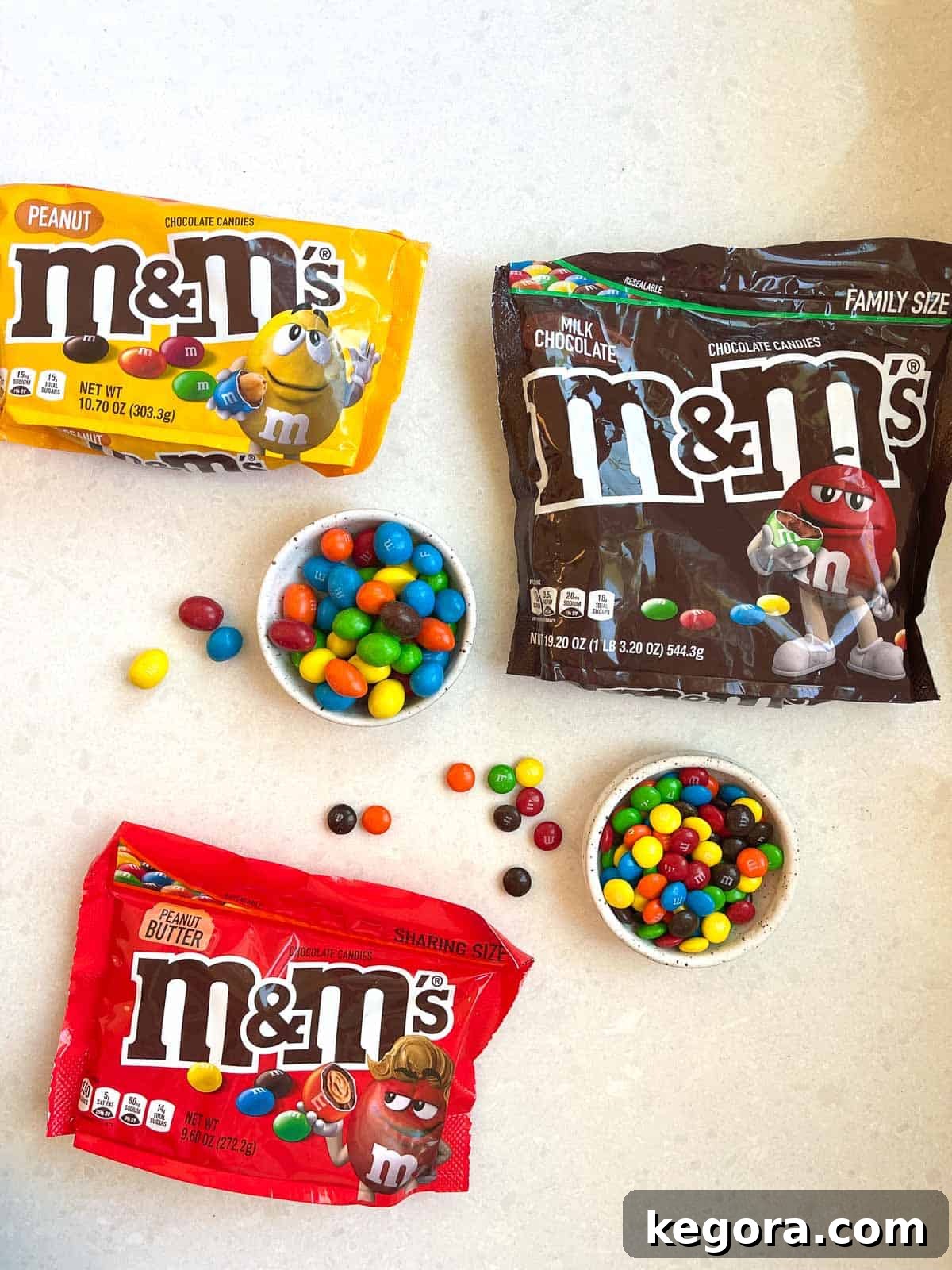
Among the vast array of M&M’s flavors, Peanut M&M’s stand out as one of the most popular and frequently consumed varieties. Good news for peanut lovers on a gluten-free diet: US-made Peanut M&M’s are widely considered gluten-free, although, like most other M&M’s, they do not carry an official “certified gluten-free” label.
A quick glance at the official M&M’s website or the ingredient list on the back of a Peanut M&M’s package typically reveals a formulation consisting of milk chocolate, peanuts, sugar, cornstarch, and other naturally gluten-free components. These ingredients are fundamental to the candy’s composition and do not include any known sources of gluten.
Furthermore, the gluten-free community has extensively tested Peanut M&M’s. Many individuals with Celiac disease and gluten sensitivity have used Nima Sensors to test this particular variety, consistently reporting zero traces of gluten. This strong anecdotal and quasi-scientific evidence reinforces the belief that Peanut M&M’s are a safe and enjoyable option for those adhering to a gluten-free lifestyle, provided they are consumed in the US and the label is checked for any unforeseen changes.
Understanding Gluten Content in M&M’s: Flavor by Flavor
The amount of gluten, if any, present in M&M’s is entirely dependent on the specific flavor. This necessitates a detailed understanding of each type:
Most M&M’s Flavors (e.g., Milk Chocolate, Peanut, Peanut Butter): The vast majority of M&M’s varieties are formulated without gluten-containing ingredients. While they do not bear a “gluten-free” certification, their ingredient lists are generally clean. Independent testing, as mentioned previously, frequently confirms no detectable gluten in these core flavors. This makes them largely safe for most individuals on a gluten-free diet.
M&M’s with “May Contain Wheat” Warnings: Certain flavors might carry a “may contain wheat” advisory. This warning indicates a potential for cross-contamination at the manufacturing facility where gluten-containing products are also processed. For individuals with Celiac disease or high gluten sensitivity, consuming these varieties carries an elevated, albeit often low, risk. While many Nima Sensor tests have shown no gluten in these products, it ultimately comes down to personal risk tolerance. If you have a severe reaction to trace amounts of gluten, it might be safer to avoid these flavors.
M&M’s Flavors That Explicitly Contain Gluten: There are two primary M&M’s varieties that you must unequivocally avoid if you are on a gluten-free diet:
- Pretzel M&M’s: As the name suggests, these contain pretzels, which are made from wheat flour. Wheat is a primary source of gluten, making these M&M’s unsafe.
- Crispy M&M’s: These typically contain barley malt, an ingredient derived from barley, which is a gluten-containing grain. Even small amounts of barley malt can trigger a reaction in sensitive individuals, thus making Crispy M&M’s unsuitable for a gluten-free diet.
For a fun, gluten-free treat that features M&M’s, consider trying this M&M popcorn recipe!
Frequently Asked Questions About M&M’s and Gluten
Many M&M’s flavors are considered safe for individuals with Celiac disease, including Milk Chocolate M&M’s, Peanut M&M’s, Peanut Butter M&M’s, and Almond M&M’s. While they are not officially certified gluten-free, their ingredient lists typically do not contain gluten. However, always avoid Pretzel and Crispy M&M’s, and exercise caution with flavors carrying a “may contain wheat” warning if you are highly sensitive to cross-contamination.
No, Peanut M&M’s produced in the U.S. are generally gluten-free. Their ingredients typically include milk chocolate, peanuts, soy lecithin, sugar, cornstarch, and gum acacia, all of which are naturally gluten-free. Independent testing also frequently confirms the absence of gluten in Peanut M&M’s, making them a popular choice for those on a gluten-free diet.
Pure, unsweetened chocolate is inherently gluten-free. However, when chocolate is processed into bars, candies, or other products, gluten-containing ingredients like barley malt, wheat flour, or even cross-contamination can occur. Many brands offer gluten-free chocolate options. Some popular chocolate brands that frequently offer gluten-free varieties include Dove, Endangered Species, Hershey’s (select bars), and Nestle (select products). Always look for “gluten-free” certifications or carefully read the ingredient labels to ensure safety.
Chocolate in its most natural, unprocessed form (like cocoa powder or 100% cacao mass) does not contain gluten. However, once other ingredients are added during processing to create various chocolate products (milk chocolate, dark chocolate bars with inclusions, candies), gluten-containing components might be introduced. These can include cereals, flavorings, or even trace amounts from shared equipment. Therefore, it is always essential to read the ingredient label to verify the gluten-free status of any chocolate product.
Similar to regular M&M’s, most M&M’s eggs (often seasonal varieties) are generally gluten-free, especially the classic milk chocolate or peanut versions. However, specific seasonal flavors or special editions of M&M’s eggs might contain unique ingredients that include gluten. As with all M&M’s products, the safest approach is to carefully check the ingredient list on the packaging of the specific M&M’s eggs flavor you are considering.
No, Crispy M&M’s are NOT gluten-free. They typically contain barley malt, an ingredient derived from barley, which is a gluten-containing grain. Individuals on a gluten-free diet, particularly those with Celiac disease, should strictly avoid Crispy M&M’s.
Seasonal and limited-edition M&M’s flavors are often innovative and may introduce new ingredients. While many follow the pattern of classic flavors being gluten-free, it’s particularly important to read the labels for these unique offerings. A new flavor might incorporate an ingredient that contains gluten (like cookie pieces or a specific type of filling). Always check the ingredient list and allergen warnings for each new or seasonal variety.
The Bottom Line: Enjoying M&M’s on a Gluten-Free Diet
For those navigating a gluten-free lifestyle, the question “Are M&M’s gluten-free?” can finally be answered with a sense of relief and clarity. Good news prevails: in many cases, the answer is a resounding yes! While M&M’s products generally do not feature an official gluten-free certification label from the manufacturer, Mars Wrigley, a significant number of their beloved flavors are formulated without gluten-containing ingredients.
Your go-to gluten-free options predominantly include the classic varieties such as Milk Chocolate M&M’s, Peanut M&M’s, and Peanut Butter M&M’s. These flavors are consistently recognized by the gluten-free community and independent tests as safe choices, free from any intentional gluten ingredients.
However, vigilance is key. It is critical to remember the definite no-go flavors: Pretzel M&M’s and Crispy M&M’s. These two varieties explicitly contain gluten—wheat flour in the case of Pretzel M&M’s and barley malt in Crispy M&M’s—making them unsuitable for anyone following a gluten-free diet.
Regarding flavors that carry a “may contain wheat” warning, the decision to consume them is a personal one. While independent Nima sensor tests frequently indicate no detectable gluten in these products, the warning itself signifies a potential for cross-contamination during manufacturing. If you have Celiac disease or a high sensitivity to even trace amounts of gluten, it’s often prudent to err on the side of caution and avoid these flavors to minimize any risk of an adverse reaction.
Above all, the golden rule for gluten-free eating remains: always read the ingredient label before purchasing and consuming M&M’s, or any packaged food product. Product formulations can change over time, and new flavors are constantly introduced, some of which may contain unexpected gluten ingredients. Staying informed ensures you can continue to enjoy your favorite candies safely.
Happy snacking, and here’s to a world of delicious, gluten-free choices!